

Dorsal Hump
What is a dorsal hump?
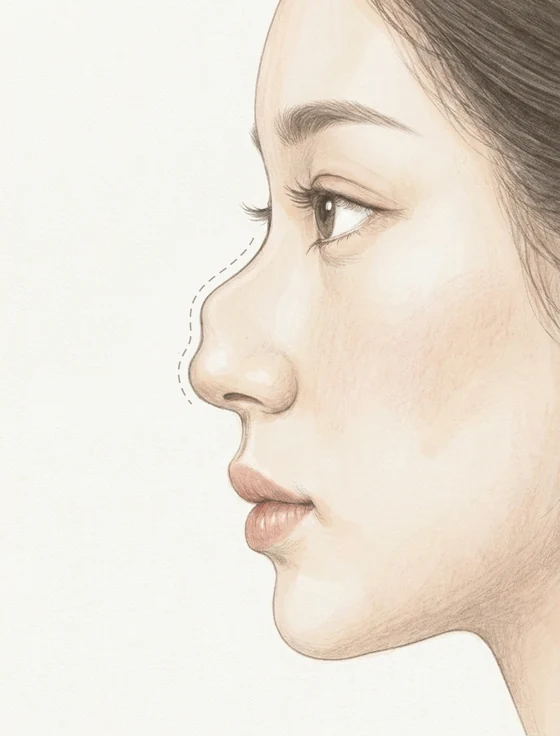
A dorsal hump refers to a shape in which the nasal bones and cartilage forming the nasal dorsum are excessively developed or protruding, making the middle part of the nasal bridge look prominently bulged in the profile view. Depending on the size and position of the hump, the nose may look strong or long, and in some cases the nasal tip may appear relatively droopy.
At ImageUp Plastic Surgery, we comprehensively analyze the degree of protrusion of nasal bones and cartilage, the width and height of the nasal bridge, and the position and angle of the nasal tip. We refine the protruding area as needed to smooth the nasal dorsum line, and, when appropriate, combine osteotomy or nasal tip correction, aiming for a natural, smooth nasal line that harmonizes with the entire face.
- Profile view of a dorsal hump nose
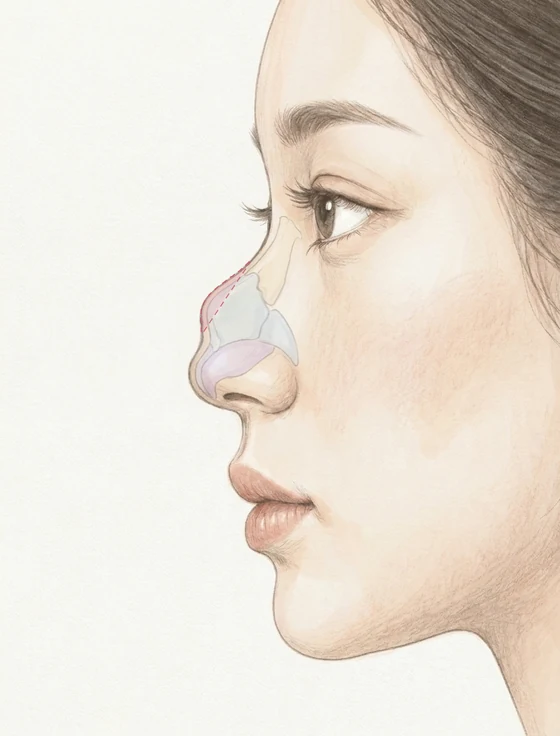
- Anatomical structure of a dorsal hump nose
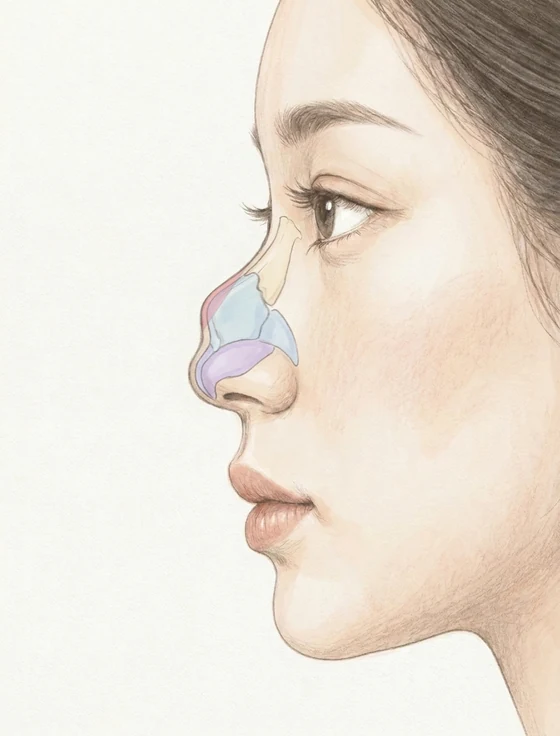
- Nasal bone — The nasal bone in the upper bridge can be excessively developed and protrude.
- Protruding dorsal hump area — The area where the nasal bone and cartilage meet can protrude, forming a dorsal hump.
- Upper lateral cartilage — The upper lateral cartilage in the mid-bridge area can be excessively developed and protrude.
- Septal cartilage — In some cases, the front part of the septal cartilage protrudes and forms a dorsal hump.
Dorsal hump rhinoplasty surgery process
- 1Before surgeryThe central nasal bridge is protruding, forming a dorsal hump. The size and position of the hump and the shapes of the bridge and the tip are assessed.
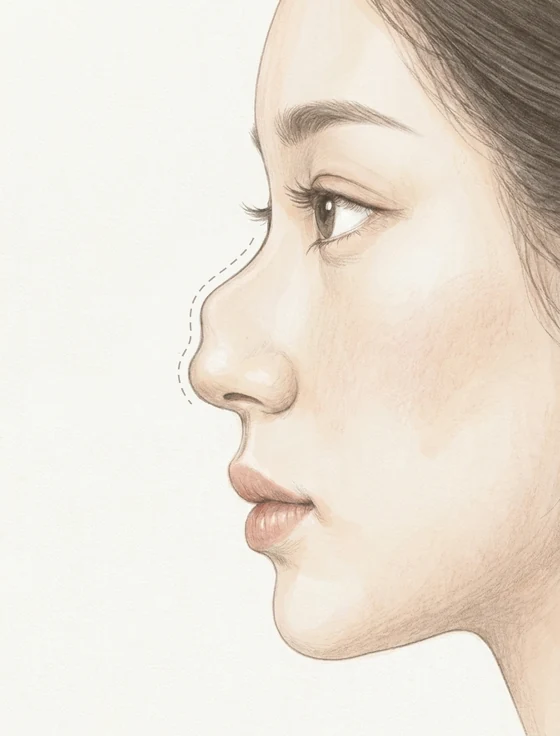
- 2Protruding area identificationIdentify the protruding area formed by excessive development of bone and cartilage, and analyze the shape and structure of the nasal bone, upper lateral cartilage, and septal cartilage.
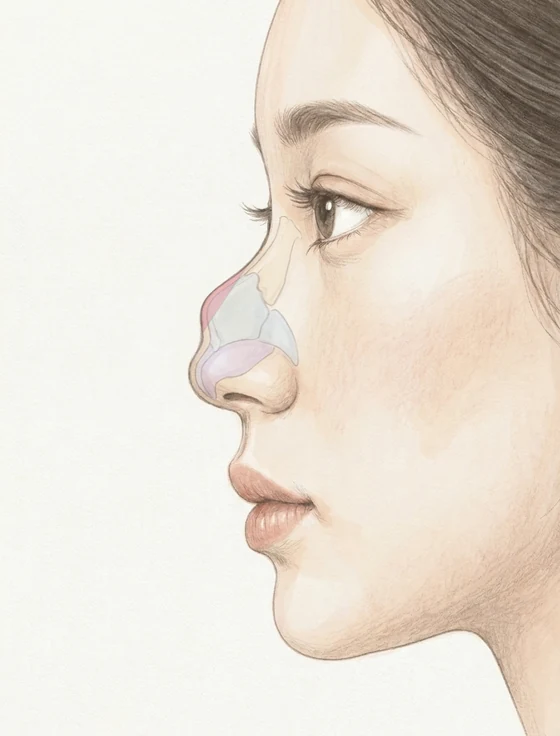
- 3Refining the protruding nasal bone and cartilageRefine the protruding nasal bone and cartilage as needed to correct the hump. In some cases, osteotomy to adjust nasal bone width or tip correction may be performed together.
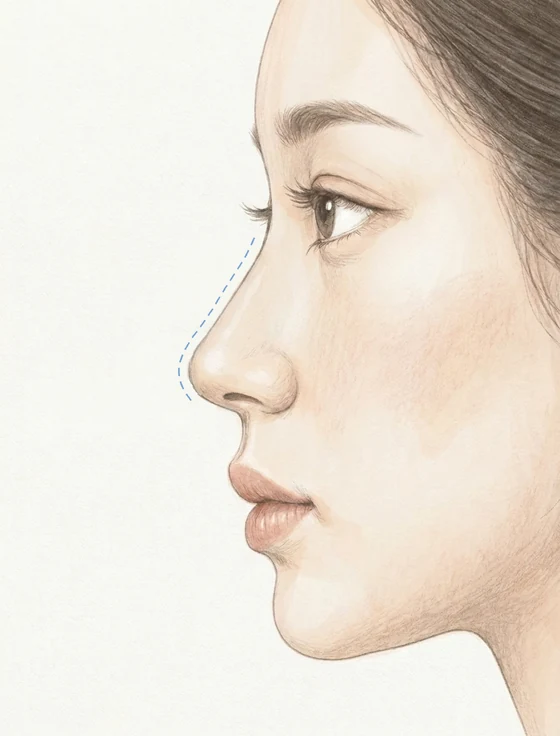
- 4After surgeryThe protruding hump is improved so that a nasal line continues naturally and smoothly from the bridge to the tip.
Key points of dorsal hump rhinoplasty surgery
Dorsal hump — KakaoTalk 1:1 consultation
If you are curious about your previous surgical history or your current nose condition, you can inquire via KakaoTalk before consultation.
Dorsal hump FAQs
After Dorsal Hump surgery, can a revision be done by adding only osteotomy?
Question details: I had Dorsal Hump surgery last October under partial anesthesia and via a non-incisional approach. The protruding hump was removed, but because they said the shaved surface was not wide, no osteotomy was performed; the tip was corrected with cartilage repositioning and cartilage tying. After the swelling subsided, from a full side view it is straight, but the sides of the nasal dorsum protrude so at a 45-degree angle it still looks like a hump, and on the front view the shaved portion of the dorsum looks wide like a trapezoid. 1. By narrowing with osteotomy, can the protruding sides and dorsum be corrected? 2. If I add only osteotomy, will it affect the tip?
1. If the nasal bones still look wide on the front view even after hump removal, osteotomy can improve it. Also, osteotomy reduces the shape of both sides of the nasal bones, so the bone width decreases and, as a result, the dorsum may appear slightly higher. 2. Osteotomy has little effect on the tip.
I heard that if you shave a Dorsal Hump, the hump grows back later. Can the bone grow again?
In adults, it is not typical for removed nasal bone to regrow and return to the original hump shape. However, during bone healing after surgery, fine irregularities can be felt, or the contours of remaining cartilage and bone can make it seem as if the hump has come back.
How long does dorsal hump surgery take?
Dorsal hump surgery takes about 1 hour. This may vary depending on the condition of the nose.
What type of anesthesia is used for dorsal hump surgery?
Dorsal hump surgery is performed under sedation anesthesia.
How long is the recovery period after dorsal hump surgery?
The recovery period is generally about one week. How quickly swelling and bruising subside varies from person to person.
What causes a dorsal hump?
It forms when the nasal bone and cartilage that make up the bridge are excessively developed or protrude. Which part among the nasal bone, upper lateral cartilage, and septal cartilage protrudes, and by how much, varies by person, so it is checked first at your visit.
From the side, only the middle of my bridge bulges. Is that a dorsal hump?
If the middle of the bridge appears to bulge out in profile, it may be a dorsal hump. The size and position of the hump vary from person to person, so we judge by also looking at the width and height of the bridge and the shape of the tip.
Can a dorsal hump make the nose look long or the tip look droopy?
It can. Depending on the size and position of the hump, the face may look strong or the nose may look long, and the tip may look relatively droopy. If a droopy tip is also present, we correct the position and angle of the tip while refining the protruding bridge.
Does dorsal hump surgery only shave bone, or is cartilage refined too?
It depends on whether the protruding part is bone or cartilage. After analyzing the shape and structure of the nasal bone, upper lateral cartilage, and septal cartilage, the protruding nasal bone and cartilage are refined as much as needed to correct the hump.
I've heard the bridge can look wide after the hump is shaved down. Is an osteotomy done as well?
It depends on the case. If the bridge looks wide after the hump is removed, or the nasal bones are wide, an osteotomy to adjust the nasal bone width may be performed at the same time. Not every dorsal hump surgery includes an osteotomy; the basic step is refining the protruding nasal bone and cartilage.
Does shaving off more of the hump make the nose look better?
No. What matters is refining only the parts that need it to create a natural bridge, and the extent of correction is set with a line that harmonizes with the whole face as the goal.
What is checked before dorsal hump surgery?
We check the degree of protrusion of the nasal bone and cartilage, the width and height of the bridge, and the position and angle of the tip together. Based on this, we decide how much to refine and whether to combine osteotomy or tip correction.
Are the forehead and chin also considered in dorsal hump surgery?
Yes. We match the proportions of the whole side profile, taking into account the relationship with the forehead, lips, and chin.
Does refining the hump make the bridge perfectly straight?
Making the bridge perfectly straight is not the goal. The goal is a natural line that flows smoothly from between the eyebrows to the tip, and surgical results vary by individual.
What are the steps of dorsal hump surgery?
Once the pre-operative check is complete, we identify the protruding area formed by excessively developed nasal bone and cartilage. We then refine the protruding nasal bone and cartilage as much as needed to correct the hump, and in some cases perform osteotomy or tip correction together. After surgery, the aim is a nose line that flows naturally and smoothly from the bridge to the tip.
Depending on the individual, side effects such as bleeding, infection, swelling, asymmetry, and scarring may occur, and the degree may vary. Please make your decision after sufficient consultation with a specialist.
View together by rhinoplasty type
Please review our complete guide to Low Nasal Bridge, Upturned Nose, Arrow Nose, Deviated Nose, Dorsal Hump, Alar Reduction, revision rhinoplasty, and Rhinoplasty.
View rhinoplasty types and revision, with 3D CT analysis, on one page.
NOSE Low Nasal BridgeLow nasal bridge surgery can be performed in various ways depending on the height and shape of the nose, skin thickness, and overall facial proportions.
NOSE Upturned Nose/Short NoseAn upturned or short nose refers to a shape in which the length of the nose is relatively short or the nasal tip is lifted upward so that the nostrils are highly visible from the front.
NOSE Arrow Nose/Long NoseAn arrow or long nose refers to a shape in which the nasal tip droops downward or the length of the nose appears long relative to the face.
NOSE Deviated NoseA deviated nose refers to a shape in which the nasal bridge or nasal tip bends to one side away from the facial midline, making the nasal line appear asymmetric.
NOSE Alar ReductionAlar reduction is a surgery that adjusts the width and shape of the alar to create a more balanced nose shape when the alar is widely spread to the sides or the nostrils appear large, making the nose look wide and blunt.
NOSE Revision RhinoplastyRevision rhinoplasty is surgery performed when, after a previous rhinoplasty, the shape of the nasal bridge or tip is unnatural or asymmetry has developed, or when further correction is needed due to implant malposition or showing through, nasal tip deformity, contracture, or similar issues.
Dorsal hump — KakaoTalk 1:1 consultation
If you are curious about your previous surgical history or your current nose condition, you can inquire via KakaoTalk before consultation.