

Alar Reduction
What is alar reduction?
Alar reduction is a surgery that adjusts the width and shape of the alar to create a more balanced nose shape when the alar is widely spread to the sides or the nostrils appear large, making the nose look wide and blunt.
At ImageUp Plastic Surgery Clinic, we do not simply reduce the width of the alar, but analyze the size and shape of the nostril, the thickness of the alar skin, the width and height of the nasal tip, and the overall facial proportions together. The goal is to reduce the width of the nose while maintaining a natural alar curve and left-right balance by appropriately adjusting the tissue inside the nostril or outside the alar according to the individual's nose shape.
Alar Reduction Surgery Process
- 1Before surgeryChecks the width and left-right symmetry of the alar, the size and shape of the nostril, skin thickness, and the ratio with the nasal tip. Determines the appropriate reduction range by considering the overall facial width and nasal proportion.
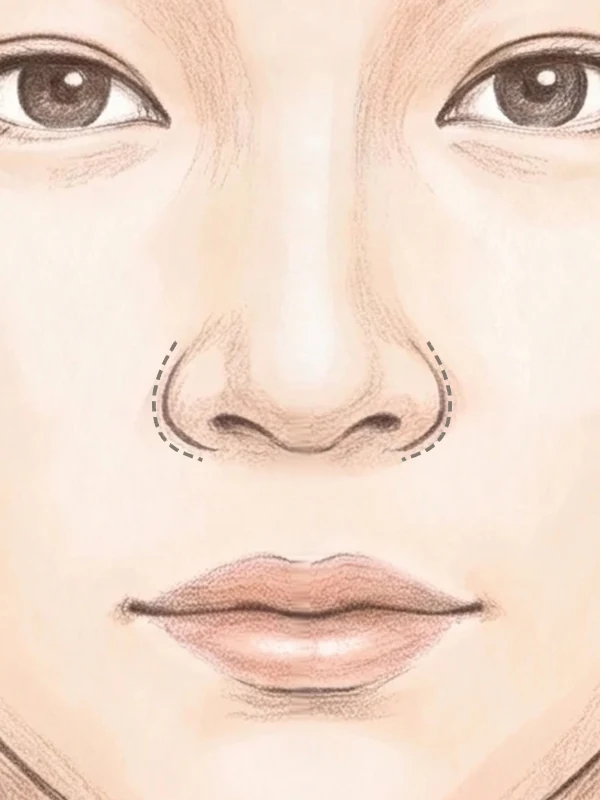
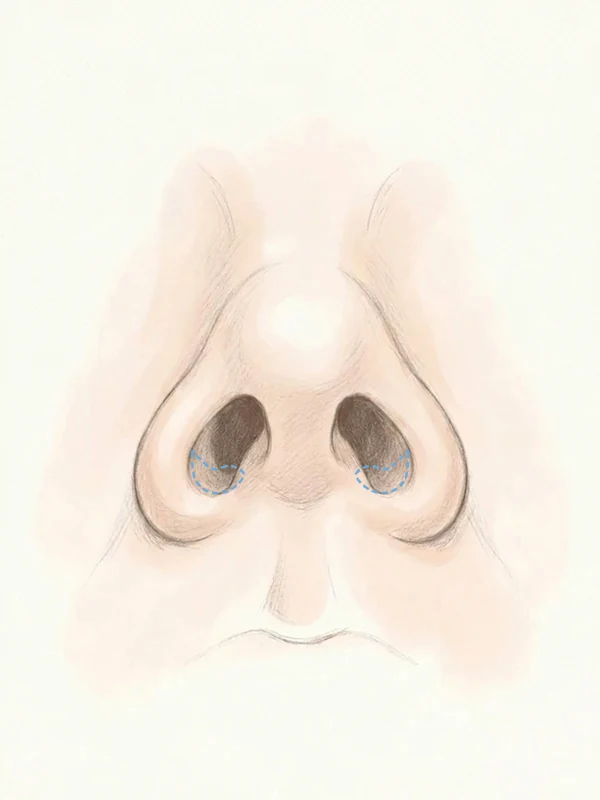
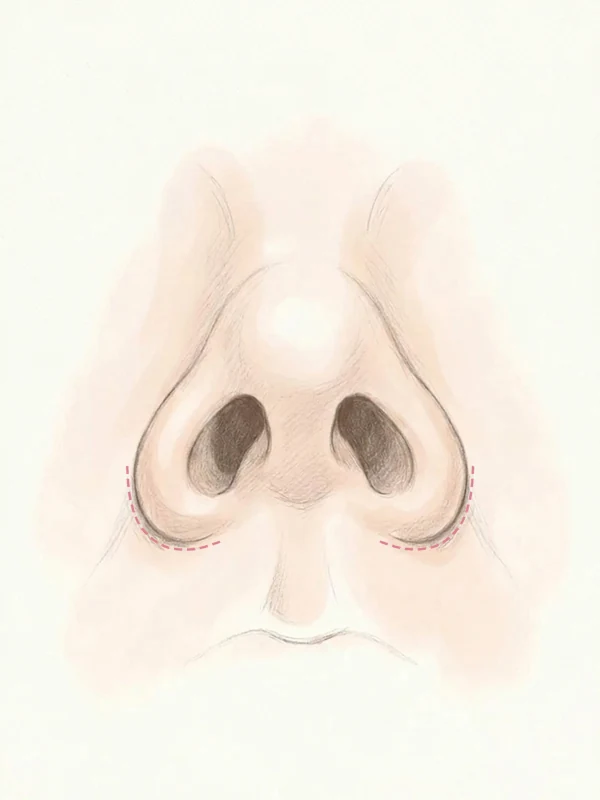
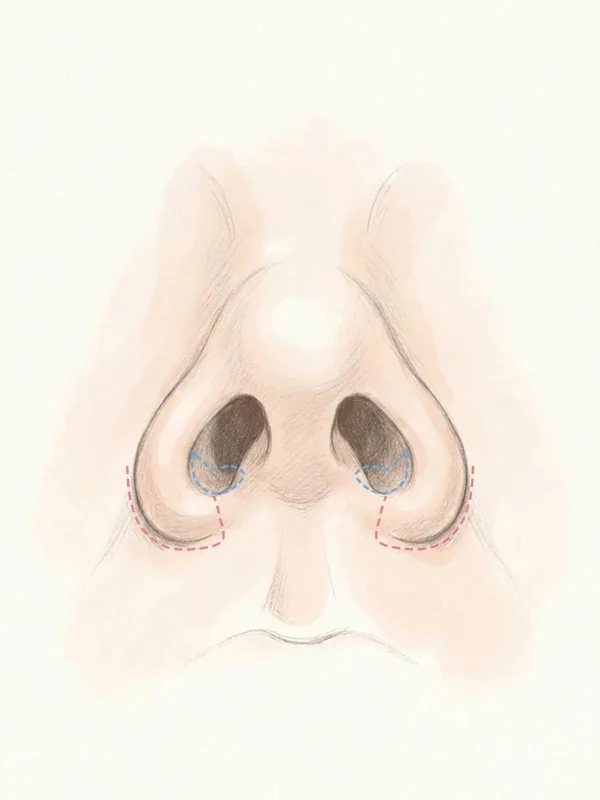
- 2Incision range designThe incision range is designed on the inside of the nostril or along the outer border of the alar base, depending on the individual's alar shape and the cause of widening. If necessary, both the inside and outside can be adjusted together.
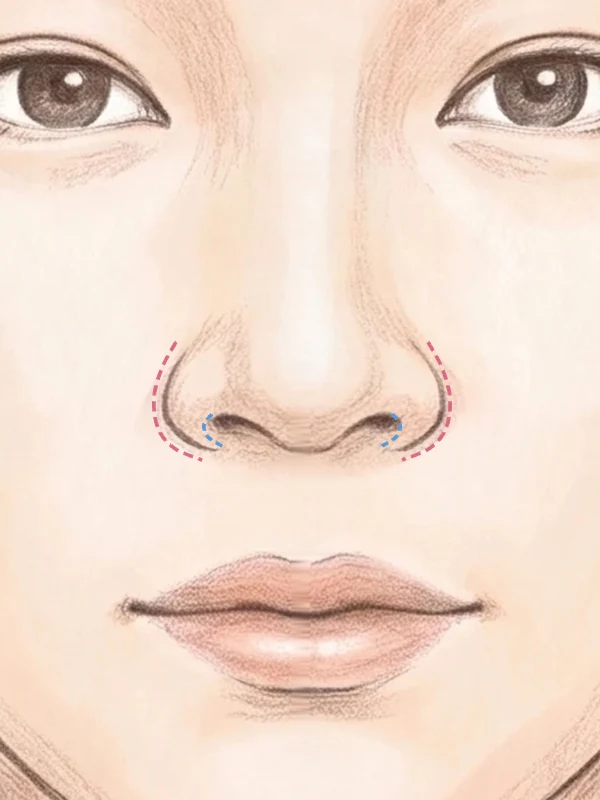
- 3Alar tissue adjustment and suturingUnnecessary skin and soft tissue are appropriately adjusted according to the designed range and then sutured to reduce the width of the alar. At this time, the shape of the nostril and left-right symmetry are finely adjusted to maintain a natural appearance.
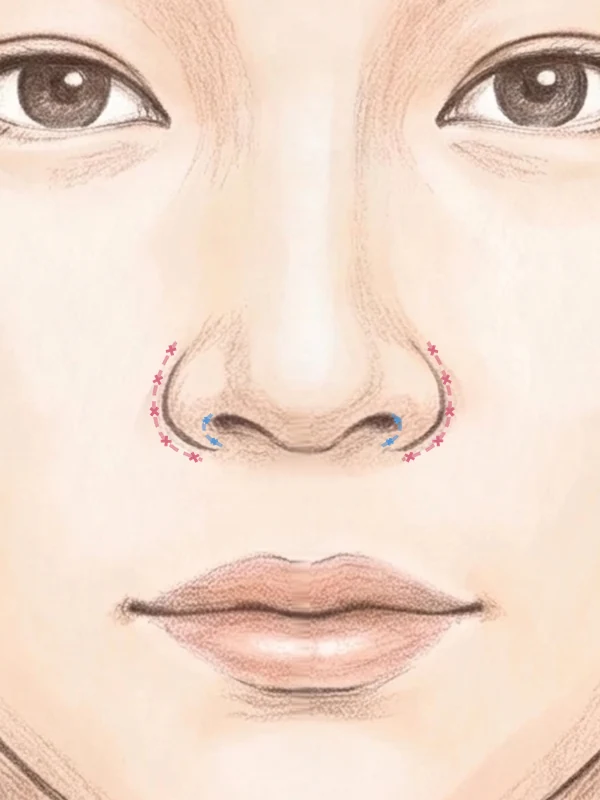
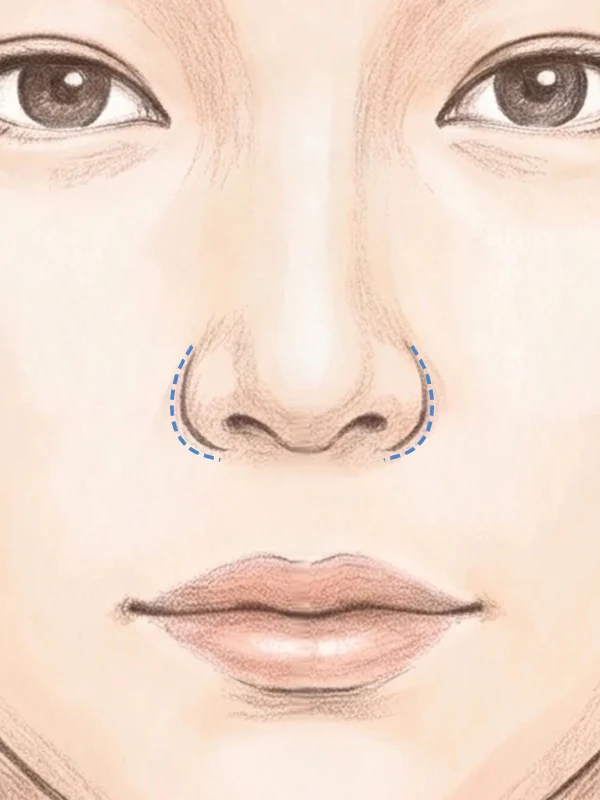
- 4After surgeryAs the width of the widely spread alar decreases, the ratio of the nostril to the nasal tip appears more balanced. A natural alar curve is maintained to avoid an excessively narrow or artificial shape.
- Inner Incision (Method close to non-incisional)A method of incising inside the nostril so that the scar is not visible from the outside; applied to relatively mild alar widening.
- Outer IncisionA method that reduces the width of the alar by incising the outer border area of the alar. The scar usually fades naturally over time.
- Combined IncisionA method of incising both the inside and outside of the nostril, allowing more precise correction of the size and shape of the alar.
Points of Alar Reduction Surgery
Alar Reduction — KakaoTalk 1:1 Consultation
If you are curious about your previous surgical history or your current nose condition, you can inquire via KakaoTalk before consultation.
Frequently asked questions about Alar Reduction
If my alae are wide, will Alar Reduction make my nose look smaller?
If the alae are spread widely to the sides, reducing alar width can improve the appearance so that the nose looks smaller and more refined. However, if the nasal tip itself is wide, Alar Reduction alone may not produce a sufficient desired change.
When I smile, my alae flare widely to the sides. Can this also be reduced?
Even in cases where the alae flare significantly when smiling, reduction may be considered after evaluating the current width and movement of the alae as well as the characteristics of the skin and muscle. However, completely eliminating movement associated with facial expressions is not the goal of surgery.
Is Alar Reduction done from the inside of the nose or from the outside?
Depending on the shape of the alae and the cause of widening, an internal incision or an external incision may be selected, or both methods may be considered together if needed. The same Incisional Method is not applied to every patient.
If an external incision is made, won’t the scar be very noticeable?
When an external incision is needed, the incision line is designed along the natural border where the nostril wing meets the face so that the scar is as inconspicuous as possible. There may be redness in the early period, and time is needed for the scar to stabilize.
Can large nostrils also be made smaller with Alar Reduction?
Reducing alar width may also change the size and shape of the nostrils. However, because the change differs depending on factors such as the vertical-to-horizontal ratio of the nostrils and the position of the nasal tip, it is important to maintain a natural nostril shape rather than simply making them smaller.
Wouldn’t reducing the alae more make it look prettier?
If reduced excessively, the nostrils may become too small or look pinched, and the proportion with the nasal tip may appear unnatural. It is important to reduce them within an appropriate range, considering facial width, nasal tip size, and nostril shape.
If I have Alar Reduction, will the nasal tip become slimmer as well?
The alae and the nasal tip are different structures. Reducing alar width may make the nose look slimmer overall, but if the nasal tip itself is wide or blunt, separate nasal tip correction may be needed.
Can Alar Reduction be done on its own?
Yes. If there are no major complaints about the shape of the nasal bridge or nasal tip and only the alar width is wide, Alar Reduction alone can be performed. However, it is advisable to check the overall proportions of the nose to determine whether a standalone surgery is appropriate.
Will Alar Reduction make breathing uncomfortable?
If surgery is performed within an appropriate range, the purpose is not to make the nostrils smaller no matter what. Excessive reduction may cause functional problems, so it is important to reduce them only as much as needed, taking into account the size of the nostrils and the nasal inlet.
After Alar Reduction, will it spread open again over time?
After surgery, some changes in shape may occur depending on the process of tissues settling into place or on facial expression movements. Therefore, rather than simply resecting a large amount, it is important to choose a surgical method suited to the current tissue characteristics and the shape of the nostril wings.
On day 9 after nose surgery, if I want to have alar reduction once more, do I need to wait 6 months?
Question details: It’s about day 9 after tip simple augmentation (septal cartilage) and dorsal silicone implant surgery. Because I had a bulbous-nose look, I also had Alar Reduction, but my nose still looks big, so I want to have Alar Reduction once more. I’m wondering whether this would be classified as nose revision surgery.
At day 9, you still need to watch the course. Significant swelling takes at least about 2 weeks to subside, and it takes at least 6 months for the shape to settle. Try not to rush; take your time.
On day 11 after nose surgery, I hit my alar area—could this cause infection or change the shape?
Question details: I was looking at my phone and dropped it, hitting the alar area.
If there is no trauma or other symptoms such as persistent pain, there is unlikely to be a serious problem, so please observe the progress, and if it gets worse or lasts a long time, visit us to have it checked. If swelling develops at the injured site or you suspect infection, it is advisable to be examined.
What is checked before alar reduction?
We check the width and left-right symmetry of the alae, the size and shape of the nostrils, skin thickness, and the proportion relative to the tip. The extent of reduction is decided considering the width of the whole face and the proportions of the nose.
My two alae are different sizes. Can alar reduction even them out?
During surgery, we carefully check and correct asymmetry of both alae and nostrils. However, if there is pre-existing asymmetry, they may not become completely identical.
What are the steps of alar reduction?
Depending on the shape of the alae and the cause of widening, the incision range is designed on the inside of the nostril or along the outer border of the alar base. The skin and soft tissue within that range are adjusted and then sutured to reduce the alar width, while keeping the nostril shape and left-right symmetry natural. If necessary, both the inside and the outside can be adjusted together.
Depending on the individual, side effects such as bleeding, infection, swelling, asymmetry, and scarring may occur, and the degree may vary. Please make your decision after sufficient consultation with a specialist.
View together by rhinoplasty type
Please review our complete guide to Low Nasal Bridge, Upturned Nose, Arrow Nose, Deviated Nose, Dorsal Hump, Alar Reduction, revision rhinoplasty, and Rhinoplasty.
View rhinoplasty types and revision, with 3D CT analysis, on one page.
NOSE Low Nasal BridgeLow nasal bridge surgery can be performed in various ways depending on the height and shape of the nose, skin thickness, and overall facial proportions.
NOSE Upturned Nose/Short NoseAn upturned or short nose refers to a shape in which the length of the nose is relatively short or the nasal tip is lifted upward so that the nostrils are highly visible from the front.
NOSE Arrow Nose/Long NoseAn arrow or long nose refers to a shape in which the nasal tip droops downward or the length of the nose appears long relative to the face.
NOSE Deviated NoseA deviated nose refers to a shape in which the nasal bridge or nasal tip bends to one side away from the facial midline, making the nasal line appear asymmetric.
NOSE Dorsal HumpA dorsal hump refers to a shape in which the nasal bone and cartilage forming the nasal dorsum are overly developed or protruding, so that the middle portion of the nasal dorsum appears bulged in profile.
NOSE Revision RhinoplastyRevision rhinoplasty is surgery performed when, after a previous rhinoplasty, the shape of the nasal bridge or tip is unnatural or asymmetry has developed, or when further correction is needed due to implant malposition or showing through, nasal tip deformity, contracture, or similar issues.
Alar Reduction — KakaoTalk 1:1 Consultation
If you are curious about your previous surgical history or your current nose condition, you can inquire via KakaoTalk before consultation.