

Lower Blepharoplasty
What is lower blepharoplasty surgery?
It is a surgery that organizes the sagging skin and orbicularis oculi muscle of the lower eyelid due to aging, and removes or repositions the protruding under-eye fat to improve both sagging and bulging under the eyes.
The patient's under-eye fat volume, depth of the tear trough, and degree of skin and muscle sagging are comprehensively considered for correction, and lateral canthal fixation or lower blepharoplasty support surgery may be performed in parallel if necessary.
Lower Blepharoplasty Surgery Process
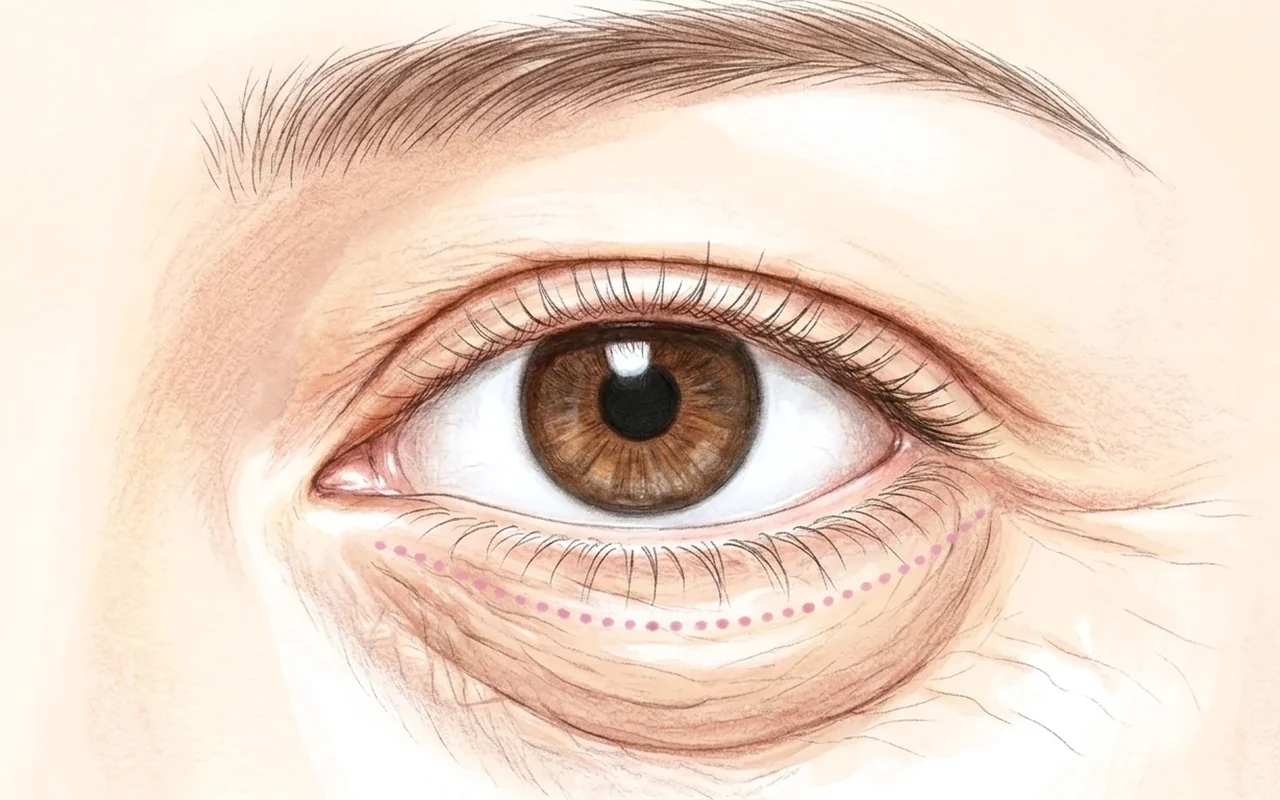
- 1Incision Line Design and Skin IncisionThe incision line is designed along the area just below the lower eyelashes. The incision is made considering natural wrinkle lines so that the scar is not easily noticeable.
- 2Skin and Orbicularis Oculi Muscle DissectionThe sagging skin and orbicularis oculi muscle are carefully dissected to confirm the under-eye fat and lower blepharoplasty structures.
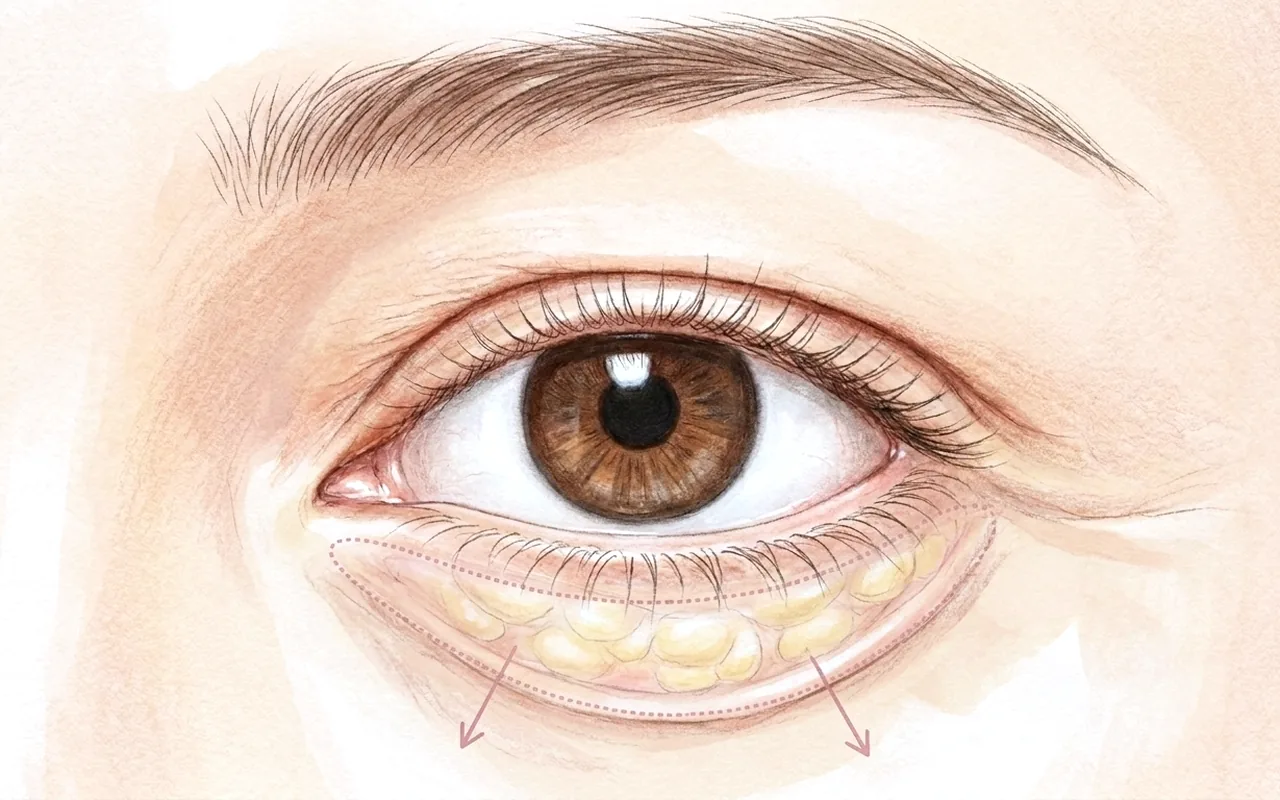
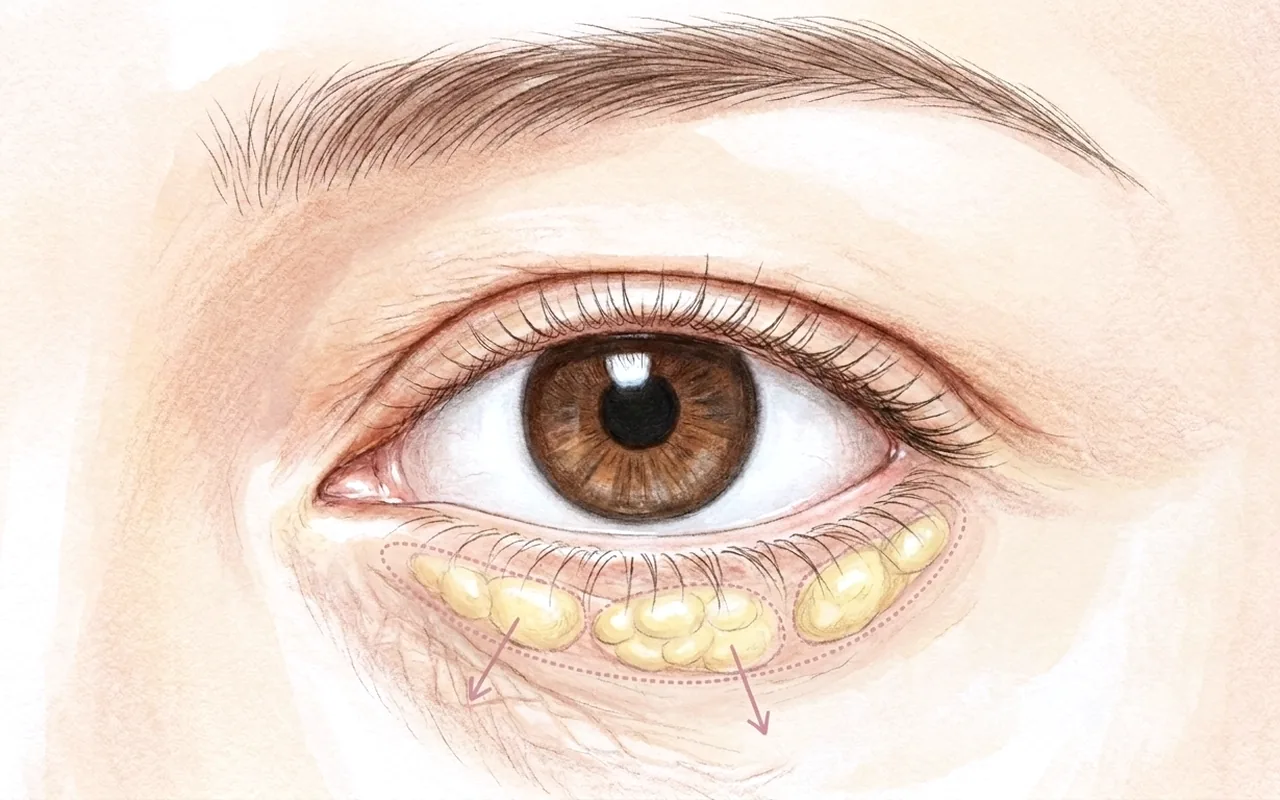
- 3Under-eye Fat CorrectionProtruding under-eye fat is appropriately removed depending on the condition, or repositioned to the hollow tear trough area to improve bulging and unevenness under the eyes.
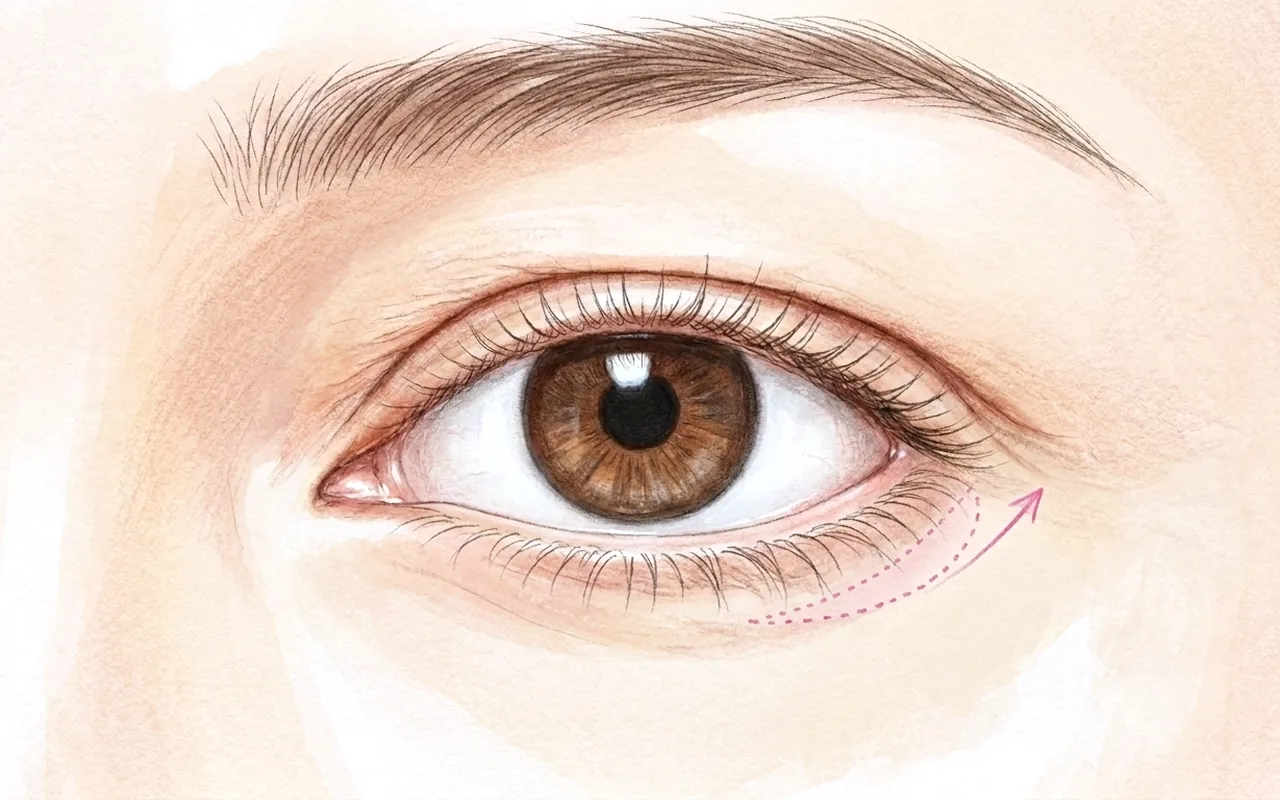
- 4Sagging Tissue Arrangement and Lower Eyelid SupportExcessively sagging skin and orbicularis oculi muscle are appropriately arranged. If there is lower eyelid laxity, lateral canthal fixation is performed if necessary to stably support the lower eyelid.
- 5Precise SuturingWhile checking the eye shape and tension of the lower eyelid, the incision site is meticulously sutured to finish with a natural under-eye line.
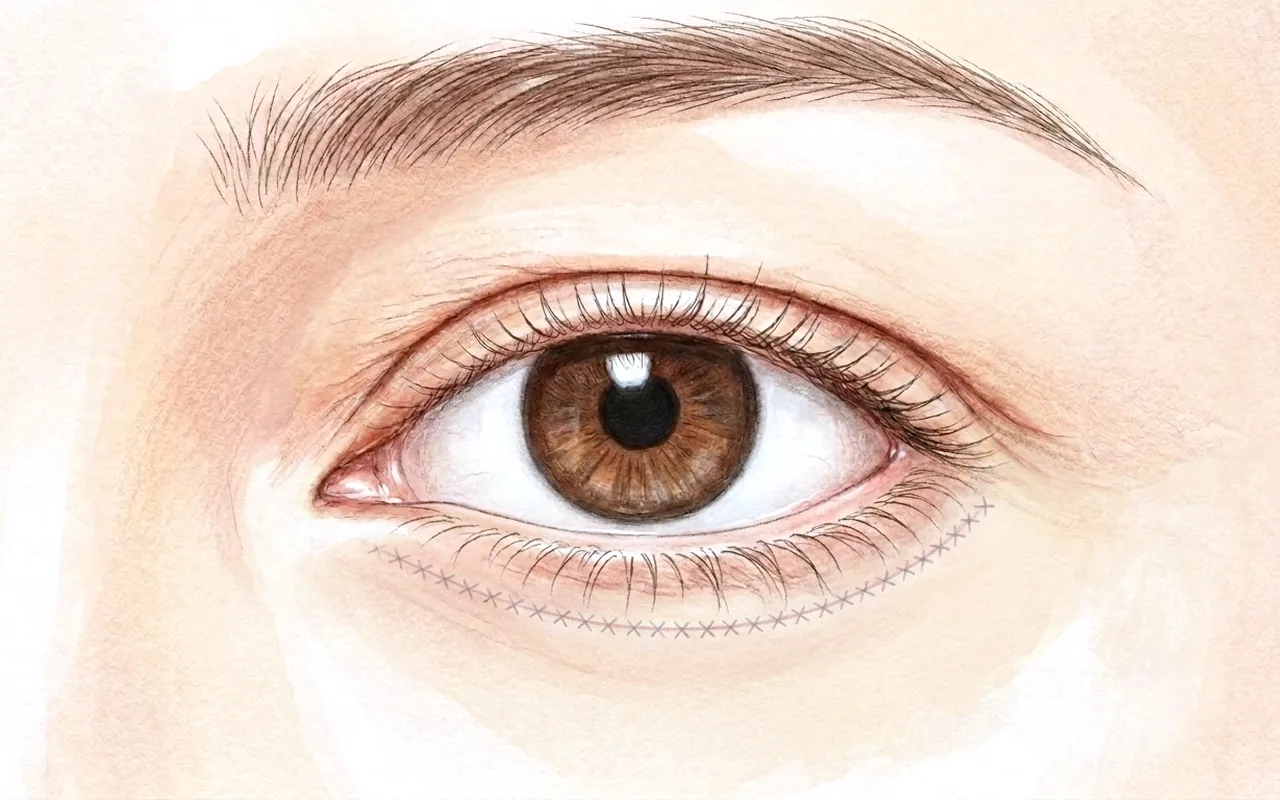
Key Points of Lower Blepharoplasty Surgery
Lower Blepharoplasty, KakaoTalk 1:1 Consultation
Anesthesia method and recovery schedule for lower blepharoplasty can be inquired in advance via KakaoTalk before the consultation.
Under-eye procedures consulted together with lower blepharoplasty
Under-eye aegyo-sal
Under-eye surgery is divided into under-eye aegyo-sal and under-eye fat repositioning, and is guided based on a surgery time of 1 hour under sedation anesthesia.
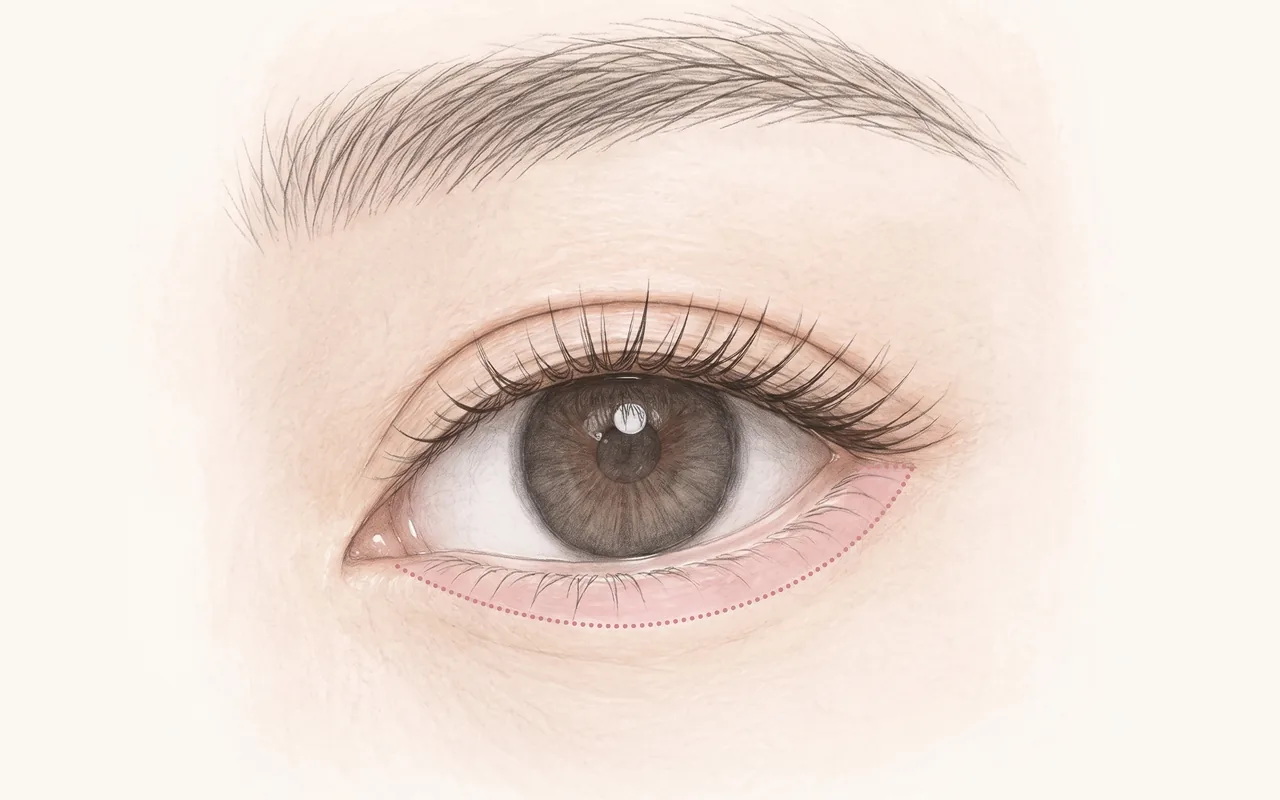
Conjunctival Under-eye Fat Repositioning
This is a surgery that approaches through the conjunctiva inside the eye and moves and repositions the protruding under-eye fat to an appropriate position. The surgical process and points are Under-eye Fat Repositioning guided on the ground.
Concurrent Fat Grafting
Under-eye fat grafting is sometimes performed together. In the early stage of grafting, clumping or a firm feeling may appear, so the progress is monitored.
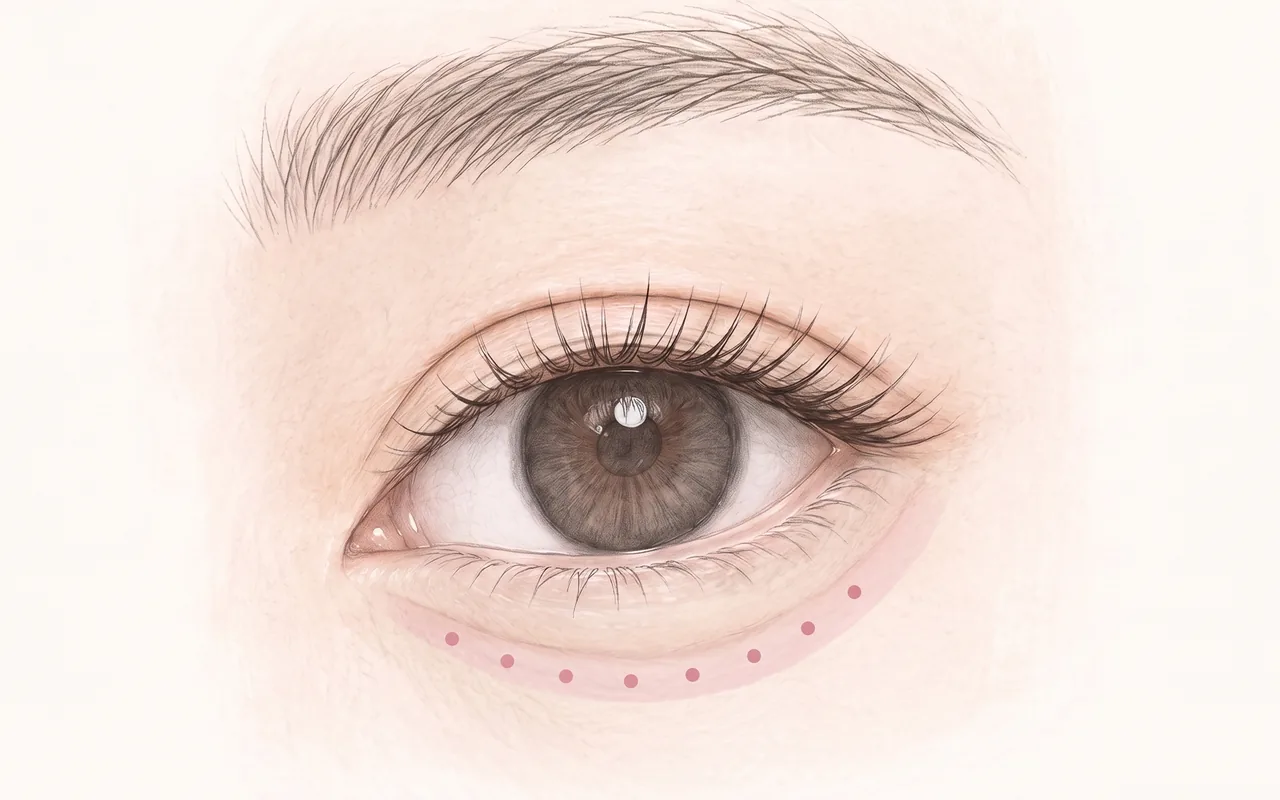
Core Summary of Lower Blepharoplasty Surgery
Lower blepharoplasty surgery arranges the sagging skin and orbicularis oculi muscle of the lower eyelid due to aging, and removes or repositions the protruding under-eye fat to improve both sagging and bulging under the eyes. It is guided based on a surgery time of 1 hour under sedation anesthesia.
The appropriate method according to the amount of under-eye fat and skin elasticity will be confirmed during consultation.
Recommended for
It can be considered in cases where the under-eye skin is sagging and there are many fine wrinkles, where the under-eye fat protrudes prominently, where the tear trough has deepened making one look tired and aged, where skin sagging and fat protrusion appear together, and where sufficient improvement is difficult with conjunctival under-eye fat repositioning alone.
Frequently Asked Questions
If the under-eye area is sagging and bulging, will Lower Blepharoplasty improve it?
Lower Blepharoplasty is surgery that corrects sagging under-eye skin, protruding fat, and lax muscle according to the condition. When under-eye fat is bulging and the skin is also lax, fat may be repositioned or adjusted as needed, and sagging skin is addressed together, which can help create a smoother under-eye line.
What is the difference between Lower Blepharoplasty and under-eye fat repositioning?
Under-eye fat repositioning is mainly a surgery that improves protruding fat and the tear trough, and Lower Blepharoplasty is a surgery that corrects not only fat but also lax skin and muscle. If skin elasticity is relatively good, under-eye fat repositioning may be suitable, but if skin sagging and wrinkles are pronounced, Lower Blepharoplasty can be considered.
Is all of the under-eye fat removed?
No. If fat is removed excessively, the under-eye area can become hollow and may actually look older. We check the amount of under-eye fat and the depth of the tear trough, and when necessary, remove only a portion or reposition the fat to hollowed areas to maintain natural volume.
Will Lower Blepharoplasty also get rid of under-eye wrinkles?
Because sagging skin is appropriately removed, improvement in skin sagging and fine wrinkles can be expected. However, fine wrinkles of the skin itself or reduced elasticity do not completely disappear with surgery alone, and depending on the condition, laser or skin treatments may be combined.
Will dark circles also improve at the same time?
Shadow-type dark circles caused by protruding under-eye fat and the tear trough can improve together as the under-eye contour is eased. On the other hand, pigmentation or a type in which blood vessels show through thin skin may not be sufficiently improved with Lower Blepharoplasty alone.
Can a deeply sunken tear trough under the eyes also be corrected at the same time?
When under-eye fat protrudes and the tear trough below it has deepened, the fat can be repositioned into the hollowed area to reduce the height difference. Depending on the degree of hollowing, the skeletal structure, and the condition of the soft tissue, additional volume correction may be needed in some cases.
Will Lower Blepharoplasty make the under-eye aegyo-sal disappear?
Aegyo-sal and under-eye fat are different anatomical structures. During Lower Blepharoplasty, the structures that form the aegyo-sal can be preserved as much as possible while correcting sagging tissue and fat. However, depending on the condition of the skin and muscle and the extent of surgery, there may be individual differences in postoperative appearance.
Will Lower Blepharoplasty change the eye shape or make the outer corners of the eyes droop?
With Lower Blepharoplasty, if too much skin is removed or the lower eyelid lacks sufficient support, the eyelid may be pulled downward, so careful surgery is important. Before surgery, the elasticity and support of the lower eyelid are checked, the amount of skin excised is adjusted appropriately, and, if necessary, methods to reinforce the eyelid’s supporting structures are considered.
Is lateral canthopexy also performed together with Lower Blepharoplasty?
It is not necessary for every patient. If the lower eyelid is lax or has weak support, or if it is judged that there is a risk of the eyelid being pulled downward after surgery, lateral canthal fixation or methods to reinforce the support structure may also be considered.
Is the Lower Blepharoplasty scar very noticeable?
For Lower Blepharoplasty that requires a skin incision, the incision line is generally designed just below the eyelashes and connected naturally toward the outside. Redness may be visible initially, but it gradually settles over time. The degree of scarring and the speed of recovery vary by individual.
Doesn't cutting away a lot of skin make it tighter?
Removing a lot of skin does not mean a better result. Excessive excision can pull the lower eyelid or change the eye shape, so it is important to remove only as much as needed, taking into account the current skin redundancy and eyelid support.
How long do swelling and bruising last? When can I go back to work?
After surgery, swelling and bruising may appear and can be relatively noticeable during the first 1–2 weeks. They gradually decrease afterward, but residual swelling and redness of the incision line may take a longer time to settle. The timing for returning to daily activities varies depending on the extent of surgery and each individual's recovery speed.
From what age is it good to have Lower Blepharoplasty?
This is not a surgery for which a specific age is set. Rather than age, the decision is made by comprehensively assessing under-eye fat protrusion, sagging of the skin and muscle, the tear trough, and lower eyelid elasticity. In general, under-eye fat repositioning may be considered when there is not much skin sagging, and Lower Blepharoplasty may be considered when skin sagging is also pronounced.
I previously had under-eye fat repositioning. Can I have Lower Blepharoplasty again?
It may be possible. However, it is necessary to check how much fat was removed or repositioned in the previous surgery, the extent of internal adhesions and scar tissue, and the current supporting strength of the skin and lower eyelid. For revision surgery, it is important to make a surgical plan considering the structures that have been altered by the previous surgery.
Once I have Lower Blepharoplasty, will it not sag again?
Even if currently sagging skin, fat, and soft tissue are corrected with surgery, aging continues to progress after surgery. Over time, skin elasticity may decrease or under-eye tissue may sag again. Therefore, rather than regarding the surgical result as permanently unchanging, it is better to understand this as surgery that improves the currently aged structure.
It has become lumpy and hard 4 weeks after the second under-eye fat grafting. Could it be calcification?
There are many individual differences, but engraftment and absorption after fat grafting continue for nearly a year after surgery. The surgical site may become harder around 1 to 3 months after surgery. Please observe the progress, but if the discomfort continues, visit us to have it checked.
Depending on the individual, side effects such as bleeding, infection, swelling, asymmetry, and scarring may occur, and the degree may vary. Please make your decision after sufficient consultation with a specialist.
Eye surgery pages worth viewing together
Please also look at under-eye fat repositioning and middle-aged eye surgery together.
For additional inquiries, contact us via KakaoTalk
1:1 KakaoTalk pre-inquiry — Mon–Thu 10:00 - 19:00 · Fri 10:00 - 21:00 · Sat 10:00 - 16:00.