

Body Filler
Ear Filler
This is a non-surgical procedure that raises ears that lie back and refines the shape of the auricular rim (helix) and earlobe with filler. In consultation, we first check where the ear is folded and any left–right differences.
At a Glance
Ear filler is a procedure that injects filler into the folded area of the ear cartilage and the earlobe to bring ears that lie back forward, and to refine the curve of the auricular rim (helix) and the earlobe shape. Because ears that lie back are often folded relative to the central cartilage (antihelix) rather than just at the rear root, it is important to smooth the folded inner side of the auricular rim (scapha) rather than reinforcing only the root. When the ears are visible from the front, the face’s width-to-height ratio changes, so the face may look smaller or the midface shorter; the degree varies depending on ear size and cartilage condition.
On which areas is the ear filler procedure performed?
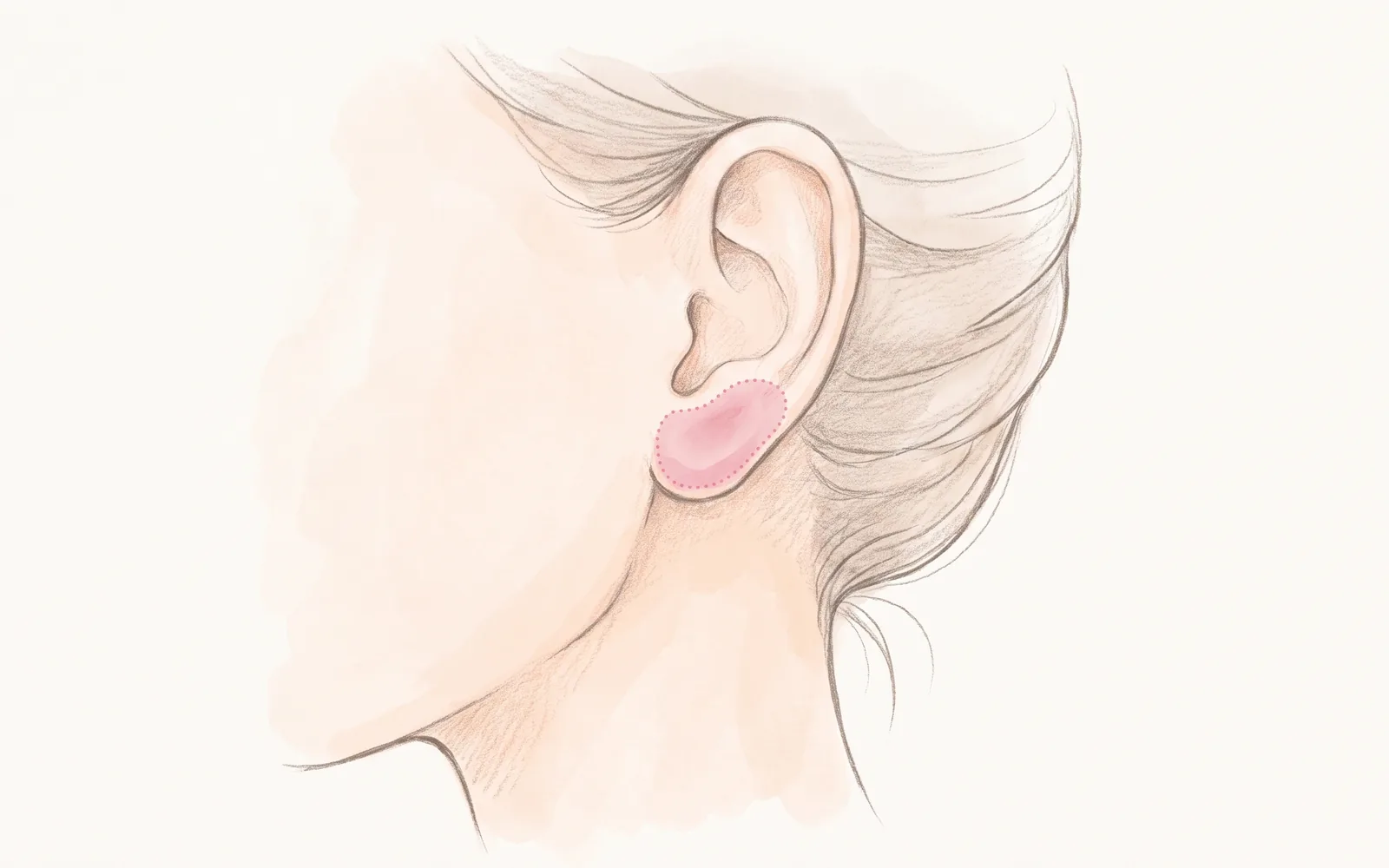
The illustration is an explanatory illustration to aid understanding, and procedure results vary by individual. The actual method is determined individually during consultation.
What kinds of ears most often seek ear filler consultation?
Ear filler — KakaoTalk 1:1 consultation
Area condition and prior procedure history — You can make a preliminary inquiry via KakaoTalk before your visit.
What does it mean that ear filler can make the face look smaller?
Whether the face looks long is determined not only by vertical length but by the width-to-height ratio. Bringing the ears forward makes the sides of the face look wider from the front while the vertical length stays the same, so the face may appear relatively shorter and smaller.
The vertical length of the ear is usually similar to the length from below the eyebrow to the nasal tip. If the end of the ear sits well above the nasal tip, the midface can look long; lowering the lower part of the ear closer to nasal-tip height can make the midface look relatively shorter.
When the ears stand, the contrast between light and shadow between the face and the ear can make the facial outline look sharper. How much things look different varies greatly by ear size, cartilage condition, and face shape.
Is there a face shape that ear filler suits well?
| Features of the face and ears | Aspects that may look different with ear filler |
|---|---|
| A face with prominent cheekbones and a protruding side profile | The hollow space behind the ear is filled so the line between the cheekbone and ear can look smoother. |
| Small, flat ears or a sunken area around the ears | As the ears are brought forward, the face shape may look more three-dimensional. |
| Long face shape or oval face | The impression of vertical length may be reduced and the midface may look shorter. |
| If you often tie your hair or wear hats | When the ears are exposed, the face shape may look more orderly. |
Even if the ears themselves are large, if the cartilage is firmly folded backward, simply smoothing the folded part can change the visible area from the front relatively well. Conversely, ears with severe cartilage deformation may have limits to how much they can be unfolded.
How does the procedure proceed?
In consultation, we look at the ears from the front and the side, determine which parts are folded and how much left–right asymmetry there is, and confirm whether the desired change is to bring the ear forward, to refine the auricular rim curve, or to adjust earlobe thickness. Bringing photos of the ear shape you want helps with design.
Filler is divided and placed where needed at the rear root of the ear, the folded inner side of the auricular rim, the rim edge, and the center of the earlobe to shape the ear. If only the earlobe is refined, it is brief; if unfolding a folded ear and also shaping the rim, it takes longer.
The amount used varies by ear size and treatment extent. In cases introduced in the doctor’s post, examples include 2cc for one earlobe and 2.5cc for one ear that lies back.
How are the tissues under the skin structured?
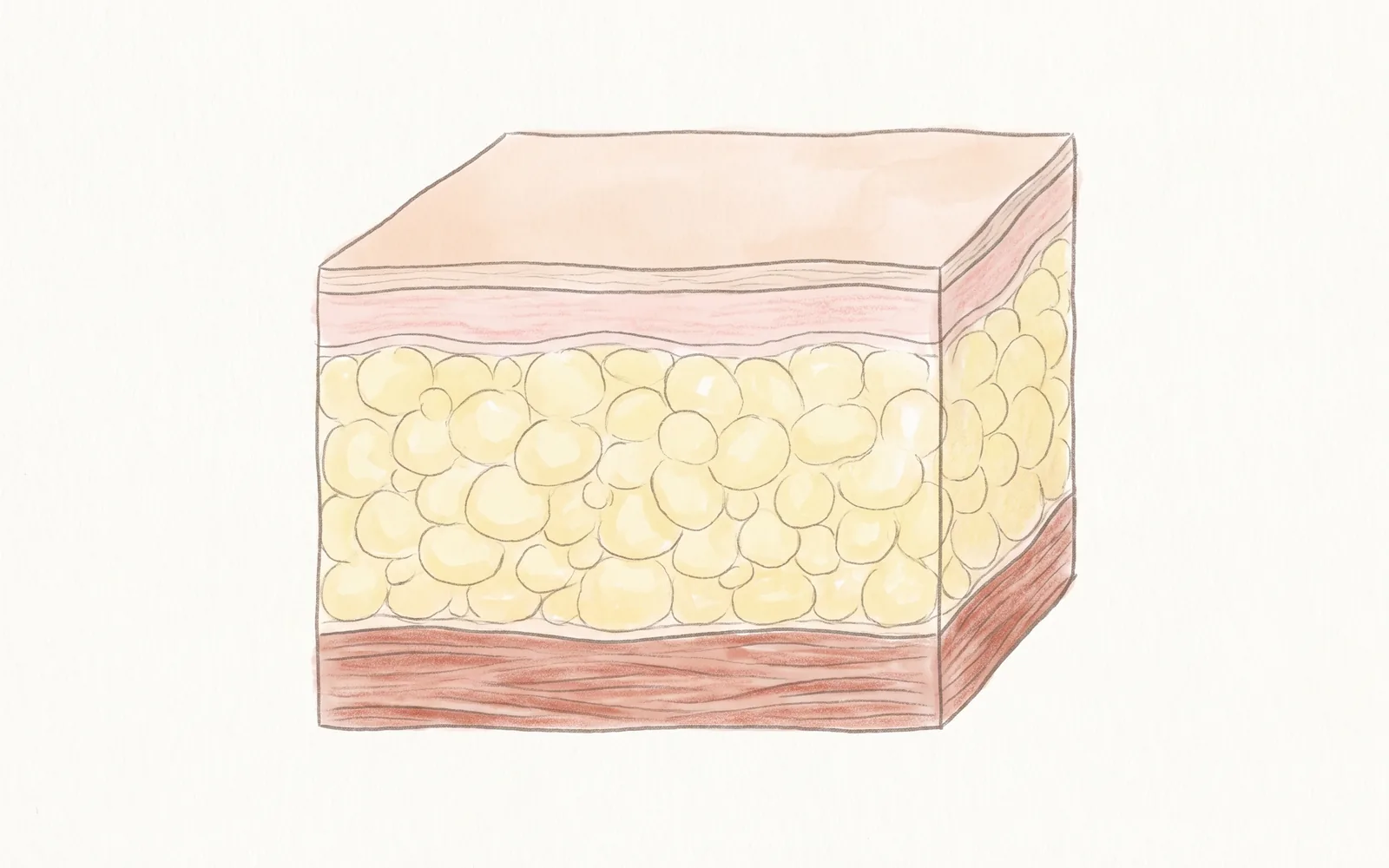
The illustration is an explanatory illustration to aid understanding, and procedure results vary by individual. The actual method is determined individually during consultation.
Ear filler — frequently asked questions
Ear filler outcomes and duration vary with individual tissue condition, injection volume, and product characteristics, and a detailed evaluation through consultation is necessary.
In what cases is it good to seek consultation for ear filler?
Common consultations include ears that lie back and are not well visible from the front, ears with the auricular rim folded backward, thin earlobes or straight attached “knife” earlobes, ears with left–right asymmetry, ears whose shape changed after ear cartilage was harvested during nose surgery, and auricular rims made bumpy by piercings or injuries. Even among ears that lie back, the fold location differs, so we examine the ear directly in consultation before planning.
For ears that lie back, isn’t it enough to raise only the rear root of the ear?
Injecting filler only at the rear root can make the ear stand a little, but the difference visible from the front may be small. In more than half of those presenting with ears that lie back, the root stands but the ear is folded backward relative to the central cartilage (antihelix), so smoothing the folded inner side of the auricular rim (scapha) and shaping the rim are needed for the ears to be visible from the front.
Will ear filler make the face look smaller?
It can look smaller. When the ears are set more forward, the face can appear wider from the front while the vertical length stays the same, changing the face’s horizontal-to-vertical ratio. The ears can also act as a frame, making the facial features look more defined. How different it looks varies by ear size and cartilage condition, as well as face shape.
Can the midface look shorter with ear filler?
The vertical length of the ear is usually similar to the distance from just below the eyebrows to the tip of the nose. If the bottom of the ear sits well above the nasal tip, the midface can look long; by bringing the lower ear closer to the nasal tip height with ear filler, the midface can look relatively shorter even if the proportions of the features stay the same.
What kind of ear is called a ‘kal-gwi’?
It refers to an ear with little to no earlobe, where the lobe is not rounded but looks pulled back and attached to the face in a straight line. People often worry that earrings do not suit them well because the earlobe area is small. After Facelift surgery, the ear can be pulled and change to a kal-gwi-like shape.
Can a kal-gwi be rounded with earlobe filler?
Because the earlobe is soft tissue without bone or cartilage, its shape can be created with filler. A sharply attached earlobe can be widened into a thicker, streamlined curve, and the transition area where the earlobe connects to the lower ear is also rounded naturally so the lower ear does not look awkward when the lobe becomes thicker.
Do some people get earlobe filler for physiognomy reasons?
Quite a few people inquire about earlobe filler because of the saying that thick earlobes bring good fortune. Kwak Yeojin wrote on the blog, 「I’m not sure whether earlobe filler will actually bring wealth luck.」 However, with the idea that pleasing-looking ears can also feel pleasing, the consultation discusses making the helix round and smooth and the earlobe moderately plump.
I heard an earlobe crease increases dementia risk—does smoothing it with filler help?
There are studies on the relationship between earlobe creases and cerebrovascular disease or dementia, but other studies indicate that an earlobe crease alone is not accurate enough to diagnose disease. Even if filler smooths the crease, it does not remove the cause, so it does not reduce disease risk.
If a crease appeared suddenly, it is advisable to get relevant tests. If a crease you have had since childhood has deepened, it may be an ear-shape issue, and filler can round and smooth the earlobe.
My left and right ear shapes are different—can they be made to match?
People’s ears often differ in left-right size and how upright they are. We reduce the difference by adding more volume to the ear that lies flatter to set it up more, and refining only the rim line on the other side. Since the original shapes differ, there may be limits to making them completely identical.
After harvesting ear cartilage for nose surgery, my ear collapsed—can I get ear filler?
In many cases, yes. The degree to which cartilage regrows after harvesting varies by person; if the ear is small and the cartilage thin, the ear can sink or change shape. Filler can set the ear upright and widen narrowed, folded areas, but if the cartilage has hardened after surgery, there may be limits to how much it can be straightened.
Can an ear with rigidly folded cartilage be unfolded too?
Ears with a hard, thick central cartilage and a helix folded sharply backward can sometimes be straightened with filler. If the ear itself is sufficiently large, simply supporting the folded area often changes the visible frontal area well; results vary depending on cartilage condition.
Can you make the upper ear pointy like a ‘fairy ear’?
A fairy ear is overall upright with a large helix and a pointed, not rounded, upper tip. This adds detailing to the basic ear-setting procedure to make the upper helix pointier, and the desired sharpness is decided together in consultation because preferences vary. The helix is the most challenging area to shape since cartilage form differs by person.
If I don’t like ear filler done elsewhere, can it be redone?
In consultation, we first check where the existing filler was placed. If it was injected only into the posterior root of the ear so the front view changed little, one option is to leave it as is and add filler to refine the helix and earlobe shape on top. If you know the previous treatment date and product, please let us know.
After ear filler, when can I re-pierce my earlobe?
If the ear gets larger and the earlobe wider after ear filler, the position of the existing piercing can look awkward. After swelling subsides and the filler settles, a new position is usually chosen and pierced 2–4 weeks after the procedure. ImageUp Plastic Surgery also offers ear piercing.
Where is the best place to pierce after ear filler?
A position slightly below the center of the earlobe and a bit toward the face looks balanced. It should be at least 5 mm above the very bottom edge of the lobe so that heavier earrings do not look droopy. We also check that the earring faces forward in the front view and harmonizes with the helix line.
How much swelling or pain occurs after the procedure?
Right after the procedure, the ear can become red and bruised, which often subsides within a few days. You may feel throbbing or tightness in the ear afterward. The degree of swelling and pain varies by person.
Do middle-aged people or men also get ear filler?
Yes. At first, many younger people came to set the ears more upright, but recently consultations have become diverse, including middle-aged women wanting to correct both a folded ear and kal-gwi, people in their 40s concerned that small ears are not visible from the front, and men in their 60s with deep earlobe creases.
What product is used for ear filler?
ImageUp Plastic Surgery uses body filler products such as e.p.t.q. eve s plus (Eptiq eve s plus)·SketchFill according to the area and purpose. The products used are explained during consultation.
How long does ear filler last?
Duration varies depending on the type of filler, injection site, injected volume, and individual tissue characteristics.
Are there any side effects?
Immediately after the procedure, swelling and bleeding from injections may occur. In the early period, the area may feel firm or uneven due to swelling.
However, if a distinct lump persists over time or redness, warmth, or pain accompanies it, you should consider not only simple filler clumping but also possibilities such as inflammation or nodules. A delayed inflammatory reaction may occur long after the filler procedure, with swelling, redness, or firm nodules appearing at the injection site. Because various causes such as infection or immune reactions may be involved, it is important to confirm the cause through medical evaluation rather than assuming it is simply filler clumping and massaging or self-treating.
If filler enters a blood vessel or compresses it and obstructs blood supply, vascular occlusion can occur and lead to serious complications such as skin damage. If severe pain persists right after the filler procedure, the skin turns white, or mottled color changes appear, you should check for the possibility of circulatory compromise rather than simple swelling or bruising. Because vascular occlusion requires rapid judgment and management, if these symptoms appear, do not wait—contact the clinic that performed the procedure immediately and receive care.
During the pre-procedure consultation, we review personal risk factors such as medications, allergies, and past procedure history. Depending on the individual, side effects such as bleeding, infection, swelling, asymmetry, and scarring may occur and vary in degree, so please decide after sufficient consultation with a specialist.
Are there any post-procedure precautions?
Right after the procedure, it is best to avoid heavy drinking, strenuous exercise, and saunas, which can increase bruising and swelling. Also, unless specifically instructed by medical staff, do not press hard or massage the injection area on your own to “shape” the filler. Care methods may vary depending on the treated area and the product used.
Can I get it during pregnancy or while breastfeeding?
If you have pregnancy or breastfeeding plans, please inform us during the prior consultation. We will adjust the procedure timing together depending on individual circumstances.
How do I book a consultation for ear filler?
You can receive guidance to book a consultation via KakaoTalk 1:1 or by phone (+82-2-555-1550).
Can foreigners also receive a consultation?
ImageUp Plastic Surgery is registered as a medical institution for attracting foreign patients (admitted specialty: Plastic Surgery). If you inquire about consultation language and booking methods, we will guide you.
Depending on the individual, side effects such as bleeding, infection, swelling, asymmetry, and scarring may occur, and the degree may vary. Please make your decision after sufficient consultation with a specialist.
Check other body filler areas as well
For additional inquiries, contact us via KakaoTalk
1:1 KakaoTalk pre-inquiry — Mon–Thu 10:00 - 19:00 · Fri 10:00 - 21:00 · Sat 10:00 - 16:00.