

Body Filler
Pelvic Filler
A non-surgical procedure that fills side pelvic depressions and hip dips to refine the curve from the waist to the legs. Injection sites are planned differently depending on body shape.
At a Glance
Pelvic filler is a non-surgical procedure that refines the curve connecting the waist, pelvis, and legs by placing hyaluronic acid (HA) body filler into the hollow areas at the side of the pelvis and the hip dip. Director Kwak Yeojin divides body shapes into four types based on the most protruding point of the pelvic bone (ASIS) and the height of the ischial tuberosity that touches the chair when sitting, and determines different filler placement points depending on the type. The degree of change varies by individual.
On which areas is the pelvic filler procedure performed?
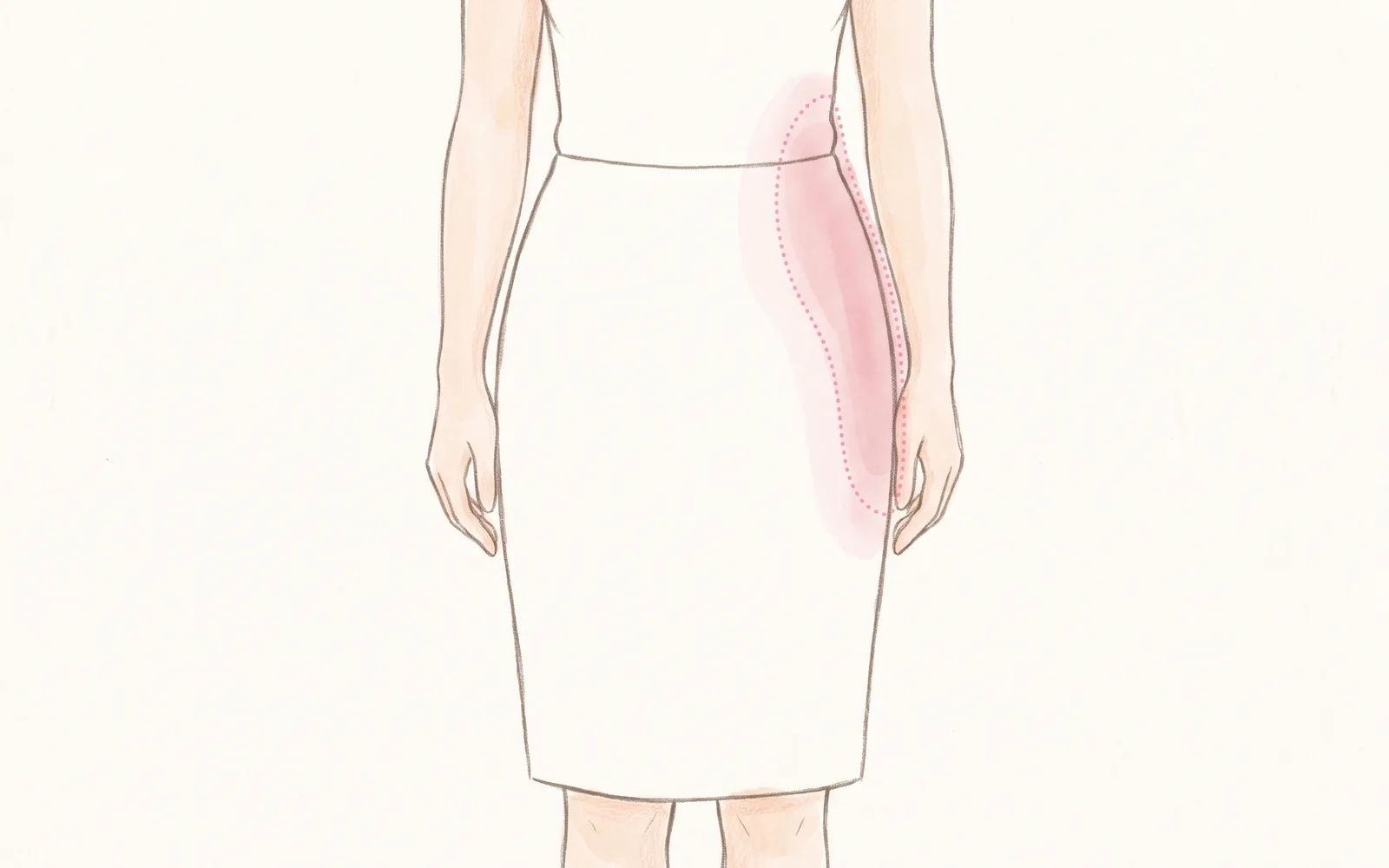
The illustration is an explanatory illustration to aid understanding, and procedure results vary by individual. The actual method is determined individually during consultation.
Things to consider before a pelvic filler procedure
Pelvic Filler — KakaoTalk 1:1 Consultation
Area condition and prior procedure history — You can make a preliminary inquiry via KakaoTalk before your visit.
Pelvic filler, what changes can be expected?
For pants fit, leg length is often judged from the most protruding point of the pelvic bone. By filling the hip dip to naturally connect the buttock line and the leg line, you can expect the effect of legs looking longer.
When the pelvis gains volume, the waist may look slimmer by comparison. The degree of change varies by individual.
How does the procedure proceed?
In consultation, we assess the heights of the pelvic bone and the area under the buttocks, the waistline, and the depth of the hip dip to categorize the body type and then determine the volume points. Rather than indiscriminately filling only the side of the pelvis, we design to lift the center of volume upward.
In a slender body type, the distance to major blood vessels and nerves is short. Director Kwak Yeojin uses real-time ultrasound to check subcutaneous fat thickness and layers the filler along the tissue planes on top of the fascia enveloping the muscle. Swelling and bruising after the procedure vary by individual.
How are pelvic body types categorized?
A classification created by Director Kwak Yeojin while designing pelvic and buttock fillers, which the director calls “Dr. Yeojin’s classification.” It is divided based on the most protruding point of the pelvic bone (ASIS) and the height of the ischial tuberosity that touches the chair when sitting.
| Type | Body shape characteristics | Perceived effect |
|---|---|---|
| Type 1 (ASIS high · ischial tuberosity high) | A type with both a high pelvis and an elevated hip line | Proportion that makes the legs look longest |
| Type 2 (ASIS high · ischial tuberosity low) | A type with a high pelvic position but sagging or low formation under the buttocks | The waist looks long and the leg starting point looks low, making the legs appear shorter than they are |
| Type 3 (ASIS low · ischial tuberosity high) | A short-waisted type with a low pelvic position but an elevated lower hip line | The waist looks short, but the leg starting point looks high |
| Type 4 (ASIS low · ischial tuberosity low) | A type with both the pelvis and the area under the buttocks positioned low | The lower body appears overall short |
※ Type 1 focuses on smoothing the side line centered on the hip dip, while Types 2, 3, and 4 have different points where volume is emphasized for each type. The actual design is determined in consultation after assessing the body shape.
How is it different from transferring waist fat to the pelvis?
The method of suctioning waist fat and putting that fat into the pelvis (Heopagori) and the method of refining the waist with Liposuction and filling the pelvis with Filler (Heopagolpil) were placed side by side as explained by Director Kwak Yeojin.
| Category | Heopagori (waist suction + pelvic Fat Grafting) | Heopagolpil (waist suction + pelvic Filler) |
|---|---|---|
| What is put into the pelvis | Your own fat harvested from the waist | Body-specific hyaluronic acid (HA) filler |
| Amount of volume | Depends on the amount of pure fat obtained from the waist and is often insufficient | Adjust the amount to match pelvic structure and hip dip depth |
| When results are seen | Because engraftment rate varies by person (usually around 30–50%), you have to wait a few months | You can visually check curves and volume immediately after the procedure and it is easier to match left–right symmetry |
| Additional suction areas | If fat is lacking, you may need to suction more from the thighs or abdomen | Focus only on recovery of the waist liposuction area |
※ If you do not have a body type with a lot of fat in the waist, rather than forcing transplantation with insufficient fat, we also consult on refining the waist with liposuction and filling the pelvis with filler.
How are the tissues under the skin structured?
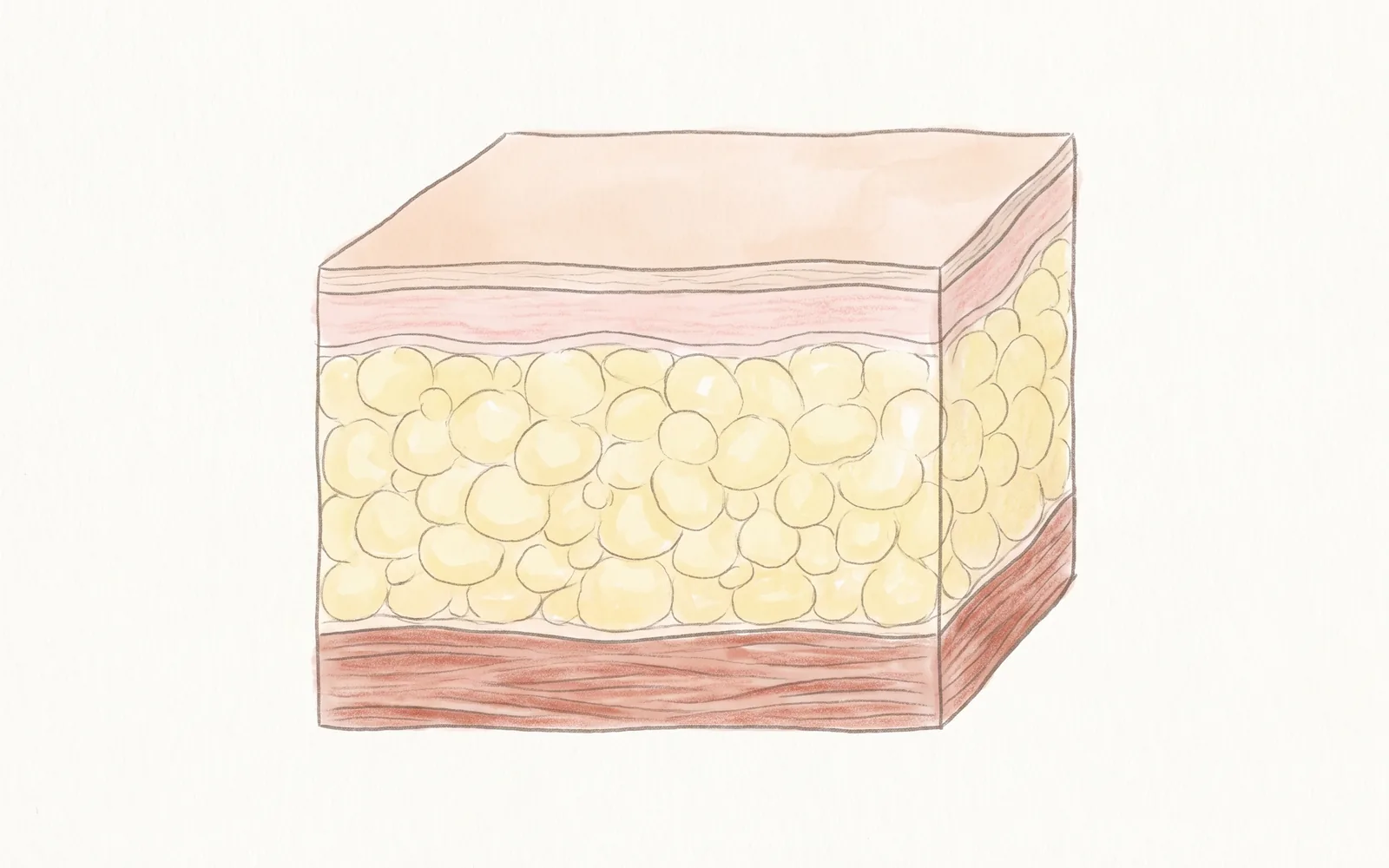
The illustration is an explanatory illustration to aid understanding, and procedure results vary by individual. The actual method is determined individually during consultation.
Pelvic filler FAQs
Pelvic filler results and duration vary depending on body type, injection volume, and product characteristics, and a precise evaluation through consultation is necessary.
What products are used for pelvic filler?
ImageUp Plastic Surgery uses body filler products such as e.p.t.q. eve s plus (Eptiq eve s plus)·SketchFill according to the area and purpose. The products used are explained during consultation.
Can pelvic filler make legs look longer?
The actual leg length does not increase; the visible proportions change. Kwak Yeojin explains that legs do not look longer just because the pelvic bone is high; the lower buttock line around the ischium also needs to support the proportion. Therefore, the design lifts the focal point of volume upward.
From where do you measure leg length?
Medically, actual leg length is measured from the most prominent point of the pelvic bone (ASIS) to the medial malleolus. The leg length people perceive with their eyes is from the leg starting point that continues from the lower buttock line to the medial malleolus. What pelvic filler changes is the posterior, visually perceived leg length.
What is Dr. Yeo-jin's classification?
A body-type classification created by Kwak Yeojin when designing pelvic and buttock filler. It is divided into four types, Type 1 to Type 4, depending on whether the heights of the most prominent point of the pelvic bone (ASIS) and the ischial tuberosity are each high or low.
How does the procedure differ by body type?
For Type 1, where both the pelvis is high and the hip line is elevated, only the side line is smoothly refined mainly in the hip dip area. For Type 2, 3, and 4, the procedure difficulty is higher, and the locations where volume is focused differ by type.
Can’t you put fat removed by waist liposuction into the pelvis?
It is possible, but Kwak Yeojin says cases with satisfactory results were fewer than expected. The waist is not an area where much fat is stored, so pure fat to fill the pelvis and hip dip is often lacking, and the suctioned fat is mixed with blood and solution, reducing the actual usable amount. In areas like the pelvis with much movement and pressure, the engraftment rate also varies by person and is usually around 30–50%.
What is Heo-pa-gol-fill?
A combination where the waist is refined with liposuction and the pelvis and hip dip are filled with a body-specific filler. Regardless of how much fat comes out of the waist, the filler amount can be adjusted to match pelvic structure and hip dip depth, and it is advantageous for checking curves immediately after the procedure and matching left–right symmetry.
Can a slim body type with almost no fat to remove still get pelvic filler?
Yes. Kwak Yeojin recommends using filler rather than fat grafting for slim people with few areas to harvest fat from, because filler allows you to set the required amount regardless of the body’s fat volume.
Why does a hip dip occur?
A hip dip appears when the gluteus medius between the iliac crest beside the pelvis and the femur is small, making that area look sunken. Posture, lack of exercise, and body type also influence it, but the decisive factor is innate body type. In East Asians, the gluteus medius is not greatly developed and the surrounding fat is relatively little, so the hip dip often appears deep.
Does pelvic filler make the waist look slimmer?
When the pelvis gains volume, the contrast between the waist and pelvis increases, so the waist can appear relatively slimmer. The degree varies by individual.
How many cc of pelvic filler are used?
It depends on body type and the desired line. In a case introduced on Director Kwak Yeojin’s blog, the procedure was performed on the buttocks and pelvis together and 700cc went in. The required amount is decided after consultation and ultrasound confirmation.
Will the filler edges be noticeable right after the procedure?
Around 2 weeks after the procedure, the boundary area of the filler may be a bit noticeable. Kwak Yeojin explains that in many cases this becomes natural after about a month.
Why is pelvic filler more challenging for a slim body type?
Because with a thin fat layer, if the depth is even slightly off or the left and right are injected differently, the filler can be palpable on the surface or unevenness can be immediately visible. Kwak Yeojin says that the 1 mm difference in layer is more important the slimmer the body type, and injects while checking subcutaneous fat thickness with real-time ultrasound.
Is there a reason an Obstetrics & Gynecology Specialist (Korea) performs pelvic filler?
Obstetrics & Gynecology is a field that deals with female pelvic anatomy and body shape changes according to hormones. Obstetrics & Gynecology is a field that routinely deals with pelvic vascular/nerve anatomy and ultrasound.
Are there any side effects?
Immediately after the procedure, swelling and bleeding from injections may occur. In the early period, the area may feel firm or uneven due to swelling.
However, if a distinct lump persists over time or redness, warmth, or pain accompanies it, you should consider not only simple filler clumping but also possibilities such as inflammation or nodules. A delayed inflammatory reaction may occur long after the filler procedure, with swelling, redness, or firm nodules appearing at the injection site. Because various causes such as infection or immune reactions may be involved, it is important to confirm the cause through medical evaluation rather than assuming it is simply filler clumping and massaging or self-treating.
If filler enters a blood vessel or compresses it and obstructs blood supply, vascular occlusion can occur and lead to serious complications such as skin damage. If severe pain persists right after the filler procedure, the skin turns white, or mottled color changes appear, you should check for the possibility of circulatory compromise rather than simple swelling or bruising. Because vascular occlusion requires rapid judgment and management, if these symptoms appear, do not wait—contact the clinic that performed the procedure immediately and receive care.
During the pre-procedure consultation, we review personal risk factors such as medications, allergies, and past procedure history. Depending on the individual, side effects such as bleeding, infection, swelling, asymmetry, and scarring may occur and vary in degree, so please decide after sufficient consultation with a specialist.
Are there any post-procedure precautions?
Right after the procedure, it is best to avoid heavy drinking, strenuous exercise, and saunas, which can increase bruising and swelling. Also, unless specifically instructed by medical staff, do not press hard or massage the injection area on your own to “shape” the filler. Care methods may vary depending on the treated area and the product used.
I’ve had filler in another area before—should I mention it during consultation?
Yes. If you know the location, timing, and type of your existing filler, please share it during consultation. It will be taken into account in the treatment plan.
Can I get it during pregnancy or while breastfeeding?
If you have pregnancy or breastfeeding plans, please inform us during the prior consultation. We will adjust the procedure timing together depending on individual circumstances.
How do I book a consultation for pelvic filler?
You can receive guidance to book a consultation via KakaoTalk 1:1 or by phone (+82-2-555-1550).
How long does Pelvic Filler last?
Pelvic filler results and duration vary depending on body type, injection volume, and product characteristics, and a precise evaluation through consultation is necessary.
Depending on the individual, side effects such as bleeding, infection, swelling, asymmetry, and scarring may occur, and the degree may vary. Please make your decision after sufficient consultation with a specialist.
Check other body filler areas as well
For additional inquiries, contact us via KakaoTalk
1:1 KakaoTalk pre-inquiry — Mon–Thu 10:00 - 19:00 · Fri 10:00 - 21:00 · Sat 10:00 - 16:00.