

Upper Blepharoplasty
What is upper blepharoplasty surgery?
It is a surgery that improves drooping eyelids by organizing the skin, muscle, and unnecessary fat of the upper eyelid that has sagged due to aging.
It improves the impression that looks stuffy due to sagging skin, and by appropriately removing skin that obstructs the visual field, it can create clearer and younger-looking eyes. The degree of eyelid ptosis, skin elasticity, amount of fat, and existing eye shape are comprehensively considered to pursue a natural and harmonious result.
At a Glance
If ptosis with reduced function of the eye-opening muscle is present, Ptosis Correction can be considered together. After surgery, swelling and scars gradually stabilize, and the final eye shape may change over several months depending on individual recovery.
Upper Blepharoplasty Surgery Process
- 1Before surgeryThe condition is checked where the upper eyelid is drooping due to aging and the skin is sagging, obstructing the visual field or making the eyes look stuffy.
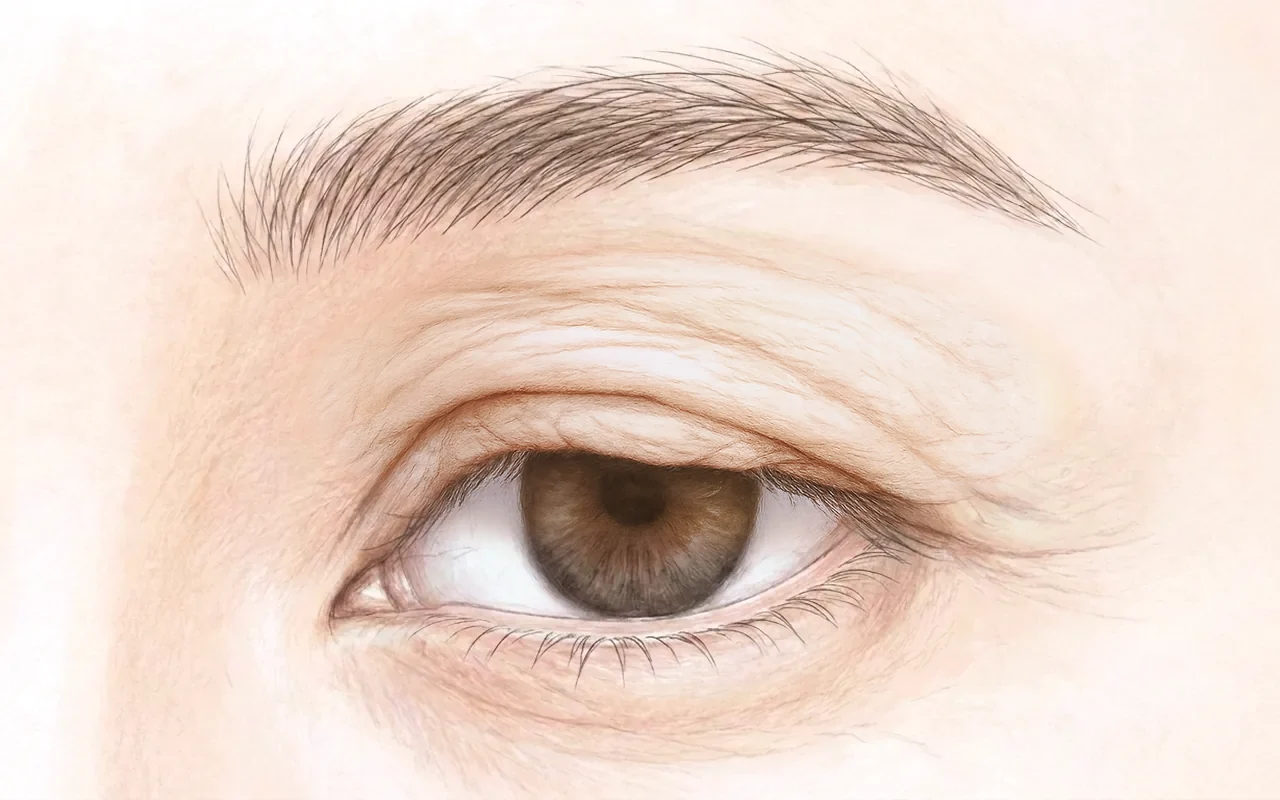
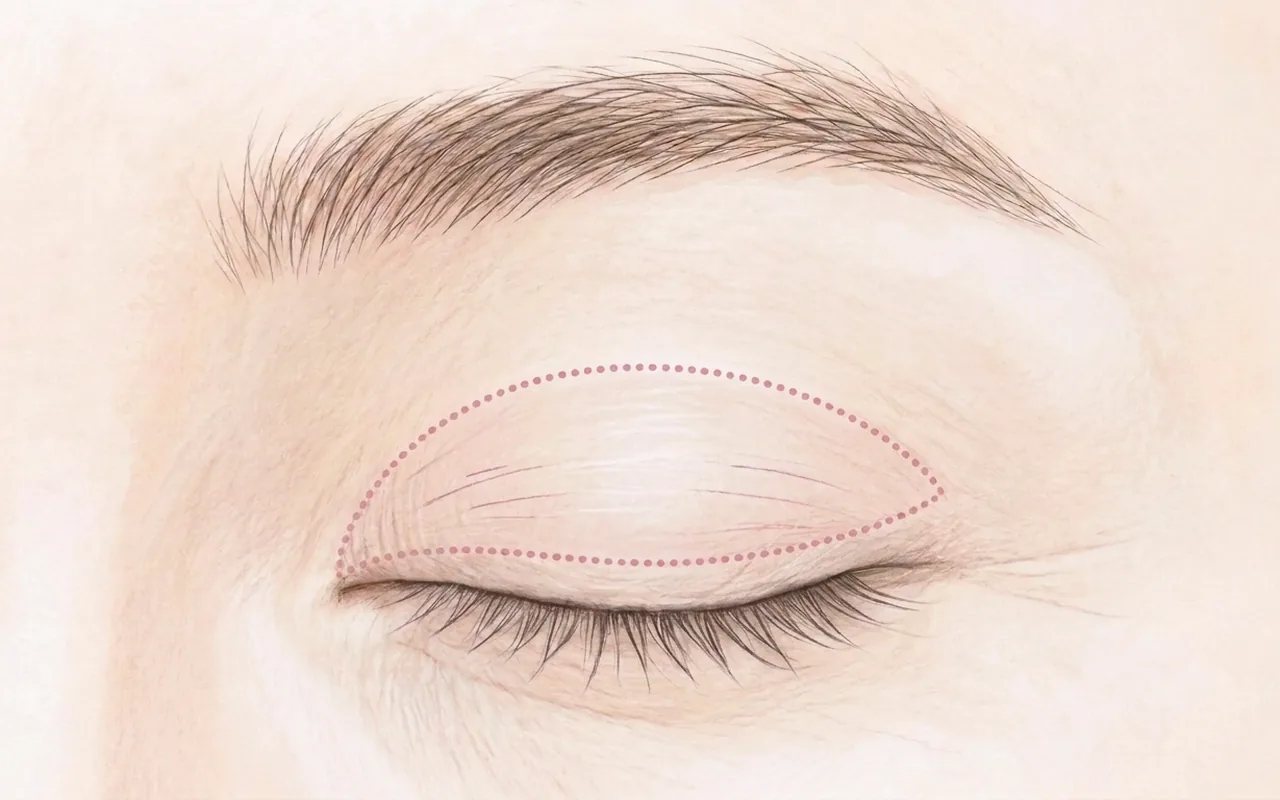
- 2Incision Line Design and Skin IncisionConsidering the existing or newly designed double eyelid line, the incision line is determined and the sagging skin is incised as planned.
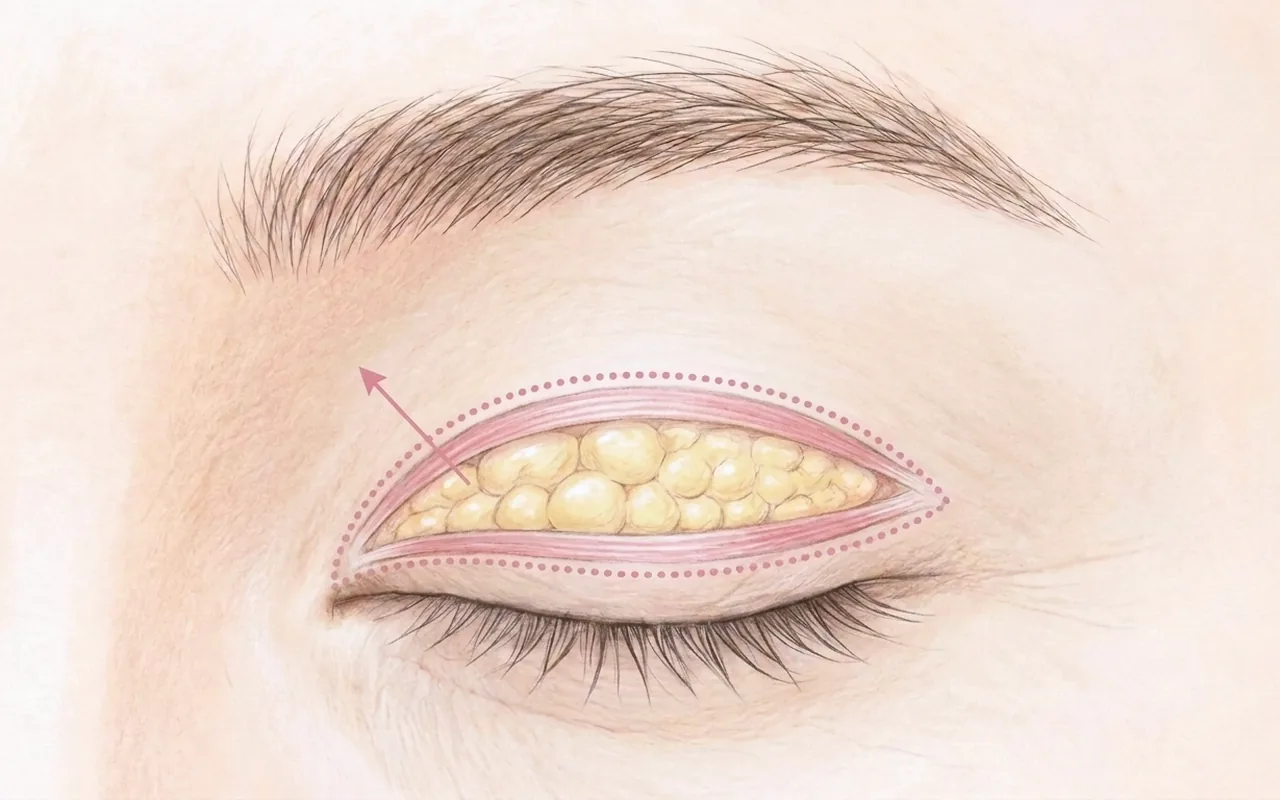
- 3Organizing sagging skin, muscle, and fatThe sagging skin is appropriately removed, and if necessary, the orbicularis oculi muscle and protruding or excessive fat are organized together to correct the thickness and shape of the upper eyelid.
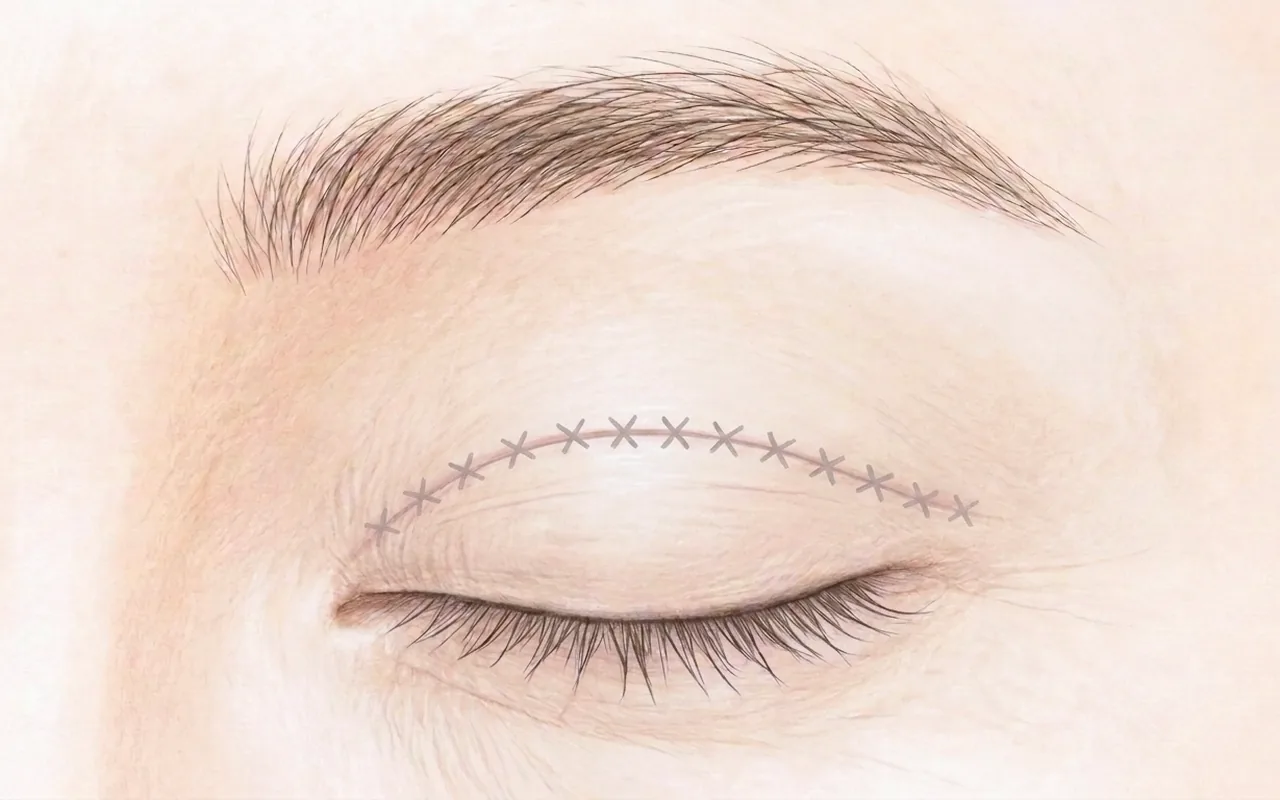
- 4Suturing and finishingWhile checking the eye shape and left-right balance, the incision site is meticulously sutured to complete with a natural double eyelid line and clearer eye shape.
Points of Upper Blepharoplasty Surgery
Upper Blepharoplasty, KakaoTalk 1:1 Consultation
The anesthesia method and recovery schedule for upper blepharoplasty can be inquired in advance via KakaoTalk before the consultation.
Upper Blepharoplasty Surgery Key Summary
If there is blepharoptosis, ptosis correction surgery may be performed together.
The range of skin excision and whether to perform ptosis correction concurrently are determined during the consultation after evaluating the eyelid condition.
Recommended for
- When the upper eyelid is drooping, making the eyes look small
- When there is a feeling that sagging skin is obstructing the visual field
- When the upper eyelid is thick and heavy, giving a stuffy impression
- When the existing double eyelid line becomes blurred or obscured with age
- When the forehead or eyebrows are used a lot when opening the eyes
Postoperative precautions
In the initial period after surgery, swelling and bruising may appear and gradually improve. Cold compresses may help for the first 2-3 days, and it is recommended not to rub the eyes vigorously or apply strong stimulation to the surgical site.
Alcohol consumption, smoking, and excessive exercise should be avoided in the early recovery period, and the schedule for suture removal and follow-up observation should follow the medical staff's guidance. The recovery process and period may vary depending on the individual's skin condition and the extent of surgery.
Frequently Asked Questions
If the eyelids are sagging and the eyes look smaller, will Upper Blepharoplasty improve this?
If sagging skin of the upper eyelid covers the eyes, the drooping skin can be appropriately trimmed through Upper Blepharoplasty to improve the appearance toward a clearer, more open-looking eye shape. It may be especially helpful when the double eyelid line is covered by skin or when the outer corners of the eyes droop, making the eyes look heavy.
If I have Upper Blepharoplasty, won’t the double eyelid become too prominent or make my expression look too intense?
It does not necessarily mean creating a large, prominent double eyelid. It is important to design it naturally, taking into account the existing eye shape and double eyelid height, the degree of skin laxity, and the distance between the brow and the eye. Surgery may also be performed in a way that refines sagging skin while preserving the existing impression as much as possible.
Can the original double eyelid be preserved as is?
If the position and shape of the existing double eyelid are appropriate, sagging skin can be removed while preserving them as much as possible. Conversely, if the double eyelid has come undone or there is asymmetry, adjusting the line together with Upper Blepharoplasty can be considered.
What is the difference between Upper Blepharoplasty and Sub-brow Lift?
Upper Blepharoplasty is surgery that directly removes sagging skin from the eyelid, and Sub-brow Lift is surgery that excises skin below the eyebrow to pull sagging tissue upward. The appropriate method differs depending on the location and degree of skin sagging, the distance between the eyebrows and the eyes, the existing double eyelid shape, and other factors.
Between Upper Blepharoplasty and Sub-brow Lift, which is more natural?
No single method is always more natural. We need to check whether you want to preserve the existing double eyelid as much as possible, whether the eyebrows themselves have descended, and in which area the eyelid skin has sagged more, among other factors. Selecting a method suited to the individual's eye structure is more important for a natural result.
If I have Upper Blepharoplasty, will my eyes open more widely?
If sagging skin was covering the eyes, removing it may make the eyes appear more defined. However, if there is ptosis with weak eyelid-opening muscle strength, removing skin alone may not be sufficient, so we also check whether Ptosis Correction is needed.
I have ptosis. Can I have Upper Blepharoplasty only?
It depends on the degree of ptosis. If the strength used to open the eyes is actually weak, removing only the sagging skin may make it difficult to achieve the desired degree of improvement. During consultation, we check skin laxity together with eyelid-opening strength to decide whether to perform Upper Blepharoplasty alone or together with Ptosis Correction.
If the eyelids are thick, is fat also removed at the same time?
If the cause of thick eyelids is fat, some of the fat can be trimmed as needed. However, if upper eyelid fat is removed excessively, the area above the eyes may appear hollow over time, so it is important to identify the cause and adjust only as much as necessary rather than removing it unconditionally.
Is it okay to have Upper Blepharoplasty even if the area above the eyes is already hollow?
It is possible, but the surgical plan may change. If the area above the eyes is hollow, excessively removing skin and fat may make the hollowness more noticeable. Therefore, the amount of skin excision is adjusted conservatively, and depending on the condition, methods to supplement volume can also be considered.
If the outer corners of the eyes are sagging a lot, does that also improve at the same time?
If the outer upper eyelid skin is lax and covers the outer corner of the eye, this can be improved by taking the outer sagging into account when designing Upper Blepharoplasty. However, if a significantly descended brow itself is the main cause, other methods such as a Sub-brow Lift or Forehead Lift may be more appropriate.
Are Upper Blepharoplasty scars very noticeable?
In general, because the incision is designed along the double eyelid line, it tends to be relatively hidden when the eyes are open. In the early period, the incision line may appear red or feel firm, but it gradually stabilizes over time. There are individual differences in the speed and degree of scar maturation.
How long do swelling and bruising last? When is it possible to return to work?
In the early period after surgery, swelling and bruising may occur and usually decrease gradually over time. Even after major swelling has gone down, residual swelling and redness of the incision line may remain. When you can return to work varies depending on the extent of surgery, each individual's degree of recovery, and occupation, so if you have important schedules, it is advisable to plan with extra time.
If I have Upper Blepharoplasty, will the habit of raising my eyebrows also improve?
If sagging skin made the visual field feel obstructed and you had been unconsciously tensing the forehead and eyebrows, this habit may decrease after the skin laxity is improved. However, if other causes such as weak eyelid-opening strength or brow drooping are also present, a separate evaluation is needed.
My eyes sag differently on each side. Can you also even out the asymmetry?
If the degree of skin laxity and the double eyelid height differ on each side, we can design different amounts of excision and different crease lines for each side before surgery to improve the asymmetry. However, because there can also be congenital asymmetry such as eyebrow height, eye position, and eyelid-opening strength, the goal is to achieve overall natural balance rather than making them completely identical.
From what age is it good to have Upper Blepharoplasty? If I have it once, will I need to have it again?
This is not a surgery for which a specific age is set. The decision is based on the current degree of skin sagging and the level of functional and aesthetic discomfort, such as when sagging skin covers the eyes or makes the visual field feel obstructed, or when the double eyelid line is buried. Because aging continues after surgery, the skin may sag again after a long time has passed, and additional treatment may be considered depending on the condition.
My eye-opening strength is insufficient and my forehead hurts every evening; why is that?
Question details: I have monolids but not sleepy eyes. It seems I use the eyebrow muscles to open my eyes due to insufficient eye-opening strength, and around evening my forehead hurts like a headache, or more precisely, the eyebrow muscles hurt as if tired.
First, an accurate evaluation is needed to determine if there is ptosis, that is, difficulty with the eye-opening muscle. The above symptoms can appear when the strength of the eye-opening muscle is weak. Surgery can be performed in various ways depending on the degree of strength of the eye-opening muscle, the structure of the eyeball, eyelid skin, etc. First, please visit for consultation and an accurate diagnosis of the eye-opening muscle is necessary.
After pulling the eyelid, the double eyelid disappeared; has the eyelid stretched?
Question details: After tapping and pulling the eyelid, there is still no double eyelid as if the eye is swollen, and the pulled area has turned red.
It does not stretch from pulling once or twice. It is thought to be temporary swelling due to the pulling force and tension. However, if the eyelid is pulled repeatedly, the skin may stretch or be damaged.
3 months after incisional double eyelid and ptosis correction, the line looks broken; will it change more?
Question details: 3 months ago I had full incision, incisional ptosis correction, and medial epicanthoplasty. The mucous membrane in the middle part of one eye is slightly raised and the line does not go all the way, feeling slightly broken, so it looks blurry when taking photos. I am curious if it will not change any more as time passes.
If you had ptosis correction, changes can continue for 6 months or more after surgery. This is currently the period when scars etc. can be at their worst, so please do not be too stressed and observe the progress for a while.
What should I do if my eyes still look small even after double eyelid and ptosis correction?
Question details: I previously had double eyelid surgery and ptosis correction, but my eye size is still around average so they look small.
Changes in eye size after surgery depend most importantly on the anatomical structure of the eyes you have. If you had incisional ptosis correction, it is also good to consider medial epicanthoplasty, lateral canthoplasty, lower eyelid canthoplasty, etc.
Can the double eyelids be undone two days after Natural Adhesion·Ptosis Correction?
Question details: Two days ago I had Natural Adhesion, Ptosis Correction, and fat removal, but I want to undo it. 1. Before Double Eyelid Surgery I had a thin inner double eyelid; if undone, will it become a monolid or return to the original double eyelid 2. Is it better to undo it quickly before adhesion forms 3. Is the difficulty of the surgery on the difficult side 4. If undone, will the gap between the eyes and eyebrows return as before (it has become too close now) I am curious.
If it has only been 2 days since surgery, swelling etc. has not yet fully settled, so please reconsider. 1. It mostly returns to almost the original state, but because fat was removed, the line may change slightly. 2. You can remove it around one week after surgery. 3. It varies depending on the surgical method used, but it is not a difficult surgery. 4. If the anatomical structures were well preserved during surgery, it often returns close to the original state, but the line may differ depending on the condition.
Can a double eyelid fold form if the eyes become dry?
Question details: In the video titled 'Reasons why double eyelids appear or become deeper when tired,' it said that double eyelids form because moisture and fat are lost from the eyes. Apart from tiredness, I am curious whether double eyelids can form if the eyes become dry. A double eyelid fold suddenly appeared recently and it does not look good, so I want to remove it. When I asked on Jisik iN a while ago because my eyes hurt, I received a reply that my eyes seemed dry. I originally had a slight double eyelid line, so the fold appeared when lying down and disappeared when I got up. If dry eye syndrome is related to double eyelids, I am curious whether the double eyelid will disappear again if I keep my eyes moist.
It often occurs due to a combination of other causes such as changes in volume above the eyelid rather than dry eye syndrome alone. The YouTuber's answer about why double eyelids become deeper seems to refer to the problem of volume above the eyelid. There are quite a few reasons why volume above the eyelid changes. There are various causes such as recent weight changes, increase or decrease in eyelid volume, excess eyelid skin, thyroid disease, etc. If the unwanted double eyelid persists, you should visit a nearby plastic surgery clinic to receive a diagnosis of the cause.
After revision ptosis correction, the space between the eyebrows and eyes has become narrower. Will it become even narrower?
Question details: I underwent revision ptosis correction with incisional double eyelid surgery. It is now one month post-op and major swelling has mostly gone down, but the space between the eyebrows and eyes has become much narrower. I am curious whether the space between the eyebrows and eyes will become even narrower or more natural as the swelling goes down further.
After the incisional method or incisional ptosis correction, the eye-opening function improves and the drooping eyelid decreases, so the habit of raising the eyebrows to open the eyes before surgery disappears and the eyebrows return to their original position. This makes it feel as if the distance between the eyes and eyebrows has decreased. The current distance is the original distance between the eyebrows and eyes, and it was farther before surgery because the eyebrows were raised. Since it has been about one month, it is still far from the point where the eyes, eyelids, and eyebrows adapt and settle after ptosis correction. It takes at least 6 months or more. In most cases, as the scar improves and swelling decreases further, it becomes more natural over time, although the speed and degree of recovery vary from person to person.
It has been 3 months since incisional double eyelid surgery and sensation is still dull. Is this okay?
Question details: I had double eyelid surgery with the incisional method 3 months ago, but the feeling from when I was under anesthesia still remains. It is not completely there, but it does not feel like my own flesh, there is no sensation when applying shadow with a brush, and the sensation is dull. I am curious whether this is a problem if it continues even after 2 months have passed. I originally swell easily and my wounds heal slowly.
It has now been about 3 months. Usually, 3-6 months are needed for the scar to stabilize after incisional double eyelid surgery. After 3 months, swelling often subsides gradually and the scar becomes softer and more natural. However, the degree of recovery varies from person to person. People who usually swell a lot experience swelling for a little longer. Please observe the progress, but if the swelling or scar remains uncomfortable or gets worse, visit us to have it checked.
I had surgery yesterday. If both eyes look uneven, do I need revision surgery?
Immediately after surgery, swelling and bruising can appear differently on both sides, so eye size or eye tail position may look different. The asymmetry of the eyes you originally had also has an effect. Therefore, rather than judging left-right differences based only on the initial appearance, it is better to evaluate after swelling has sufficiently subsided and the tissue has stabilized.
If you are not satisfied with the epicanthoplasty surgery results, when can you have surgery again?
Question details: It seems not open enough and I feel upset.
Right after surgery, the eye shape continues to change due to swelling and scar contraction, so it is better not to decide on revision surgery too early. Unless there is a problem that requires early correction, the tissue and scar are allowed to stabilize sufficiently before evaluating the current condition to determine the timing and method of revision surgery.
Only one side is very swollen after revision eye surgery and canthoplasty. When should I get a swelling injection?
Question details: I underwent revision double eyelid surgery, incisional method, ptosis correction, medial epicanthoplasty, and dual canthoplasty (lateral canthoplasty and lower eyelid canthoplasty), and I am going to have the stitches removed tomorrow. The swelling does not seem to be going down and is similar to day 3, with little swelling on the right side but a lot on the left side like a sausage. It seems like it will be inconvenient to live with right away, so I am curious when I can get a swelling injection.
There are individual differences in swelling after surgery. If double eyelid surgery and canthoplasty are performed together, swelling, bruising, and conjunctival edema may occur more easily. Swelling and bruising become more severe for 2-3 days after surgery, and major swelling usually subsides about 1-2 weeks after stitch removal. Bruising and redness also gradually decrease. A swelling injection is helpful if received on the day of stitch removal, and improvement is faster if you also receive swelling laser treatment. Management such as cold compresses is also important.
After Lateral Canthoplasty and Lower Eyelid Canthoplasty, the outer eye corner looks too drooped. Will it rise a little over time?
Right after surgery, the outer eye corner may appear more drooped than expected due to swelling and fixed tissues. It is only that the outer eye corner appears lowered; the surgery does not forcibly lower the outer eye corner. As swelling subsides and tissues settle during the recovery process, the shape may become more natural, so it is difficult to judge the final result based only on the initial appearance.
Can eyes that have used a lot of double-sided tape, double eyelid tape be done with the non-incisional (buried suture) method?
The surgical method is determined in various ways depending on the desired double eyelid height or the current condition of the eyelids. Even if double-sided tape or double eyelid tape has been used, the non-incisional (buried suture) method can be performed if the skin is on the thin side and not sagging much. If skin elasticity is good, there is a lot of tissue, and there is remaining skin causing sagging, it is thought that surgery with the incisional method would yield better results.
Can double eyelids disappear after squeezing a stye?
Question details: I had a stye inside the eyelid and squeezed it. I originally had faint inner double eyelids, but today I noticed the inner double eyelid line at the back of the eye has completely disappeared. It seems over 6 months have passed since squeezing the stye.
Yes, as a stye forms and resolves, adhesion occurs between the tissues around the eyelid and the stye scar. If it is close to the double eyelid line, it affects the line. Double eyelids can disappear or form.
Depending on the individual, side effects such as bleeding, infection, swelling, asymmetry, and scarring may occur, and the degree may vary. Please make your decision after sufficient consultation with a specialist.
Eye surgery pages worth viewing together
Please also check midlife eye surgery and ptosis correction together.
For additional inquiries, contact us via KakaoTalk
1:1 KakaoTalk pre-inquiry — Mon–Thu 10:00 - 19:00 · Fri 10:00 - 21:00 · Sat 10:00 - 16:00.