

Body Filler
Shoulder Filler
This is a non-surgical procedure that fills and refines a rounded, sagging, or bony shoulder line with filler. In the consultation, we review body shape, posture, and lifestyle habits together.
At a Glance
Shoulder filler is a procedure that smooths an uneven or rounded, sagging shoulder line by filling the hollow space between the end of the clavicle, the acromion of the shoulder blade, and the upper part of the humerus with filler. The thinner the body type, the more these three bony points stand out, often making the shoulder line uneven. For women, the design is often toward a straight-falling shoulder line, and for men, toward making the shoulder width and volume appear larger; even with the same procedure, how it looks can vary depending on body type.
On which areas is the shoulder Filler procedure performed?
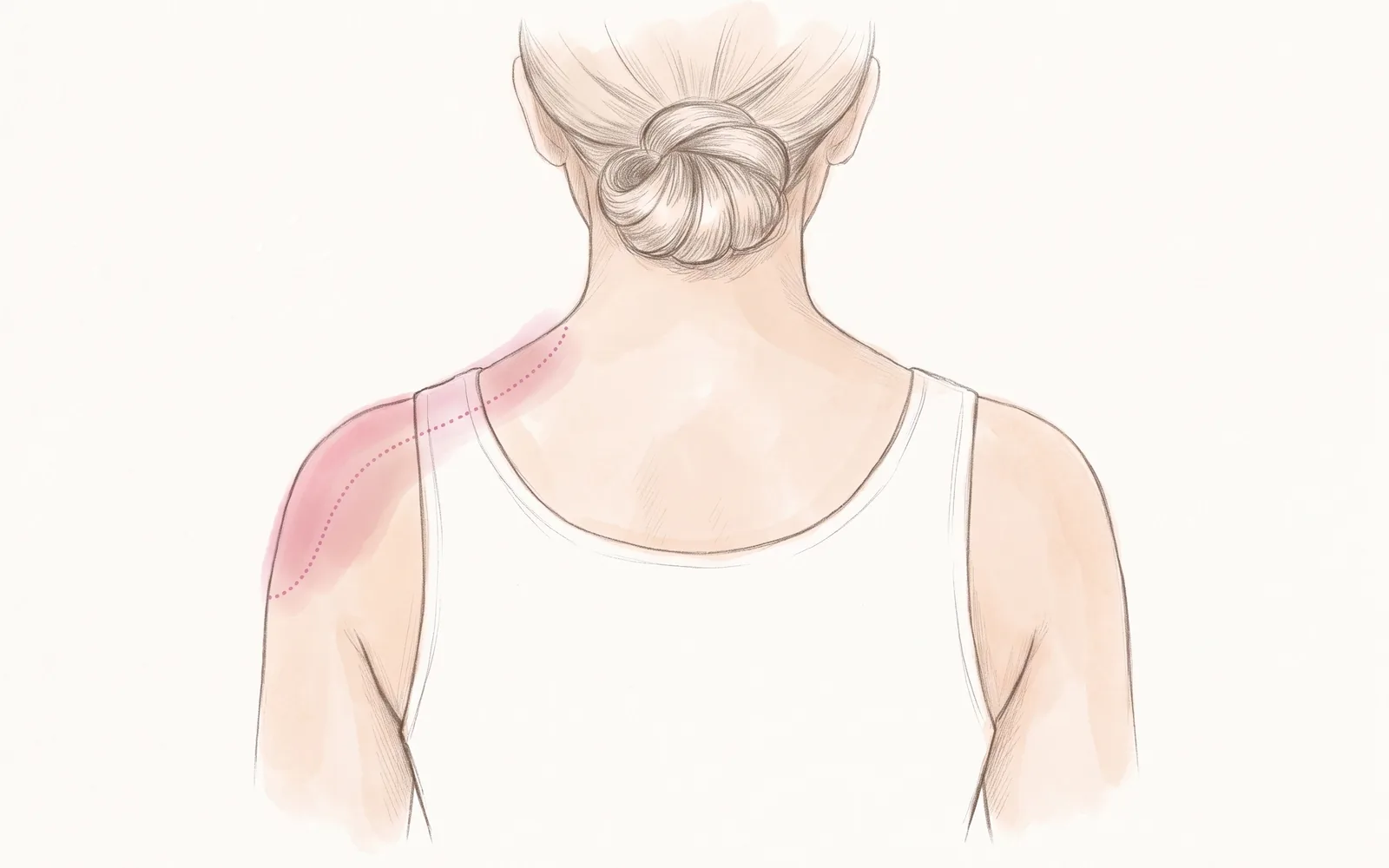
The illustration is an explanatory illustration to aid understanding, and procedure results vary by individual. The actual method is determined individually during consultation.
What types of shoulders most often seek consultation for shoulder filler?
Shoulder Filler — KakaoTalk 1:1 consultation
Area condition and prior procedure history — You can make a preliminary inquiry via KakaoTalk before your visit.
How does shoulder filler change the appearance?
If a rounded, rolled shoulder line is set into a straight angle, the upper body can look slimmer, and outfits that expose the shoulders, like off-shoulder tops or knits, may look different. If narrow shoulders appear slightly wider, the face can look relatively smaller, and if the shoulder tip stands straight, the trapezius may also appear smaller than it actually is.
Director Kwak Yeojin summarized two criteria for an attractive shoulder line on the blog: the clavicle line and shoulder line should connect naturally, and the apex where the shoulder ends should be at a height similar to the clavicle.
However, the Director wrote, “Unlike other procedures, shoulder filler may show more effect for some people and not for others.” If you have more soft tissue or originally broad shoulders, the degree of visible change may be small.
How do shoulder fillers differ for women and men?
| Category | Women | Men |
|---|---|---|
| Design direction | Women: To look slimmer, with the shoulder line falling at a right angle and the arm line dropping vertically | Men: To make the shoulders and arms look thicker and wider, and the muscles look larger |
| Main areas to fill | Women: The hollow between the end of the clavicle and the shoulder tip, and the outer side of sagging shoulders | Men: The overall contour of the deltoid; the back of the shoulder if it appears rolled forward |
| Required amount | Women: Varies by body type; in severe hanger-type shoulders, there is a case where a total of 30cc was used for both sides | Men: Generally requires more than for women; in the Director’s examples, totals for both sides were 30cc and 45cc |
Cases where shoulder filler is well-suited and less-suited
| Category | Body type and situation |
|---|---|
| When consultation is recommended | Hanger-type drooping shoulders, forward-rolled shoulders, when there is a bit of soft tissue on the upper arms, when narrow shoulders make the head look large, or when an event showing the shoulders (such as a body profile shoot or wedding) is upcoming |
| Cases where the visible change may be small | When there is a lot of soft tissue, or when the shoulders are originally broad |
How does the procedure proceed?
In consultation, we ask about daily habits and posture, sleeping habits, and whether you exercise or are dieting, then decide how to design the shoulder filler. Because body type and shoulder shape vary by person, we allow sufficient time for consultation.
After finalizing the design, local anesthesia is injected and the procedure is performed. The filler is placed not in the muscle, but in the space between the subcutaneous fat layer above the shoulder contour and the fascia, to supplement the shoulder line’s volume.
If the upper trapezius is thickly raised, the shoulder line does not look attractive, so a trapezius Botox procedure is also sometimes performed together. For those whose clavicle line is not well visible Clavicle FillerWhen done together, the line from the collarbone to the shoulder can connect more naturally.
How the director who used to perform liposuction looks at the shoulder line
Director Kwak Yeojin (Obstetrics & Gynecology Specialist (Korea)) has long performed liposuction since before doing body fillers. The sense built up while performing liposuction to shape the arm line is applied as-is to shoulder filler design.
“Because I have done a lot of liposuction to create the arm line, I have a developed sense of which points need volume for the shoulder line to come alive.”
A straight shoulder line is sometimes not completed by filler alone. The director recommends posture correction together, noting that if your posture is rounded like a round shoulder, even if you create a line with filler, the pretty line is less apparent.
How are the tissues under the skin structured?
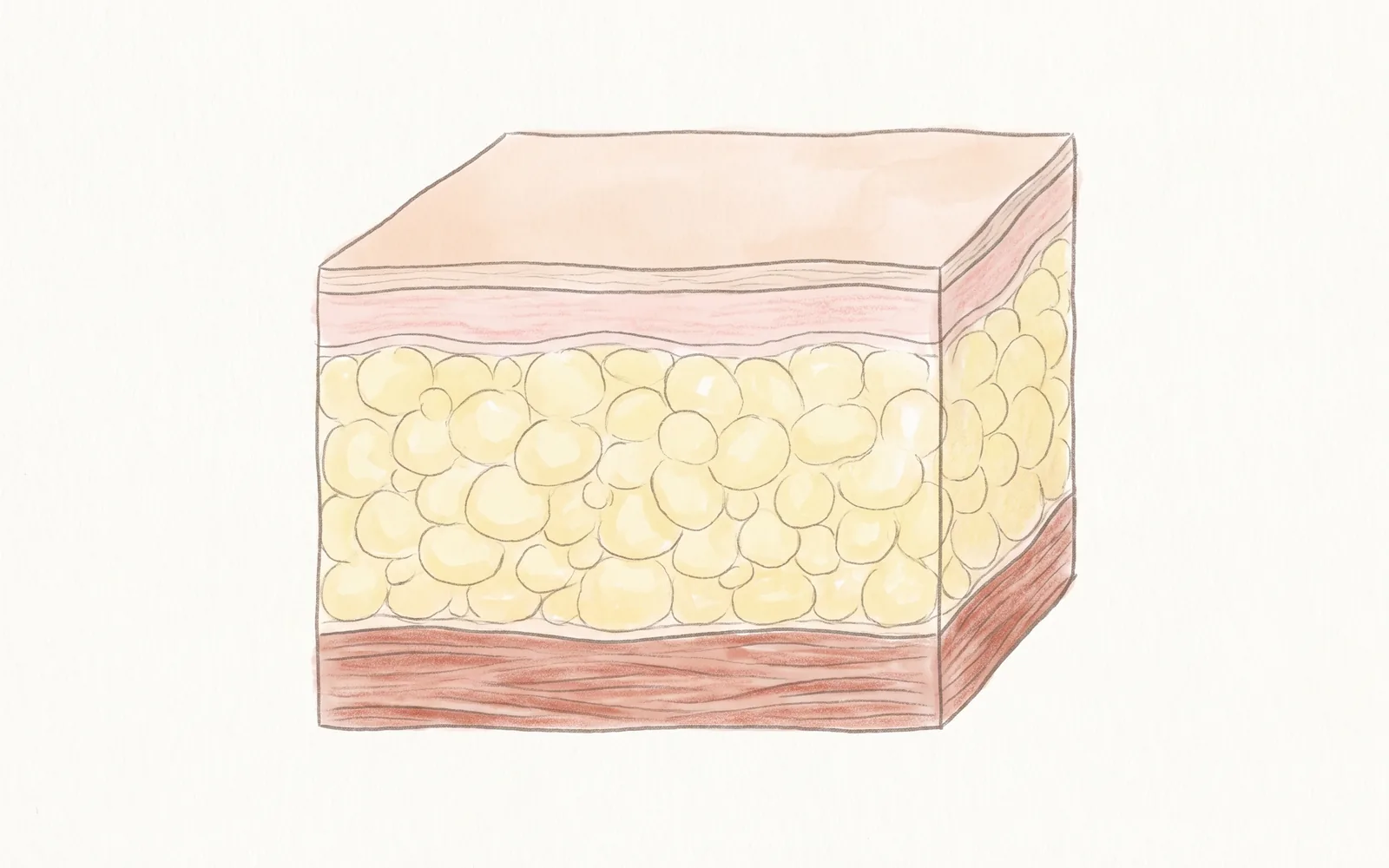
The illustration is an explanatory illustration to aid understanding, and procedure results vary by individual. The actual method is determined individually during consultation.
Shoulder filler frequently asked questions
For shoulder filler, results and duration vary depending on individual tissue condition, injection volume, and product characteristics, and a detailed assessment through consultation is necessary.
In what cases is it good to seek consultation for shoulder filler?
We mainly consult for drooping shoulders like a clothes hanger, shoulders rolled forward, cases where the head looks big due to narrow shoulders, and bony, thin body types where the shoulder bones protrude unevenly. People also consult ahead of schedules where the shoulders are exposed, such as a body profile shoot or a wedding.
Are there body types for which shoulder filler is not a good fit?
Yes. For those with a lot of soft tissue or originally broad shoulders, the degree of visible change with shoulder filler may be small. Some people see more effect from shoulder filler, while others do not; we first let you know after assessing your body type during consultation.
Why do thin people’s shoulder lines look bumpy?
Because the three points—the end of the clavicle, the acromion of the shoulder blade, and the top of the humerus—can be felt under the skin. If you have little soft tissue, fat does not fill the gaps between the protruding bones, making the shoulder line look uneven. The curved shape of the clavicle also varies by person, so even among thin body types the shoulder line looks different.
Can’t right-angled shoulders be made with exercise or diet?
If the muscles surrounding the shoulders are not sufficient, it is hard to change the shoulder line greatly with exercise alone. With exercise, the trapezius and deltoid often grow together, making the shoulders broadly bulky, and losing weight can make the bones show more and look bumpier. Some people consult because the space between the end of the clavicle and the shoulder tip is not filled even with exercise and posture correction.
If I get shoulder filler, will the trapezius also look smaller?
If you shape a rounded shoulder line closer to a right angle, it can have the visual effect of making the trapezius look smaller. It is not a procedure that reduces the trapezius muscle itself, so if the trapezius is thickly developed, we also discuss trapezius Botox together.
Do I need to get trapezius Botox together?
It is not something that must be done together. However, if the upper trapezius is thickly raised, even if a line is created with shoulder filler the shoulders can look droopy, so the procedure is also sometimes performed together. Whether it is needed is decided by looking at the shoulder shape during consultation.
Can round shoulders be solved with shoulder filler?
Shoulder filler is a procedure that fills the shoulder contour, so it cannot change the rounded posture itself. If your posture is rounded and your shoulders are rolled, even if you create right-angled shoulders with filler, the pretty line is less apparent, so posture correction is recommended together. For body types that look rolled due to lack of volume in the back of the shoulder, we sometimes design by filling the back to make the shoulders look opened.
Do men also receive shoulder filler?
Yes. In the past most patients were women, but recently consultations have increased for men who have a thin body type or who feel the shoulder line is lacking even with exercise. For women, the design aims for a slimmer look with a right-angled drop; for men, it aims for a broader, firmer look of the shoulders and arms.
Do men need a larger amount for shoulder filler?
Generally more than women, and it is placed over a wider area considering the overall contour of the deltoid. In the cases of men introduced in the director’s article, the total of both sides was 30cc and 45cc, and for those whose shoulder volume is large due to exercise, there were cases where we explained in advance about roughly double the amount compared to women. The required amount is determined during consultation according to the body type.
In which layer is the filler placed in the shoulder?
Not inside the muscle, but in the space between the subcutaneous fat layer and the fascia above the shoulder contour, especially above the deltoid, to create the shape. It is a procedure that complements the volume of the shoulder contour line rather than building muscle.
When can I start exercising after the procedure?
In Director Kwak Yeojin’s article, it is guided that exercise can be resumed after 3–4 days post-procedure. It may vary by individual condition, so please also check the instructions provided on the day of the procedure.
Since the shoulder moves a lot, doesn’t the shape change easily?
The filler used for shoulder filler is relatively firmer than fillers used for the face, so the shape tends to be maintained even in the highly mobile shoulder area. However, for one month after the procedure, it is best not to press or massage the treated area.
How long does shoulder filler last?
There are individual differences. In the director’s article, it generally guides as 18 months or more, and it states that in many cases, even those who visited nearly 2 years later still had the basic shape remaining, so additional treatment was sufficient. There was also a case of visiting after 1 year and topping up with only 5cc.
Are there any post-procedure precautions?
In the director’s article, it guides to avoid pressing or massaging the treated area for one month after shoulder filler, and to avoid hot showers or saunas for a week. Immediately after the procedure, it is also good to avoid heavy drinking that can increase bruising and swelling. Shoulder stretching and good posture habits help maintain a natural line.
What is checked during consultation?
We ask about daily lifestyle and posture, sleeping habits, whether you exercise, and whether you are dieting, and we decide the design along with the shoulder shape. We also check medications you are taking, allergies, and past treatment history. Bringing a photo of your desired shoulder shape helps in matching the design.
Can I receive it together with collarbone filler?
The procedure is also sometimes performed together. For those whose collarbone line is not well visible, when collarbone Filler is done together rather than only shoulder Filler, the line from the collarbone to the shoulder can connect naturally. There are also cases of adding a little collarbone Filler for a body type with rounded, rolled shoulders to straighten the shoulder line.
What products are used for shoulder filler?
ImageUp Plastic Surgery uses body filler products such as e.p.t.q. eve s plus (Eptiq eve s plus)·SketchFill according to the area and purpose. The products used are explained during consultation.
Are there any side effects?
Immediately after the procedure, swelling and bleeding from injections may occur. In the early period, the area may feel firm or uneven due to swelling.
However, if a distinct lump persists over time or redness, warmth, or pain accompanies it, you should consider not only simple filler clumping but also possibilities such as inflammation or nodules. A delayed inflammatory reaction may occur long after the filler procedure, with swelling, redness, or firm nodules appearing at the injection site. Because various causes such as infection or immune reactions may be involved, it is important to confirm the cause through medical evaluation rather than assuming it is simply filler clumping and massaging or self-treating.
If filler enters a blood vessel or compresses it and obstructs blood supply, vascular occlusion can occur and lead to serious complications such as skin damage. If severe pain persists right after the filler procedure, the skin turns white, or mottled color changes appear, you should check for the possibility of circulatory compromise rather than simple swelling or bruising. Because vascular occlusion requires rapid judgment and management, if these symptoms appear, do not wait—contact the clinic that performed the procedure immediately and receive care.
During the pre-procedure consultation, we review personal risk factors such as medications, allergies, and past procedure history. Depending on the individual, side effects such as bleeding, infection, swelling, asymmetry, and scarring may occur and vary in degree, so please decide after sufficient consultation with a specialist.
Can I get it during pregnancy or while breastfeeding?
If you have pregnancy or breastfeeding plans, please inform us during the prior consultation. We will adjust the procedure timing together depending on individual circumstances.
How do I book a consultation for shoulder filler?
You can receive guidance to book a consultation via KakaoTalk 1:1 or by phone (+82-2-555-1550).
Depending on the individual, side effects such as bleeding, infection, swelling, asymmetry, and scarring may occur, and the degree may vary. Please make your decision after sufficient consultation with a specialist.
Check other body filler areas as well
For additional inquiries, contact us via KakaoTalk
1:1 KakaoTalk pre-inquiry — Mon–Thu 10:00 - 19:00 · Fri 10:00 - 21:00 · Sat 10:00 - 16:00.