

Canthoplasty
Canthoplasty is planned according to the structure of the eye
Canthoplasty is a surgery that improves the horizontal length of the eye and the shape of the eye corners by adjusting the structures of the inner corner, the outer corner, and the lower eyelid. ImageUp Plastic Surgery performs Medial Epicanthoplasty, Upper Eyelid Canthoplasty, Lateral Canthoplasty, and Lower Eyelid Canthoplasty, and determines the appropriate surgical range by considering each person's anatomical structure, such as the degree of Mongolian fold, the distance between the eyes, and the direction of the eye corners. Eye surgery is performed by Medical Director Kwon Dohyun, Plastic Surgery Specialist (Korea).
At a Glance
Eye-opening surgery is divided into Medial Epicanthoplasty that opens the inner corner of the eye, Upper Eyelid Canthoplasty that corrects the upper inner side of the inner corner, Lateral Canthoplasty that widens the outer side of the eye tail, and Lower Eyelid Canthoplasty that adjusts the outer side of the lower eyelid. Lateral Canthoplasty and Lower Eyelid Canthoplasty are sometimes performed together when there is both insufficient horizontal eye length and an eye tail angle problem, but they are not necessarily performed together. Conjunctival edema, pulling sensation, and dryness may appear during the recovery process, and most subside over time.
Choose and view by eye-opening type
Canthoplasty, KakaoTalk 1:1 Consultation
The anesthesia method and recovery schedule for canthoplasty can be inquired in advance via KakaoTalk before the consultation.
What does each of medial epicanthoplasty, upper eyelid canthoplasty, lateral canthoplasty, and lower eyelid canthoplasty correct?
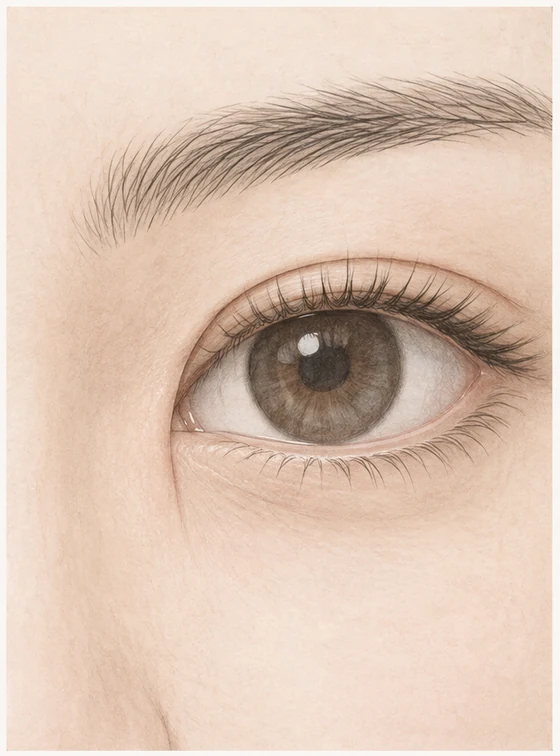
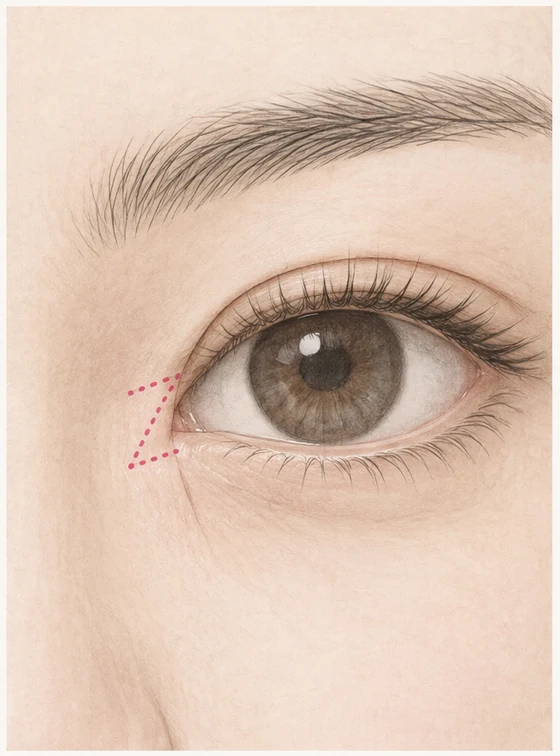
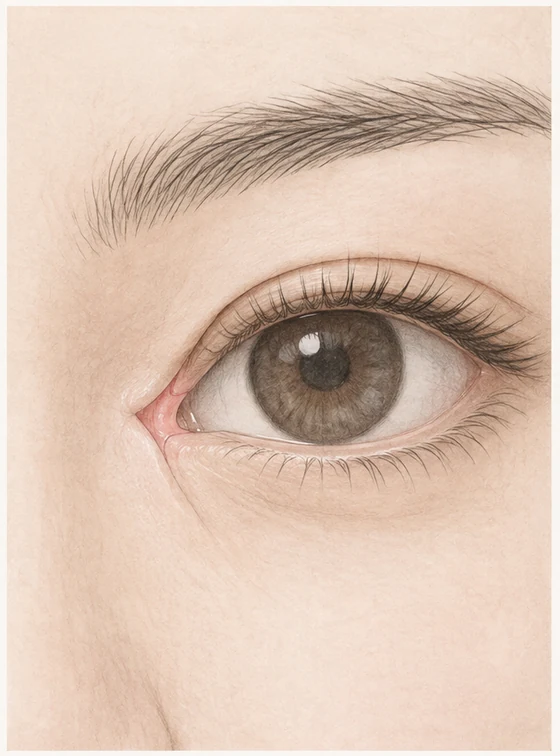
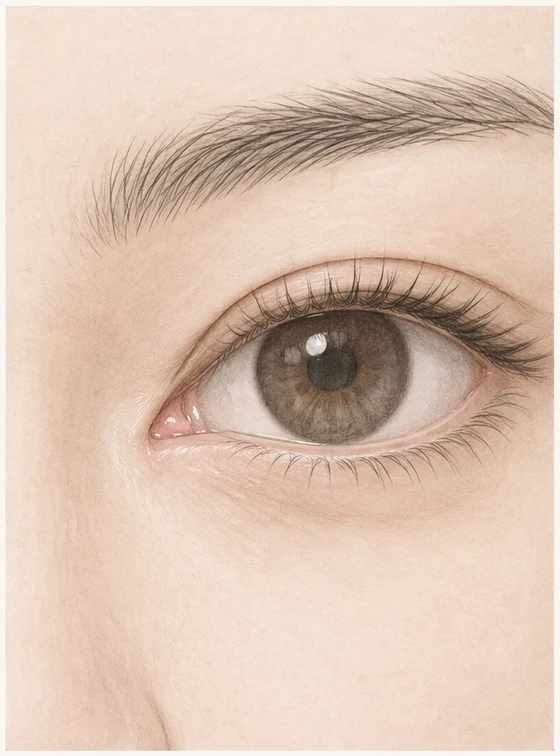
Medial Epicanthoplasty
Adjusts the Mongolian fold at the inner corner of the eye to correct the distance between the eyes and the shape of the inner corner. If the distance between the eyes is already close, excessive opening may make the eyes appear crowded, so only the necessary range is corrected.
- 1Before surgery
- 2Design
- 3Mongolian fold adjustment
- 4After surgery
Upper Eyelid Canthoplasty
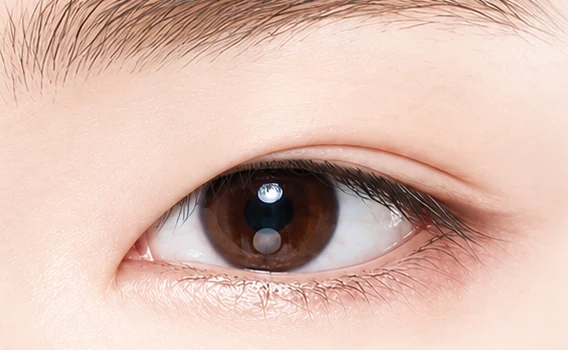
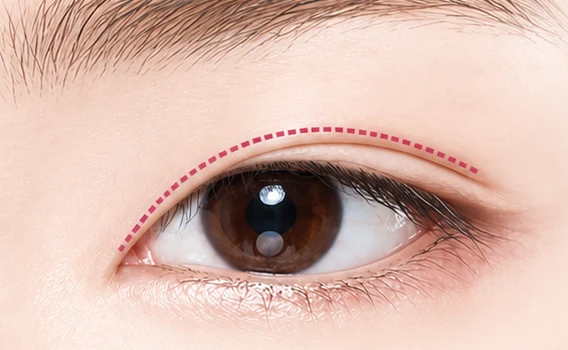
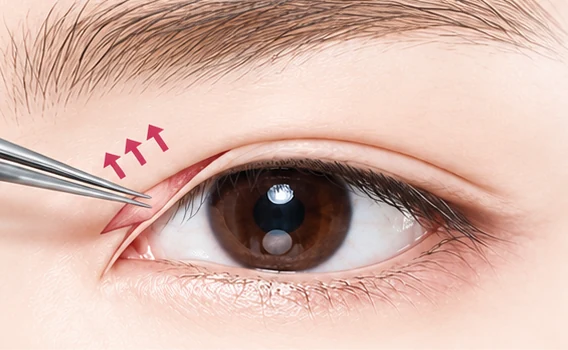
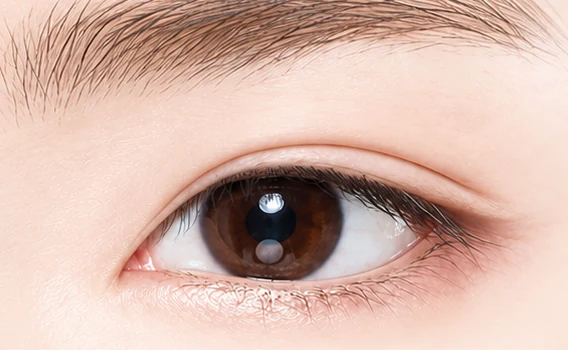
Upper Eyelid Canthoplasty is a surgery that improves the hidden double eyelid line and the shape of the inner corner of the eye by adjusting the skin and Mongolian fold above the inner corner. Correction is made to the extent necessary, considering the condition of the skin and surrounding tissue at the inner corner.
- 1Before surgery
- 2Design
- 3Tissue correction and suturing
- 4After surgery
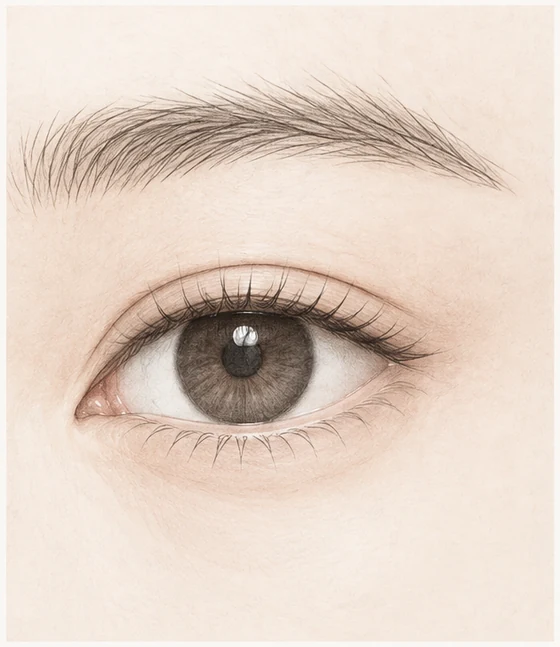
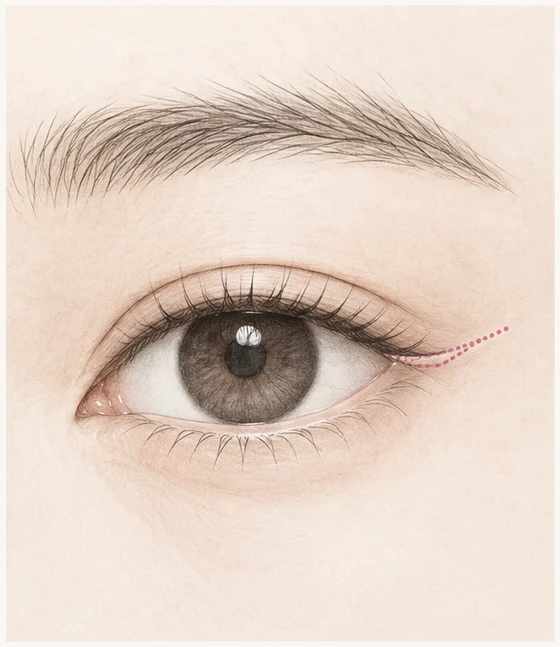
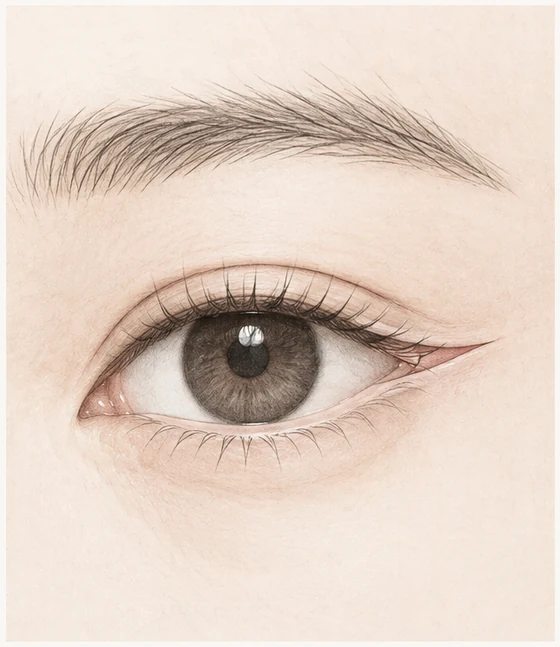
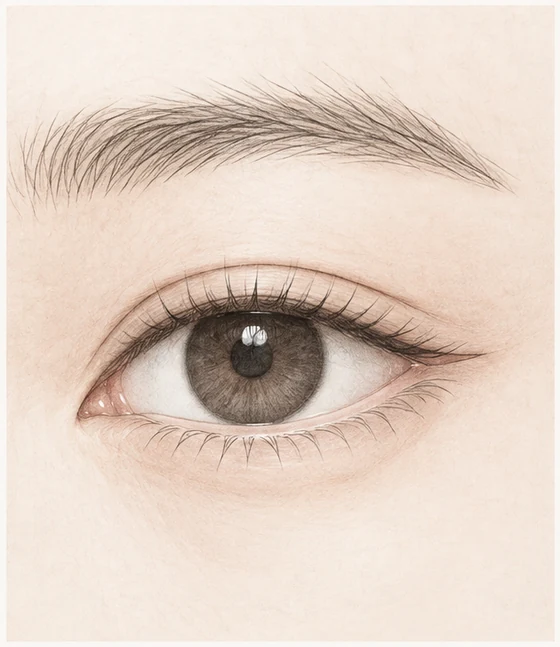
Lateral Canthoplasty
Relocates the outer structure of the eye corner to increase the horizontal length of the eye. It is performed within the anatomical limits of the space between the outer eye bone and the eyeball.
- 1Before surgery
- 2Canthoplasty range design
- 3Suturing
- 4After surgery
Lower Eyelid Canthoplasty
Adjusts the outer part of the lower eyelid downward to change the vertical width of the eye and the angle of the eye corner. Lowering it more than necessary may cause excessive scleral show, so correction must be performed within a safe range considering the elasticity of the lower eyelid and the position of the eyeball.
- 1Before surgery
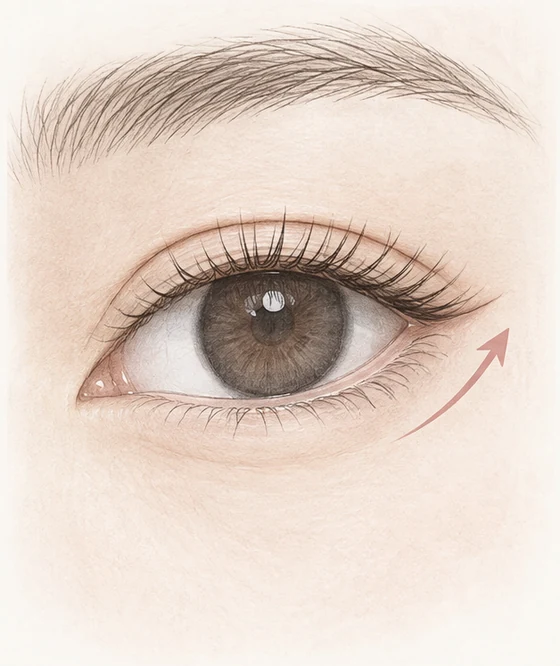
- 2Incision
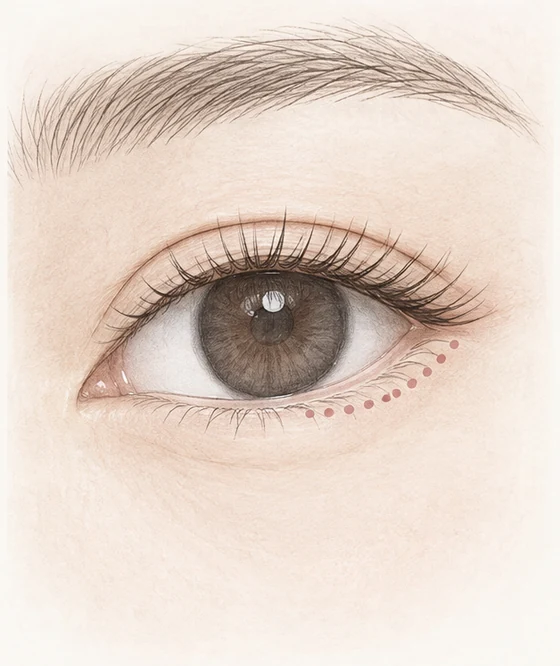
- 3Downward adjustment
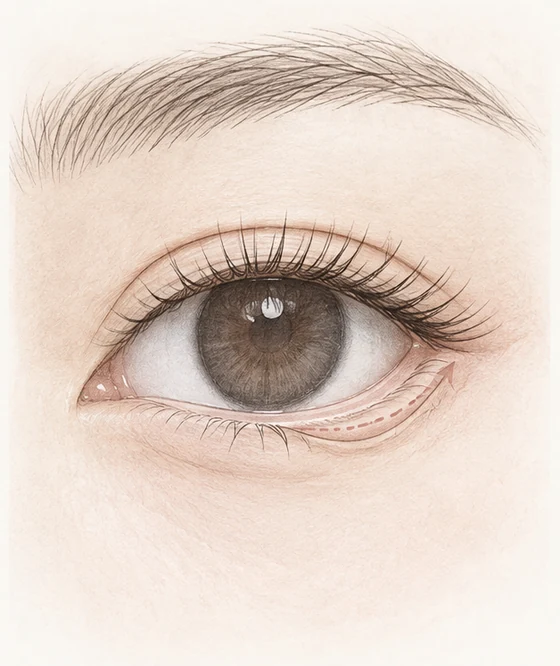
- 4After surgery
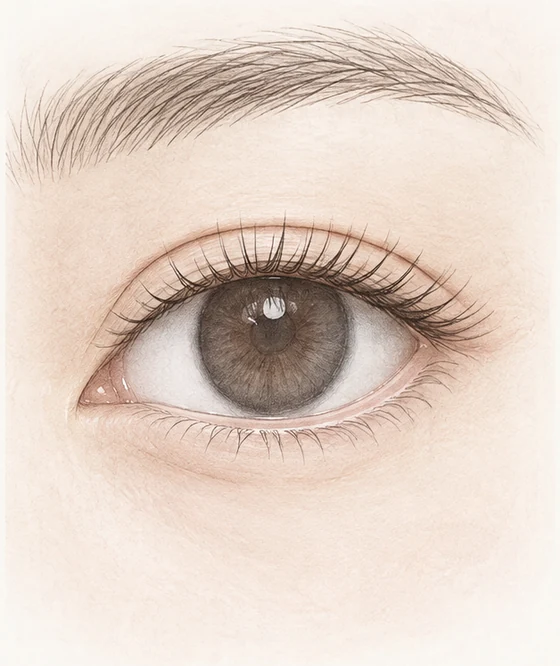
Core summary of canthoplasty surgery
Canthoplasty is divided into Medial Epicanthoplasty, Upper Eyelid Canthoplasty, Lateral Canthoplasty, and Lower Eyelid Canthoplasty, and the necessary areas are corrected after comprehensively evaluating the horizontal length of the eye, the direction of the eye corners, and the degree of Mongolian fold. After Lateral Canthoplasty and Lower Eyelid Canthoplasty, conjunctival edema, pulling, and dryness may appear temporarily and may gradually improve during recovery.
The range of canthoplasty and whether to combine it with other eye surgeries are decided after examining the anatomical structure and condition of the eye.
Frequently Asked Questions
I opened my eyes wide to put in lenses. Will the medial epicanthoplasty restoration area be okay?
Question details: It has been 3 months since I had medial epicanthoplasty restoration. Today the lenses did not fit well, so I was opening my eyes quite wide.
You need to be careful for about one month after surgery, and after that major problems usually do not occur. If you feel any discomfort, please have it checked at a consultation.
If the incisional lower eyelid canthoplasty sutures break, does it return to its original state?
Question details: It has been 7 years since I had lower eyelid canthoplasty. I heard from a YouTube video that lower eyelid canthoplasty is fixed with thread, so if the thread breaks, it returns to its original state. After searching, I found that there are incisional and non-incisional types, and although it was a long time ago and not certain, there was a lot of bruising at the time, so I think it was done with the incisional method. The hospital website where I had the surgery also explains that it is sutured after incision (there is a time difference). The surgery was done together with lateral canthoplasty. 1. If the thread breaks in incisional lower eyelid canthoplasty, does the eye shape return to its original state? 2. Is the probability of the tied thread breaking high? 3. In one comment on Knowledge iN, it said that after about two and a half years, you can consider it maintained for life, but I am curious why recurrence is easy right after surgery and it is considered permanently fixed as time passes, and if the tied thread breaks, wouldn't it return to original, and does the probability of the thread breaking decrease as time passes?
1. In lower eyelid canthoplasty, after about 6 months post-surgery, the surgical site is maintained by adhesion rather than the strength of the thread. However, this is only the case if the operating surgeon understood the anatomical structure well and performed the surgery accurately. If you had a non-incisional lower eyelid canthoplasty, it may return to original if the thread breaks. 2. With incisional lower eyelid canthoplasty, the chance of it returning to the original state even if the thread breaks is low, but it may vary from person to person. 3. As in answer 1, after 6 months or more post-surgery, the surgical site adheres and is maintained. The role of the thread is for about 6 months. If the thread does not loosen in the early period after surgery, the surgical site is often maintained by the adhesion of the tied tissues regardless of the strength of the thread. The degree and duration vary from person to person. Conversely, if non-incisional was performed, it usually returns if the thread loosens.
If I have medial epicanthoplasty, won't my eyes look too close together?
Medial epicanthoplasty is not simply a surgery that opens the inner corner of the eye a lot, but must be performed considering the degree of Mongolian fold, the distance between the two eyes, the length of the eyes, and the overall proportion. If the space between the eyes is already close, excessive medial epicanthoplasty can make the eyes look close together, so it is important to correct only the necessary degree.
After medial epicanthoplasty, won't the red caruncle show too much and make me look fierce?
After medial epicanthoplasty, the red conjunctiva or caruncle on the front of the eye may be more visible than before surgery. The degree of exposure that looks natural differs depending on the existing eye shape and the degree of Mongolian fold. If too much is exposed, the impression can look strong, so it is important to create a natural inner eye corner shape rather than simply opening it a lot.
Is the scar from medial epicanthoplasty very visible?
Question details: I am curious if it is noticeable when not wearing makeup.
Medial epicanthoplasty involves an incision in the skin of the inner eye corner, so initially a red line or firm feeling may be visible. In most cases, it gradually fades over time, but depending on skin characteristics or surgical method, there is also a possibility that the scar remains noticeably. In particular, since the inner eye corner is a highly visible area, it is important not to overdo the surgery beyond the necessary range.
Does lateral canthoplasty actually make the eyes longer horizontally?
Question details: I am also curious about how much longer it can become.
Lateral canthoplasty is a surgery that adjusts the structure on the outer side of the eye to increase the horizontal length of the eye, but there are anatomical limitations to the degree it can be lengthened. If the space between the outer eye bone and the eyeball is not sufficient, it is difficult to lengthen it much. It is important to expand naturally within the individual's eye structure rather than unconditionally opening it a lot.
There are many stories that lateral canthoplasty reattaches, is that true?
Lateral canthoplasty is not simply incising the skin, but it is important to reposition and fix the structures around the eye tail to appropriate positions. During the recovery process, as the scar contracts, the effect may appear reduced compared to immediately after surgery. The degree of maintenance differs depending on the individual's eye structure and surgical method.
If I have lateral canthoplasty, can the eye tail look too red or become a ㄷ shape?
Question details: I have seen cases among people who had lateral canthoplasty where the end of the eye looks strange.
If the eye tail is excessively expanded or surgery is done that does not match the eye structure, the outer conjunctiva may be overly exposed or the eye tail shape may look round and unnatural. Therefore, it is important to correct naturally while maintaining the original eye tail shape and direction rather than simply increasing by a few mm.
Is lower eyelid canthoplasty a surgery that lowers the eye downward?
Question details: I am also curious if it makes the eyes look bigger.
Lower eyelid canthoplasty is a surgery that adjusts the outer part of the lower eyelid downward to change the vertical width of the eye and the angle of the eye tail. In cases where the eye tail is raised a lot and gives a sharp impression, an effect of appearing as a softer impression can be expected. However, it is not possible to lower it a lot in all eyes.
If lower eyelid canthoplasty is done too much, won't a lot of the white of the eye show or the eye look everted?
If the lower eyelid is lowered more than necessary, excessive exposure of the lower white of the eye or an unnatural appearance such as the lower eyelid appearing detached from the eyeball can occur. Therefore, correction must be done within a safe range by considering not only the desired eye shape but also the elasticity of the lower eyelid and the position of the eyeball.
Do lateral canthoplasty and lower eyelid canthoplasty have to be done together?
Question details: I am curious if doing them together is more effective and if it is not okay to do only one. I want to do only lateral canthoplasty, but some hospital said they must be done together.
It is not necessary to do them together. If the horizontal length of the eye is insufficient, lateral canthoplasty may be more necessary, and if the eye tail is raised a lot, lower eyelid canthoplasty may be more helpful. In cases where both issues are present, lateral canthoplasty and lower eyelid canthoplasty are sometimes performed together to correct both the length and direction of the eye tail. The important thing is to first evaluate the current eye structure and select only the necessary surgeries.
After lateral canthoplasty, something like a blister swelled up on the white of the eye. Is it okay?
Question details: I am curious what this is and if there is an abnormality in the eyeball.
After surgery, conjunctival edema may appear where the conjunctiva swells and the white of the eye looks swollen like a blister. It usually improves over time, but if the swelling is severe and it is difficult to close the eyes, or if accompanied by pain, severe redness, vision changes, etc., the condition must be checked at the hospital.
After lower eyelid canthoplasty, my eyes feel stinging and tears keep coming. Is it okay?
In the early post-surgery period, due to swelling and changes in eyelid position, the eyes may feel drier than usual, sting, or produce a lot of tears. It usually improves with recovery, but if symptoms are severe or persist, it is good to check for irritation of the cornea or conjunctiva.
At 3 weeks after medial epicanthoplasty, the scar at the inner eye corner is red and raised. Is this okay?
Question details: It was okay after removing the stitches, but at 3 weeks, the inner eye corner became red and the scar rose convexly. I heard that scars do not remain, but it looks strange.
The incision site for medial epicanthoplasty may feel red, firm, and slightly raised for the first few weeks to several months. Afterward, as the scar matures, it often becomes gradually softer and lighter. However, if redness or protrusion persists severely, it is possible to consider necessary treatment by checking the scar condition.
Among the lateral canthoplasty and lower eyelid canthoplasty I received at another hospital, the lower eyelid canthoplasty seems excessive. Can it be restored to original?
If the shape is unnatural or excessively open after medial epicanthoplasty or lateral canthoplasty, revision surgery can be considered depending on the condition. However, completely returning to the pre-surgery anatomical structure may be difficult, and the possible correction range varies depending on the remaining tissue and degree of scarring.
If you are not satisfied with the epicanthoplasty surgery results, when can you have surgery again?
Question details: It seems not open enough and I feel upset.
Right after surgery, the eye shape continues to change due to swelling and scar contraction, so it is better not to decide on revision surgery too early. Unless there is a problem that requires early correction, the tissue and scar are allowed to stabilize sufficiently before evaluating the current condition to determine the timing and method of revision surgery.
Depending on the individual, side effects such as bleeding, infection, swelling, asymmetry, and scarring may occur, and the degree may vary. Please make your decision after sufficient consultation with a specialist.
Eye surgery pages worth viewing together
Please also check Double Eyelid Surgery, Epicanthoplasty, Ptosis Correction, Upper Blepharoplasty, Lower Blepharoplasty, and Revision Eye Surgery.
We guide you to the method suitable for your eyelid condition among Non-incisional (Buried Suture) Method, Incisional Method, and Natural Adhesion Method.
EYE Ptosis CorrectionAfter evaluating for ptosis, we determine the method among non-incisional or incisional ptosis correction.
For additional inquiries, contact us via KakaoTalk
1:1 KakaoTalk pre-inquiry — Mon–Thu 10:00 - 19:00 · Fri 10:00 - 21:00 · Sat 10:00 - 16:00.