

Lateral Canthoplasty
What is Lateral Canthoplasty surgery?
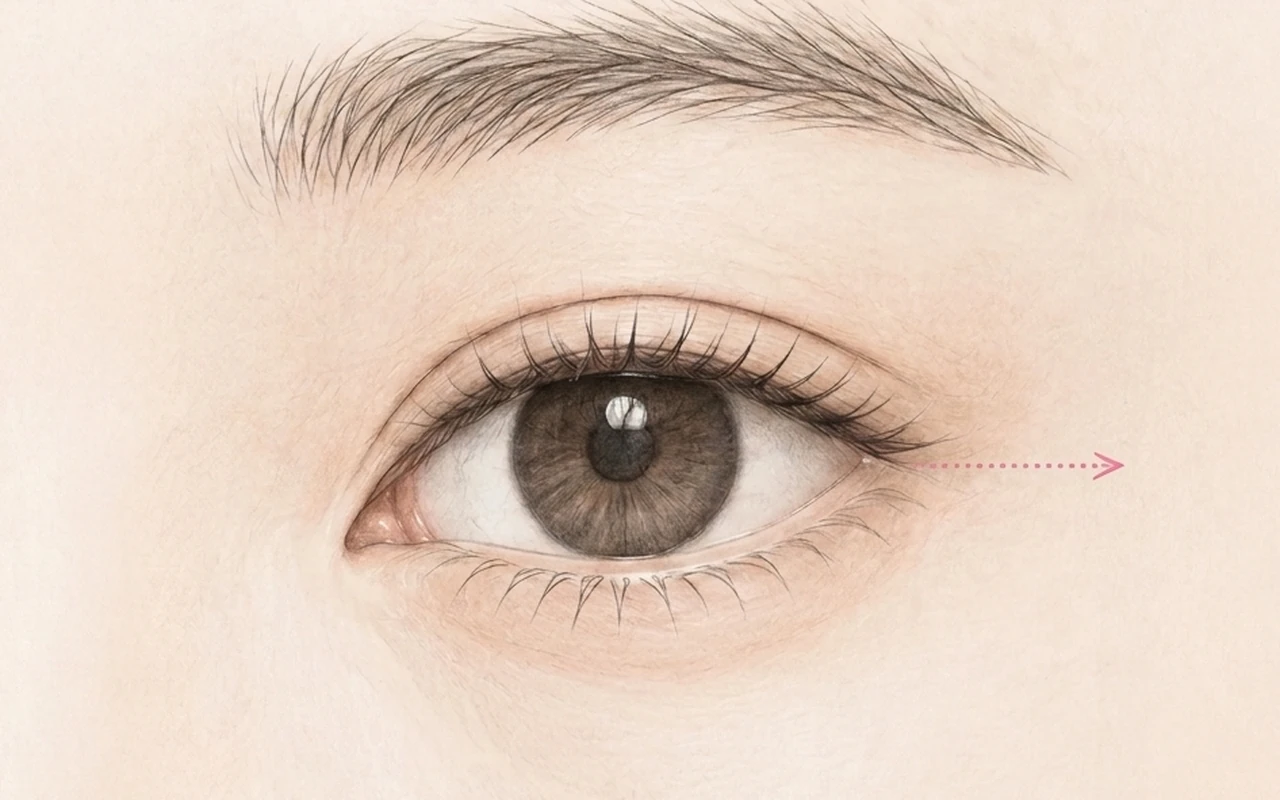
Lateral Canthoplasty is a surgery that adjusts the outer canthus of the eye according to the individual's eye structure to extend the horizontal length of the eye and improve the stuffy eye corner shape.
It is important not simply to make the eye corner longer but to create a natural eye shape that is not excessive by considering the position of the outer canthus, the eye corner angle, the horizontal and vertical ratio of the eye, and the condition of surrounding tissues.
At a Glance
During the recovery process, the scar may contract and the effect may appear reduced compared to right after surgery. Initially, there may be conjunctival edema or a pulling and tight feeling in the eye corner. It is not necessary to always perform it together with Lower Eyelid Canthoplasty; the current eye structure is evaluated first to select only the necessary surgery.
Lateral Canthoplasty surgery process
- 1Preoperative designThe horizontal length of the eye, eye corner position, shape of the outer canthus, and left-right balance are checked to design the correction range and direction.
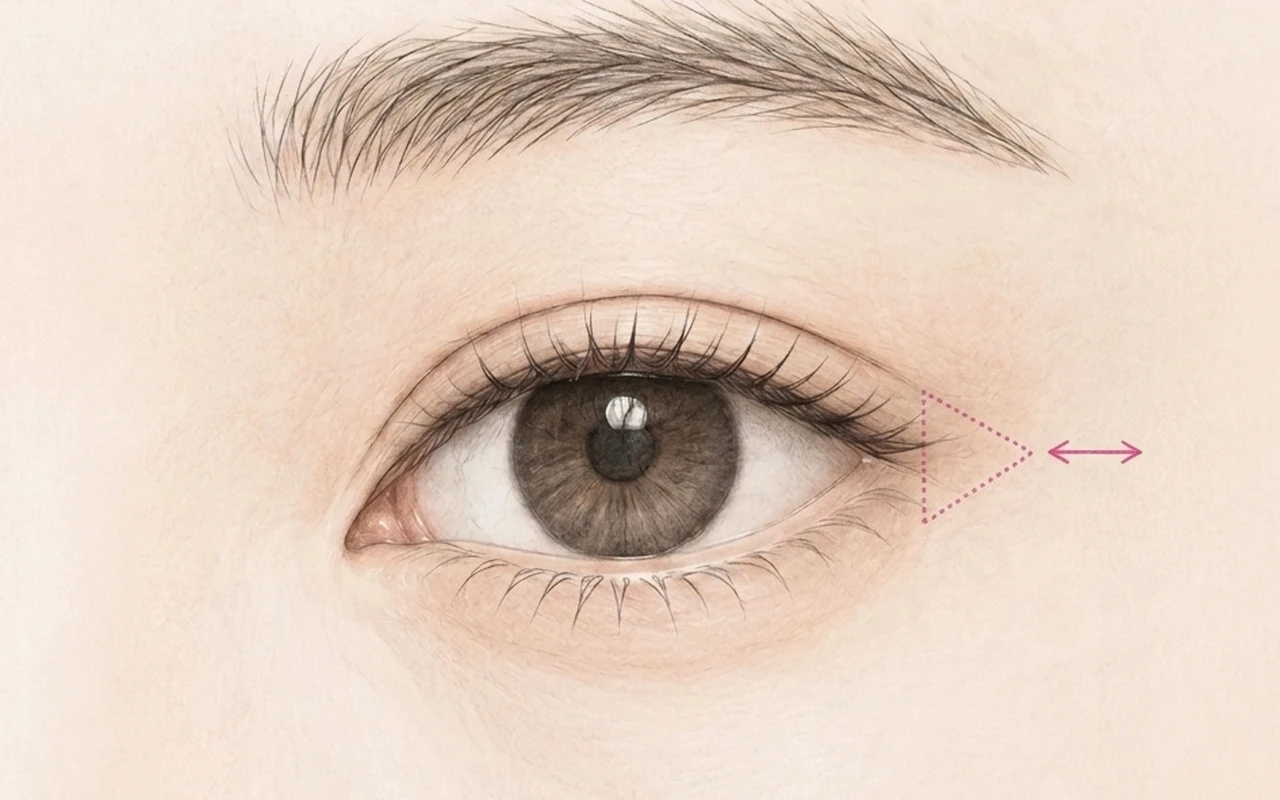
- 2Outer canthus incision and tissue dissectionAccording to the design, the eye corner area is incised and the surrounding tissues are dissected to secure space for moving the outer canthus.
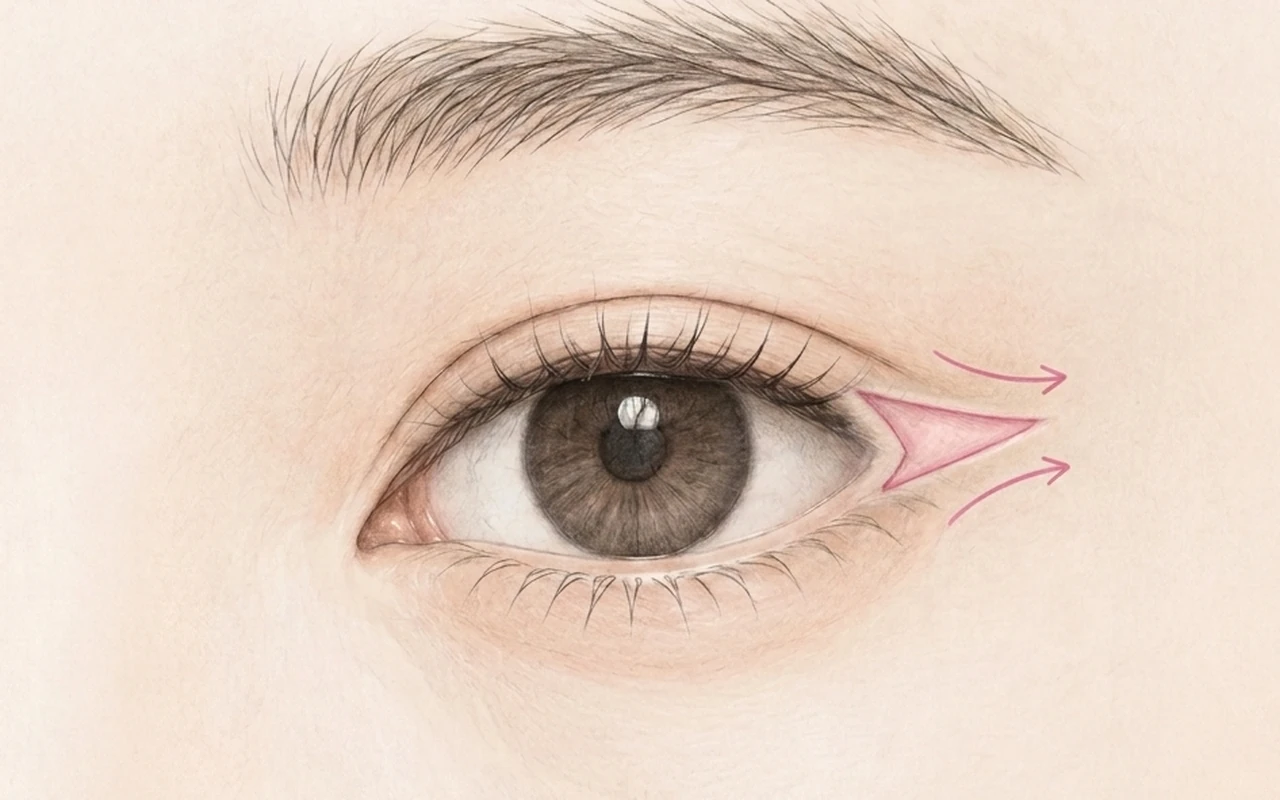
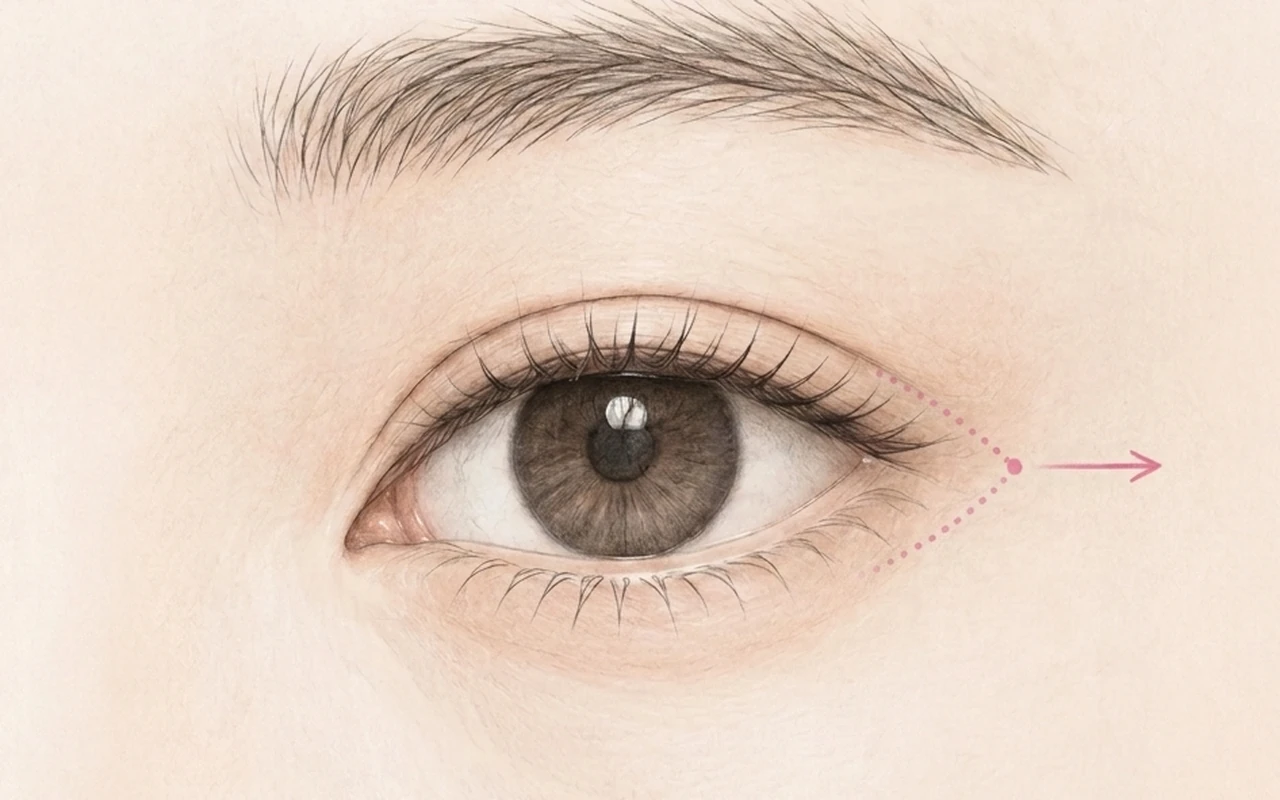
- 3Outer canthus relocation and fixationThe outer canthus is moved in an appropriate direction according to the eye structure and desired eye shape and then fixed stably.
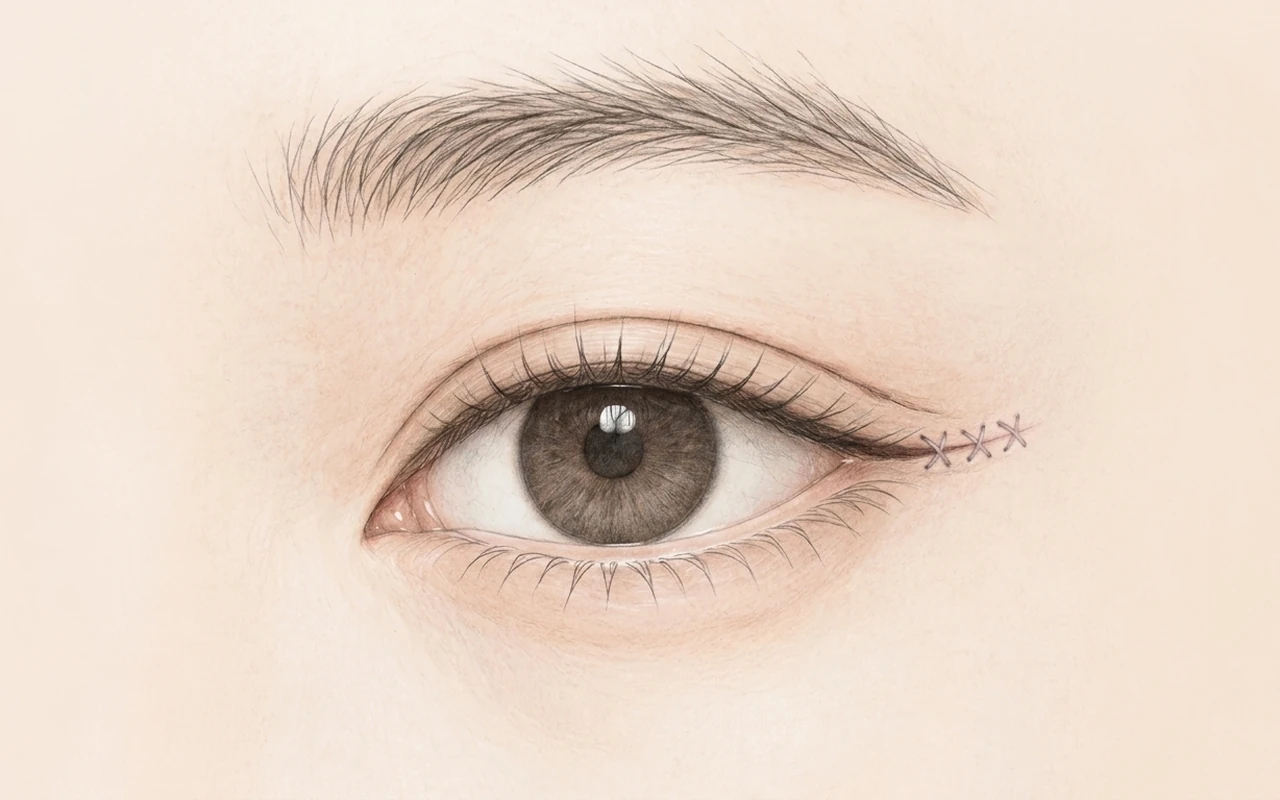
- 4Suturing and eye shape confirmationThe position and angle of the eye corner and left-right balance are confirmed, and the incision site is meticulously sutured to finish.
Effects of Lateral Canthoplasty
Lateral Canthoplasty, KakaoTalk 1:1 consultation
The anesthesia method and recovery schedule for Lateral Canthoplasty can be inquired in advance via KakaoTalk before the consultation.
What does Lateral Canthoplasty correct?
Relocates the outer structure of the eye corner to increase the horizontal length of the eye. It is performed within the anatomical limits of the space between the outer eye bone and the eyeball.
Recommended for
- When the horizontal length of the eye appears short
- When the eye corner appears stuffy or blocked
- When the eye corner appears raised and gives a sharp impression
- When you want to naturally expand the outer side of the eye
- If improvement in the horizontal length of the eyes is insufficient with medial epicanthoplasty alone
- When a soft eye shape is desired along with lower eyelid canthoplasty
Postoperative precautions
In the early stages after surgery, swelling, bruising, redness, or a pulling sensation may appear and will gradually ease during the recovery process. Avoid rubbing the eyes hard or applying strong stimulation to the surgical area, and it is recommended to refrain from drinking, smoking, sauna use, and strenuous exercise for a certain period.
Follow the medical staff's guidance for suture removal, face washing, makeup, and lens wearing times. Lateral canthoplasty has individual differences in the possible correction range depending on the anatomical structure of the outer eye corner and skin laxity, so it is important not to overextend.
Frequently Asked Questions about Lateral Canthoplasty
How much longer horizontally do the eyes become with Lateral Canthoplasty?
Lateral canthoplasty is a surgery that adjusts the structure on the outer side of the eye to increase the horizontal length of the eye, but there are anatomical limitations to the degree it can be lengthened. If the space between the outer eye bone and the eyeball is not sufficient, it is difficult to lengthen it much. It is important to expand naturally within the individual's eye structure rather than unconditionally opening it a lot.
There are many stories that lateral canthoplasty reattaches, is that true?
Lateral canthoplasty is not simply incising the skin, but it is important to reposition and fix the structures around the eye tail to appropriate positions. During the recovery process, as the scar contracts, the effect may appear reduced compared to immediately after surgery. The degree of maintenance differs depending on the individual's eye structure and surgical method.
If I have lateral canthoplasty, can the eye tail look too red or become a ㄷ shape?
If the eye tail is excessively expanded or surgery is done that does not match the eye structure, the outer conjunctiva may be overly exposed or the eye tail shape may look round and unnatural. Therefore, it is important to correct naturally while maintaining the original eye tail shape and direction rather than simply increasing by a few mm.
Do lateral canthoplasty and lower eyelid canthoplasty have to be done together?
It is not necessary to do them together. If the horizontal length of the eye is insufficient, lateral canthoplasty may be more necessary, and if the eye tail is raised a lot, lower eyelid canthoplasty may be more helpful. In cases where both issues are present, lateral canthoplasty and lower eyelid canthoplasty are sometimes performed together to correct both the length and direction of the eye tail. The important thing is to first evaluate the current eye structure and select only the necessary surgeries.
After lateral canthoplasty, something like a blister swelled up on the white of the eye. Is it okay?
After surgery, conjunctival edema may appear where the conjunctiva swells and the white of the eye looks swollen like a blister. It usually improves over time, but if the swelling is severe and it is difficult to close the eyes, or if accompanied by pain, severe redness, vision changes, etc., the condition must be checked at the hospital.
It is the 7th day after lateral canthoplasty surgery, and the outer eye corner feels too tight and stiff. Is this okay?
After lateral canthoplasty or lower eyelid canthoplasty, the tissues around the outer eye corner are moved and fixed, so a pulling or stiff feeling may occur initially. It often becomes more comfortable gradually as swelling subsides and tissues stabilize. However, if the pain gradually worsens or is accompanied by severe redness or discharge, it is advisable to visit the hospital for a check.
After Lateral Canthoplasty and Lower Eyelid Canthoplasty, the outer eye corner looks too drooped. Will it rise a little over time?
Right after surgery, the outer eye corner may appear more drooped than expected due to swelling and fixed tissues. It is only that the outer eye corner appears lowered; the surgery does not forcibly lower the outer eye corner. As swelling subsides and tissues settle during the recovery process, the shape may become more natural, so it is difficult to judge the final result based only on the initial appearance.
When can I start face washing, eye makeup, and wearing lenses after Lateral Canthoplasty and Lower Eyelid Canthoplasty?
Before the sutures and incision sites stabilize, be careful not to rub the eyes or let cosmetics touch the wound directly. Contact lenses also pull on the eyelids during insertion, so it is better to avoid them initially. For the timing to start face washing, makeup, and lens wear, follow the hospital's guidance according to the surgical method and wound condition. Usually, wearing lenses is recommended starting about 4 weeks after surgery.
Among the lateral canthoplasty and lower eyelid canthoplasty I received at another hospital, the lower eyelid canthoplasty seems excessive. Can it be restored to original?
If the shape is unnatural or excessively open after medial epicanthoplasty or lateral canthoplasty, revision surgery can be considered depending on the condition. However, completely returning to the pre-surgery anatomical structure may be difficult, and the possible correction range varies depending on the remaining tissue and degree of scarring.
What should I do if my eyes still look small even after double eyelid and ptosis correction?
Changes in eye size after surgery depend most importantly on the anatomical structure of the eyes you have. If you had incisional ptosis correction, it is also good to consider medial epicanthoplasty, lateral canthoplasty, lower eyelid canthoplasty, etc.
If you are not satisfied with the epicanthoplasty surgery results, when can you have surgery again?
Right after surgery, the eye shape continues to change due to swelling and scar contraction, so it is better not to decide on revision surgery too early. Unless there is a problem that requires early correction, the tissue and scar are allowed to stabilize sufficiently before evaluating the current condition to determine the timing and method of revision surgery.
It is the 10th day after lateral canthoplasty and the conjunctival edema has not subsided. Do I need to visit again?
Conjunctival edema and redness commonly take 1 to 2 weeks to be absorbed. However, if the edema and redness do not improve and become worse, visiting the surgery hospital for a consultation, changing to a different type of eye drop, or receiving swelling laser treatment can be helpful.
In what order is Lateral Canthoplasty performed?
The scope and direction of correction are designed after checking the horizontal length of the eye, the position of the outer corner, the shape of the lateral canthus, and left-right balance. Following the design, the outer corner area is incised and the surrounding tissue is dissected to secure space to move the lateral canthus, and the lateral canthus is then moved in a direction suited to the eye structure and fixed. Finally, the position and angle of the outer corner and left-right balance are checked and the incision is sutured.
For which eyes is Lateral Canthoplasty considered?
It is considered when the eyes look short horizontally, the outer corners look stuffy or closed in, or the outer corners are raised and give a sharp impression. It also applies when Medial Epicanthoplasty alone is not enough to improve horizontal length, or when a softer eye shape is wanted together with Lower Eyelid Canthoplasty. The possible range of correction varies from person to person depending on the anatomical structure of the lateral canthus and the amount of spare skin.
Does Lateral Canthoplasty only make the outer corners of the eyes longer?
It is not simply about lengthening the outer corners; what matters is creating a natural, not excessive, eye shape by considering the position of the lateral canthus, the angle of the outer corner, the horizontal-to-vertical ratio of the eye, and the condition of the surrounding tissue. Depending on the individual eye structure, it can help soften the impression of outer corners that look raised.
Depending on the individual, side effects such as bleeding, infection, swelling, asymmetry, and scarring may occur, and the degree may vary. Please make your decision after sufficient consultation with a specialist.
View by Canthoplasty Type
Please review the medial epicanthoplasty, upper eyelid canthoplasty, lateral canthoplasty, lower eyelid canthoplasty, and the overall canthoplasty guide together.
Medial epicanthoplasty, upper eyelid canthoplasty, lateral canthoplasty, and lower eyelid canthoplasty are viewed together on one page.
EYE Medial EpicanthoplastyAdjusts the Mongolian fold at the inner corner of the eye to correct the distance between the eyes and the shape of the inner corner.
EYE Upper Eyelid CanthoplastyIt is a canthoplasty that treats the inner part of the upper eyelid.
EYE Lower Eyelid CanthoplastyAdjusts the outer part of the lower eyelid to change the vertical width of the eye and the angle of the eye corner.
For additional inquiries, contact us via KakaoTalk
1:1 KakaoTalk pre-inquiry — Mon–Thu 10:00 - 19:00 · Fri 10:00 - 21:00 · Sat 10:00 - 16:00.