

Thread Lift
Lifting that minimizes incisions and supports with threads
Thread Lift is a procedure that inserts threads under the skin to support sagging tissue. ImageUp Plastic Surgery Clinic has various types of lifting threads and will guide you on the appropriate thread and direction after checking your skin and tissue condition during consultation.
At a Glance
Thread Lift is a procedure that inserts dissolvable threads with small barbs to lift sagging skin upward. The type of thread and insertion direction are determined during consultation according to the degree and area of sagging.
What kind of thread is used for the procedure?
-
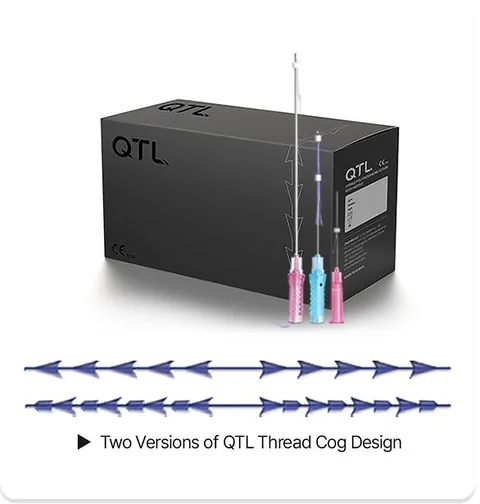
QTL cog Lifting Thread
It is a lifting thread with a cog (hook) structure.
-
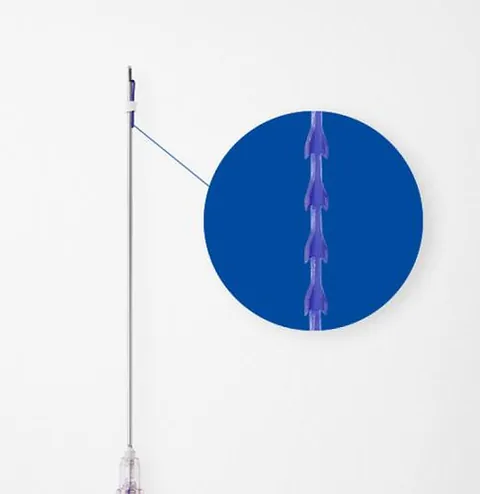
White rosa Lifting Thread
It is a lifting thread that is inserted under the skin to support tissue.
-
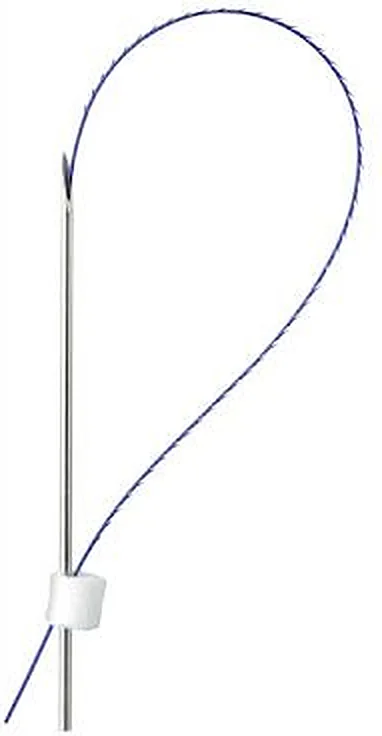
Omega V
Thread Lift, If you are curious about the thread that suits me
We will check your skin and tissue condition first and then guide you — pre-inquiries are possible via KakaoTalk.
Who is Thread Lift suitable for?
It is a method that can be considered for those in their late 30s to 40s when the jawline or cheek fat begins to sag, and some skin elasticity still remains. If elasticity has already decreased significantly, the thread may not hold the skin and it may sag again or thread marks may be visible. If the degree of sagging is severe, surgical lift may be discussed together, and we will provide comparative guidance during consultation. Age is a rough standard to help understanding and there are individual differences.
Frequently Asked Questions
When will swelling and bruising subside after Thread Lift?
Question details: I received a facial Thread Lift procedure 3 days ago to improve jawline sagging and nasolabial folds. There is quite severe swelling on both jaw and cheeks, and slight yellow bruising has appeared, which makes me very conscious when going to work. The treatment area also feels slightly throbbing when touched. I am also curious about fomentation methods or care methods to reduce swelling quickly.
If you have received a Thread Lift procedure, swelling may become more severe for 2–3 days. After that, as 1–2 weeks pass, major swelling gradually decreases. Bruising may appear darker for several more days, and bruised areas take at least about 2 weeks to largely disappear. Bruises may also slightly migrate downward due to gravity. To reduce swelling quickly, light exercise such as walking is more helpful than remaining lying down. Cold compresses are also helpful.
How is the Thread Lift procedure performed?
Question details: I am also curious about which areas it is performed on.
Thread Lift is a procedure that inserts medical threads under the skin to pull sagging tissue and improve facial contours. Depending on the type of thread used and the insertion direction, it can be applied to various areas such as cheek sagging, jawline, deep cheeks, and around the nasolabial folds.
My nasolabial folds are quite sagging. Will Thread Lift be effective?
It can be considered when facial sagging begins, making the jawline blurred or when cheeks and deep cheeks descend, making the face look heavy. However, if skin sagging is very severe or there is a lot of excess skin, the desired level of improvement may be difficult with Thread Lift alone.
Is the effect better the more it is pulled during Thread Lift?
Not necessarily. Pulling excessively without considering skin thickness, fat volume, and direction of sagging can instead make it look unnatural. It is important to correct with appropriate direction and intensity according to the facial structure.
Are there any medications I should not take before Thread Lift?
Question details: I am scheduled for Thread Lift next week and I take vitamins every day.
If you are taking any medications or health supplements that may increase the possibility of bleeding or bruising, please inform the medical staff in advance. In particular, if you are taking anticoagulants or antiplatelet agents, do not stop them arbitrarily and consult with the prescribing medical staff.
Does it hurt a lot after Thread Lift?
Question details: I heard it hurts for a few days.
Generally, because the procedure is performed after local anesthesia, pain can be controlled to some extent. However, there may be a feeling of pressure or pulling when the thread is inserted, and for a few days after the procedure, you may feel tightness or pain when moving.
How long does the procedure take?
Question details: I am also curious whether sedation anesthesia is required.
It varies depending on the treatment area, type and number of threads used, but it generally takes about 30 minutes to 1 hour. Including consultation, design, and anesthesia time, the total time may be a little longer. Both local anesthesia and sedation anesthesia procedures are usually possible. If you are concerned about pain, you can proceed with sedation anesthesia for a more comfortable procedure.
Can I go to work the day after the procedure?
Most light daily activities are possible. However, there may be swelling, bruising, or a pulling sensation, so if you meet many people or have important schedules, it is better to allow a sufficient recovery period. Swelling often becomes more severe for 2–3 days.
After the procedure, my face looks bumpy and there are places where the skin appears pinched. Is something wrong?
Immediately after the procedure, a dimple phenomenon may appear where the skin temporarily folds or looks indented as the thread pulls the tissue. It usually improves over time, but if it is severe or persists for a long time, confirmation by the performing medical staff is needed.
How many days do swelling and bruising last?
Question details: I am also curious whether bruising is severe.
There are individual differences, but mild swelling and bruising can last from several days to 1–2 weeks. If the treatment range is wide or many threads are used, it may last a little longer.
When can I start washing my face or putting on makeup?
It is good to minimize stimulation until the small insertion points where the threads were placed stabilize. The time when face washing and makeup are possible may vary depending on the procedure method and insertion site, so please follow the post-procedure precautions provided.
When can I do exercise, sauna, and drinking?
Question details: I do Pilates and am curious whether I can attend classes.
It is recommended to avoid activities that increase blood flow and body temperature, such as intense exercise, sauna, jjimjilbang, or drinking alcohol immediately after the procedure. Usually, these activities are restricted during the initial recovery period, and the exact duration will be guided according to the scope of the procedure and recovery status. It is recommended to avoid high-intensity exercises like Pilates for 2-3 weeks. Light walking is fine.
Can the threads break if I open my mouth wide?
Question details: I still feel a pulling sensation. I am also curious if the threads break, whether I need to do it again.
It does not easily break due to everyday facial expressions, but it is good to reduce excessive facial movements such as chewing tough food for a long time or yawning widely during the initial period. Please avoid strong movements while the threads and surrounding tissues stabilize. Even if the threads break, it does not cause a problem. Usually, multiple threads are inserted, so even if you feel a breaking sensation, it is okay. Also, the feeling of tissue adhesion loosening may be perceived as if the threads are breaking. It is very rare for the threads to break.
When does the effect start to show?
Since the tissues are pulled with threads, changes can be confirmed immediately after the procedure. However, because swelling and skin pulling are present initially, the appearance after the swelling subsides and the tissues stabilize is more natural. In addition, as the threads dissolve, collagen synthesis occurs in the surrounding tissues, so immediately after the procedure you may feel a physical pulling sensation, and from 1-2 months later, as collagen remodels, elasticity and others gradually improve.
How long does the effect last?
Question details: I am curious whether it needs to be done frequently and whether it lasts for several years.
The maintenance period varies individually depending not only on the type of threads used but also on skin condition, degree of sagging, age, lifestyle habits, etc. As time passes, the threads are absorbed and natural aging continues, so it is not a permanent lifting method.
After thread lifting, the threads do not remain as foreign substances, right?
Question details: I am also worried about side effects from thread lifting.
Bruising, swelling, pain, pulling sensation, temporary skin dimpling or asymmetry may occur. Rarely, infection, thread exposure or palpability, persistent dimples, inflammation, etc. may occur, so if abnormal symptoms persist, you must receive medical consultation from the medical staff. The thread lifting threads used these days are gradually dissolving threads, so they do not remain.
The threads are palpable inside the skin; is that okay?
Question details: I am curious if they need to be removed.
In the early period after the procedure, the threads or the areas where the threads passed may feel hard under the skin. It often becomes softer over time, but if accompanied by pain or redness, or if the threads are exposed outside the skin, it is good to have it checked at the hospital.
After thread lifting, only one side of the face pulls when smiling; is that normal?
Question details: It is only on one side, so something seems wrong.
In the initial period, the areas where threads were inserted may feel pulling or tight when smiling or chewing. Most improve as the tissues stabilize, but if the pain or asymmetry is severe or continues, confirmation is needed.
After thread lifting, one side seems lifted more; is it wrong?
Question details: I had the procedure to correct asymmetry, but it seems to have become worse.
Our faces are not originally perfectly symmetrical on both sides, and swelling after the procedure can also appear differently on each side. Therefore, rather than judging only by the immediate post-procedure appearance, it is better to evaluate after swelling subsides and the tissues have stabilized to some degree.
After thread lifting, is it okay to sleep lying on my side?
Question details: I toss and turn a lot while sleeping, so I am worried that the threads might break if pressed.
Immediately after the procedure, it is recommended to sleep lying flat if possible. It is good to be careful initially while sleeping on your side so that the treatment area is not continuously pressed against the pillow.
When can I start receiving facial massage or meridian massage?
Strong massage or meridian massage should be avoided immediately after thread lifting. In particular, it is good to avoid strongly pressing or rubbing in the direction where the threads were inserted during the initial period. If massage is needed, please check with the medical staff who performed the procedure first.
I am going to a skin care salon; is it okay to receive high-frequency or ultrasound care?
Immediately after Thread Lift, it is advisable to avoid care that strongly compresses the skin or delivers heat and energy. Because procedures such as radiofrequency and ultrasound differ in applied depth and energy depending on the type, it is advisable to inform the medical staff that you received Thread Lift and decide on an appropriate time.
Is it okay to do thread lifting and lifting procedures like Ultherapy or Thermage on the same day?
There are cases of combining them, but it is not necessary to do them on the same day. Because the type of energy device, treatment depth, thread position, etc. must be considered, it is good to consult with the medical staff on which treatment to do first and the interval between procedures. When performing them together on the same day, usually the laser procedure is done first, followed by thread lifting.
While doing thread lifting, can I do Rejuran, Botox, and filler on the same day?
Depending on the area and purpose, they can be combined. However, since thread lifting, filler, and Botox each target different corrections, it is good to establish a treatment plan for the entire face and proceed with the necessary procedures in an appropriate order.
I had a lot of filler in the past; is it okay to do thread lifting?
Question details: I had a lot of filler in the past, but it looks sagging perhaps because of my age these days. I am curious if the filler will not dissolve if I do thread lifting. I also heard that if you had filler in the past, you cannot do thread lifting.
There are many cases where it is possible, but it is important to check the position and amount of the existing filler. In particular, if you know which area, what filler, and when the procedure was performed, please inform the medical staff during consultation. If you remember the type of filler, it would be good to tell them that as well.
If I do thread lifting, will the nasolabial folds also disappear?
Question details: I am curious if the wrinkles will disappear completely.
If the nasolabial folds have deepened due to sagging of the cheek tissues, the nasolabial area may be partially alleviated as the cheeks are lifted. However, it is not a procedure that completely eliminates the nasolabial folds themselves, and depending on the cause of the wrinkles, additional filler or other treatments may be needed.
Can double chin also be improved with thread lifting?
Question details: I am concerned about my double chin, so I have also tried Ultherapy and other lifting lasers.
In cases where the jawline is sagging and appears like a double chin, it can help with contour improvement. However, if there is a lot of fat itself, thread lifting alone may not be sufficient, so the amount of fat and skin sagging must be evaluated together. If it sags due to a large amount of fat itself, doing it together with double chin liposuction is very helpful.
The more threads I put in, the longer it lasts?
Question details: When I go for consultation at the hospital, the price differs depending on the number of threads; I am curious if more is better.
A larger number of threads does not necessarily mean better effects or longer maintenance. It is more important to use appropriate threads in the necessary positions according to the size of the face, fat volume, skin thickness, and direction of sagging.
Is it okay to receive thread lifting repeatedly?
Question details: I hear it needs to be done periodically. I'm curious what the appropriate interval is.
Additional procedures can be considered as needed, but it is not a procedure that must be repeated unconditionally at set intervals. It is better to decide whether to proceed with additional treatment after evaluating the threads used previously, the current skin condition, and the degree of sagging.
How is Thread Lift different from Facelift?
Question details: I'm curious if having a Thread Lift means I don't need to have a lifting surgery.
Thread Lift is a procedure that minimizes incisions and uses threads to lift sagging tissue. In contrast, Facelift is a surgery that corrects sagging tissue more directly through incisions. For relatively mild sagging, Thread Lift can be considered, but when sagging of the skin and soft tissue is severe, a surgical method may be more appropriate.
What symptoms after Thread Lift require me to contact the clinic immediately?
Question details: I need to go to work after the procedure. I'm curious what to do if there is pain or inflammation.
Mild swelling, bruising, tightness, or tenderness may appear after the procedure. However, if pain and swelling worsen over time, if the skin becomes severely red with heat, if pus or discharge appears, or if the thread is exposed outside the skin, it is advisable to contact the clinic for medical consultation.
Depending on the individual, side effects such as bleeding, infection, swelling, asymmetry, and scarring may occur, and the degree may vary. Please make your decision after sufficient consultation with a specialist.
Related pages you may find helpful
If you are considering skin procedures, please also refer to the pages below.
For additional inquiries, contact us via KakaoTalk
1:1 KakaoTalk pre-inquiry — Mon–Thu 10:00 - 19:00 · Fri 10:00 - 21:00 · Sat 10:00 - 16:00.