Shadowless lamp and operating table in the operating room
Lift/Lifting

Facelift

Corrects both skin and SMAS layer together

Facelift is not simply a surgery that cuts and pulls loose skin. It appropriately dissects, moves, and fixes up to the SMAS fascial layer beneath the skin to correct sagging facial tissue. ImageUp Plastic Surgery applies scalp incision, fascial surgery methods (fascial overlapping, fascial resection, fascial reinforcement), and facial retaining ligament repositioning according to the patient's condition.

At a Glance

A facelift is a surgery that evaluates sagging of both the skin and the SMAS layer to improve the contour of the cheeks and jawline. The incision begins around the temple hairline and runs along the front and back of the ear, and depending on the range, may extend into the scalp.

Depending on the surgical method, sagging of the midface and neck can also be corrected together, but deep nasolabial folds or fine wrinkles in the skin itself may not be fully improved by surgery alone.

ImageUp Plastic Surgery comprehensively evaluates skin elasticity, the extent of sagging, facial fat distribution, and tissue condition to determine the lifting method suited to each individual.

Choose and view by facelift item

In what cases is facelift considered?

In these cases
It can be considered when sagging of the cheeks and jawline is distinct and laxity of the skin and deep tissues has progressed, so that correction over a wider range is needed. Suitability for surgery is judged by the degree of sagging, skin elasticity, and facial structure rather than by age.
Simply put
The fascia (SMAS) that supports the face is dissected and repositioned in place, and the stretched skin is trimmed and sutured.
Duration
The effects of surgery can last for several years, but there are individual differences depending on skin elasticity, the progression of aging, the surgical method, and lifestyle habits. Natural aging continues even after surgery.
Recovery
Initial swelling and bruising generally improve over 2–4 weeks, but residual swelling, sensory changes, and tissue stabilization may take several months or longer.
Points to note
The recovery period and overall health condition must be considered together.
Side Effects
Because the surgical area is wide, significant swelling and bruising may occur initially. Rarely, if nerves are damaged or function temporarily decreases, abnormalities in movement around the forehead, eyebrows, or mouth may occur. If blood supply to the dissected skin area is insufficient, skin damage or necrosis may occur.

※ Age, figures, and duration of maintenance are approximate standards to aid understanding and there are individual differences. The exact method and plan are determined after consultation. The possibility of side effects and complications will be explained together during consultation.

Why does the face sag?

Facial aging is not a problem of a single layer of skin. It occurs simultaneously in five areas.

Skin
Elasticity and thickness decrease and fine wrinkles appear.
Fat
Subcutaneous fat decreases and moves downward. This is why the cheeks become hollow and fat accumulates next to the jawline.
SMAS
The SMAS, the fascial layer beneath the skin, loosens and blurs the jawline boundary.
Retaining Ligaments
The 'retaining ligaments' that anchored facial tissues to the bone weaken, causing sagging of the nasolabial folds and deep cheek fat.
Bone
The bone is also gradually absorbed, making the support itself smaller.

Therefore, there is a limit to pulling only the skin, and surgeries that address deeper layers have developed.

Facial Layer Structure

The face is structured in layers like an onion. The top layer is the skin, followed by subcutaneous fat, and the third layer is the SMAS (superficial musculoaponeurotic system), which is the core of lift surgery. It is a thin but tough membrane that envelops the facial expression muscles. The space immediately below the SMAS is called the 'deep plane' (deep layer), and beneath that are branches of the facial nerves that move expressions, deep fat, and bone.

Here, there are 'retaining ligaments' (zygomatic ligament, masseteric cutaneous ligament, mandibular ligament) that hold the face like pillars from the bone to the skin. They are particularly firm around the cheekbones and jaw.

Ultimately, the types of lift surgery are divided according to how deep they go and what they pull (skin, SMAS, composite flap), and whether they release these ligaments.

What are the types of facelift?

Facelifts can be divided into mini facelifts and standard facelifts according to the surgical range, and classified into subcutaneous lift, SMAS lift, deep plane lift, and so on according to how tissues are dissected and corrected.

CategoryDissection LayerDescription
Mini FaceliftSubcutaneous Layer (Limited Range), SMAS SutureShort incision centered in front of the ear and limited dissection
Subcutaneous LiftSubcutaneous LayerIncision running from in front of the ear to behind the ear, wide subcutaneous dissection of the skin flap
SMAS LiftSubcutaneous Layer and SMAS FlapSeparate from skin dissection, the SMAS layer is elevated as a flap
Deep PlaneBelow SMAS LayerEnter and dissect the deep layer below the SMAS and release retaining ligaments
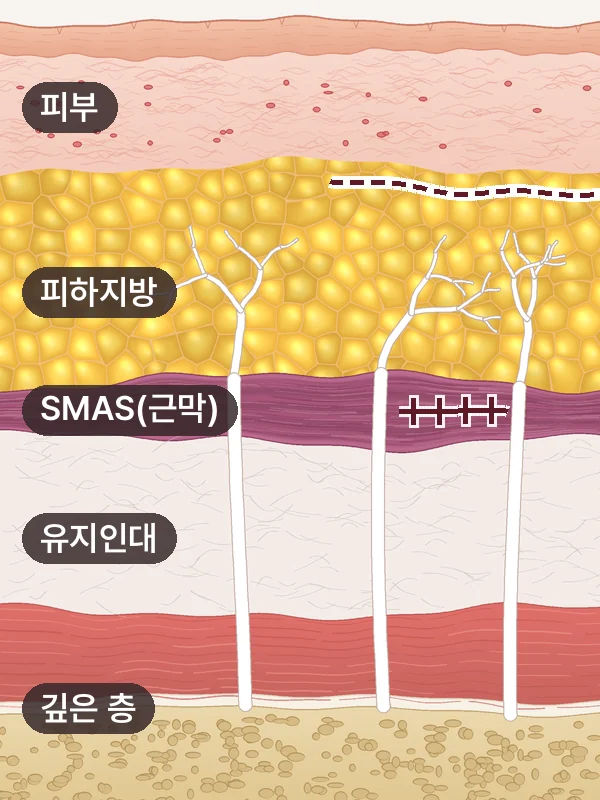
  • Mini FaceliftPartial subcutaneous dissection and SMAS sutureFacelift Type-by-Type Dissection Layer Comparison Diagram — Mini Facelift: Dissection plane on part of the upper subcutaneous fat, suture to SMAS fascia (explanatory illustration)
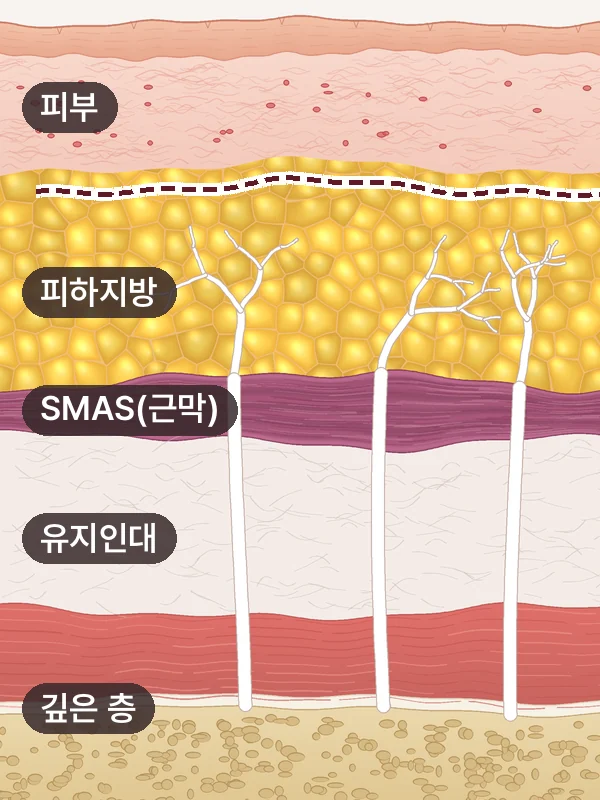
  • Subcutaneous LiftWide subcutaneous dissectionFacelift Type-by-Type Dissection Layer Comparison Diagram — Subcutaneous Lift: Wide dissection plane in the subcutaneous fat layer immediately below the skin (explanatory illustration)
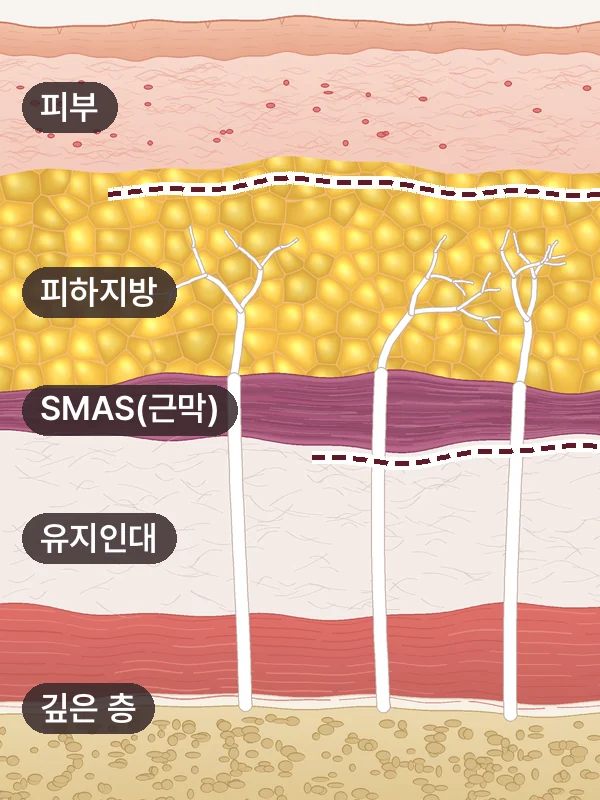
  • SMAS LiftSeparate dissection of the subcutaneous layer and below the SMASFacelift Type-by-Type Dissection Layer Comparison Diagram — SMAS Lift: Dissection planes in two locations — subcutaneous layer and below the SMAS (explanatory illustration)
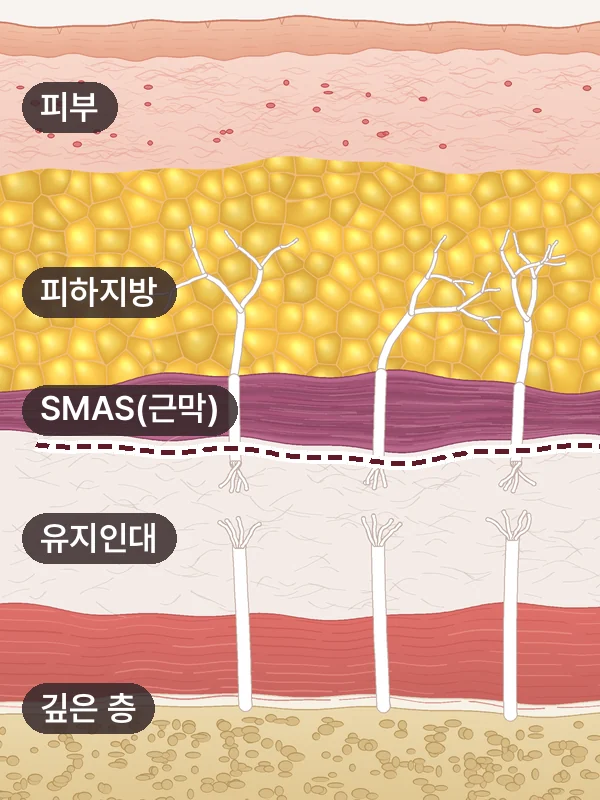
  • Deep PlaneDissection of the layer below the SMAS and release of retaining ligamentsFacelift Type-by-Type Dissection Layer Comparison Diagram — Deep Plane: Dissection plane below the SMAS layer and released retaining ligaments (explanatory illustration)
Illustration: Facelift Type-by-Type Dissection Layer Comparison. Dotted lines indicate dissection planes, vertical lines indicate sutures.
The illustrations are explanatory diagrams to aid understanding.

At-a-Glance Comparison by Type

As one progresses from Mini Facelift to Deep Plane, the incision and dissection become deeper and wider, and the range of improvement also widens accordingly; however, surgical difficulty and recovery period also increase together. There is no type that is unconditionally better; the key is to choose the surgery that matches the degree and location of one's own sagging.

CategoryMini FaceliftSubcutaneous LiftSMAS LiftDeep Plane
IncisionIn front of ear~earlobeIn front of ear~behind earIn front of ear~behind ear ±scalpIn front of ear~behind ear·scalp
Dissection LayerLimited Subcutaneous + SMAS SutureSubcutaneous LayerSubcutaneous + SMAS TreatmentBelow SMAS
Main Improvement AreaInitial JawlineSkin LaxityJawline·CheeksMidface·Nasolabial·Jawline·Neck
RecoveryFastModerateModerateRelatively Long
DurationShort SideShort SideMediumLonger
DifficultyLow to mediumMediumMedium to highHigh

※ Recovery and maintenance periods vary greatly depending on skin condition, degree of sagging, and lifestyle habits.

How do the methods and pros & cons differ by type?

The following is a general explanation to help understand the methods and pros & cons by type. The methods performed at ImageUp Plastic Surgery Clinic will be explained during consultation.

Mini Facelift

Method
A short incision is made from in front of the ear near the sideburns down to below the earlobe. After limited undermining of the skin, the SMAS layer is folded and sutured or tightened in a purse-string shape and lifted upward, and the excess skin is trimmed.
Advantages
The short incision means less scar burden and shorter surgery time. Swelling and recovery are also relatively quick.
Disadvantages
Due to the short incision, improvement to the neck or under the chin is difficult, and the effect on nasolabial folds or midface sagging in front of the cheekbones is limited. If sagging has already progressed significantly, the effect may be weaker than expected, and the maintenance period is shorter than with deeper lifts.
Recommended for
Early sagging where the jawline border is beginning to blur, or cases where the effect of thread lift was short-lived

Subcutaneous Lift

Method
The skin and subcutaneous fat are widely undermined, and only the skin is pulled to excise the excess portion. This is a classic method that does not touch the deeper structural layers.
Advantages
Because the deeper layers are not touched, the risk of facial nerve damage is relatively low, and the effect of trimming sagging skin is immediately visible.
Disadvantages
Because only the skin is pulled while leaving the sagging deeper tissues in place, all the pulling force is applied to the skin and incision line. This makes scarring prone to widening, can create a commonly called “pulled look,” and sagging recurs quickly. In addition, if blood flow to the thin skin flap is insufficient, there is a risk of skin necrosis, so caution is especially needed for smokers.
Recommended for
When skin laxity is the main issue or wide undermining is burdensome. Nowadays, it is used selectively rather than as subcutaneous lift alone, or as part of another lift procedure.

SMAS Lift

Method
After undermining the skin, the underlying SMAS layer is treated separately. There are SMAS plication (folding and suturing), SMAS excision (partial removal and suturing), SMAS flap (lifting as a flap), and high SMAS (extending undermining above the zygomatic arch to enhance midface effect). The key is dividing the skin and SMAS into two layers so they can be pulled in different directions and with different forces.
Advantages
Because the sagging structural layer itself is pulled, it is a method that reduces tension on the skin. It is mainly used to improve jawline and cheek sagging and has been performed for a long time.
Disadvantages
The cheekbones and nasolabial area have ligaments that firmly hold the tissues, so SMAS lift alone without releasing the ligaments has limitations in midface improvement. In addition, the wide undermining required to separate skin and SMAS can cause swelling, and results can vary depending on the specific technique used.
Recommended for
Moderate sagging of the cheeks and jawline

Deep Plane Lift

Method
Instead of above the SMAS, the procedure enters the deep plane space below the SMAS. Supporting ligaments such as the zygomatic ligament, masseteric cutaneous ligament, and mandibular ligament are released. Once released, the skin, fat, and SMAS move as one thick unit (composite flap), which is mainly repositioned in an upward direction.
Advantages
Because ligaments are released, it can improve a wide range at once—including the midface and nasolabial folds that were limitations of SMAS lift—as well as the jawline and neck. Because it repositions the deep layers rather than pulling the skin, facial expressions remain natural, and tension on the incision line tends to be low. Because the flap is thick and has good blood supply, the risk of skin necrosis is known to be relatively low, and the maintenance period varies from person to person.
Disadvantages
Because the dissection plane is close to the facial nerve branches, precise anatomical understanding and proficiency are essential. Surgery time is long, cost is high, and there may be initial swelling. Above all, it is the procedure with the greatest difference in results depending on the surgeon’s experience.
Recommended for
Overall sagging from the midface to the jawline and neck, revision surgery after previous lift with recurrent sagging, cases where skin and soft tissue are thick and heavy

※ All surgeries have individual differences in results and recovery, and side effects such as hematoma, nerve damage, or scarring may occur. Please decide after sufficient consultation.

What lift is right for me?

Facial sagging results from changes in multiple tissues, including the skin, fat, SMAS, and retaining ligaments. Therefore, the location and degree of sagging, skin elasticity, and the anatomical structure of the face are comprehensively evaluated to select the appropriate surgical method.

Main concernOptions to consider
Early sagging in which the jawline gradually becomes less definedLimited-range lifts such as a mini facelift
When skin laxity is more prominent than deep-tissue saggingSkin-focused lift
Moderate sagging of the cheeks and jawlineFacelift including SMAS correction
Deep-tissue sagging of the midface and nasolabial areaSMAS flap or deep plane lift including retaining ligament release
Sagging skin and muscle under the chin and on the neckCombined neck lift and platysma muscle correction
Volume loss in the cheeks and templesCombined volume correction such as fat grafting

※ The above is a general reference guide, and the actual surgical method is determined after consultation with a Plastic Surgery Specialist (Korea). Even within the same age group, the surgery needed may differ depending on skin elasticity and the cause of sagging.

Surgeries and treatments considered together

Facelift is a surgery that corrects the 'position' of sagging tissue. However, aging involves not only position but also issues of 'volume' and 'skin quality,' so there are things to consider together.

Neck Lift
If neck wrinkles or sagging under the chin are severe, through submental incision Neck Lift, platysma muscle suture is performed together.
Fat Grafting
If the cheeks or temples are hollow, Fat Graftingis used to fill the volume.
Forehead Lift
If the forehead and eyebrows have sagged, Forehead Liftis considered separately.
Regenerative treatment
Regenerative treatment is sometimes performed in parallel for skin quality and elasticity management after surgery.

Facial skin thickness and elasticity, fat distribution, the position of the retaining ligaments, and the degree of tissue sagging differ from person to person.

Therefore, a facelift is not simply about pulling the skin tight; it is important to accurately evaluate the tissues causing the sagging and correct them within the necessary range.

In addition, the surgery is planned with the aim of a natural, harmonious result, taking into account the position of the incision line, the tension placed on the skin, and even the characteristics of scarring.

Facelift, what should be considered?

SMAS layer correction

Not only the skin but also the underlying SMAS fascial layer is dissected, moved, and fixed to correct sagging facial tissue more stably.

Incision site

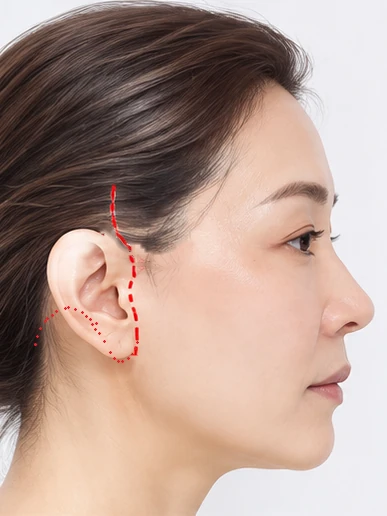
It starts around the temporal hair, runs in front of and around the ear, and depending on the surgical range, may extend to behind the ear or the scalp.

Procedure elements

Radiofrequency dissector dissection, full-layer traction under the fascia, 45-degree facial skin fascial flap rotation, and fat repositioning are applied according to the patient's condition.

Limitations and side effects

Discomfort due to aging, slow recovery, short duration of effect, adhesions, complications, etc., may be more burdensome than other procedures, so they are explained together during consultation.

  1. 1Design and incisionIt is designed according to the individual and then incised.Facelift surgery process explanation image step 1 of 4 — Design and incision. Image showing red incision lines marked in front of and around the ear on the side of the face (AI-generated image)
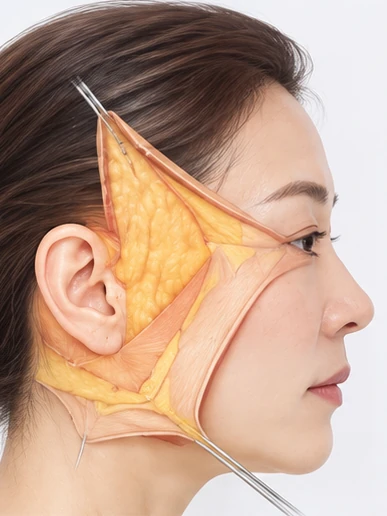
  2. 2Skin dissectionThe skin is dissected through the incision site.Facelift surgery process explanation image step 2 of 4 — Skin dissection. Image showing the skin lifted from in front of the ear to the cheek on the side of the face, revealing the layer beneath (AI-generated image)
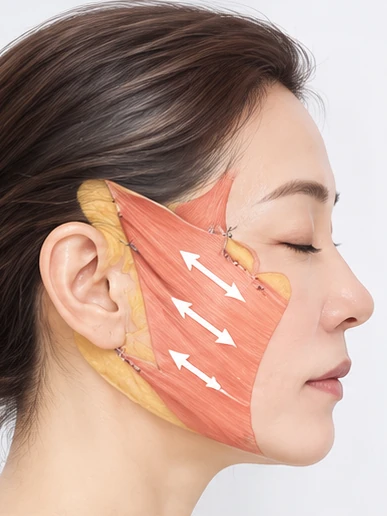
  3. 3SMAS layer movement and fixationThe SMAS layer is pulled upward and fixed.Facelift surgery process explanation image step 3 of 4 — SMAS layer movement and fixation. Image showing three white bidirectional arrows marked on the cheek area layer on the side of the face (AI-generated image)
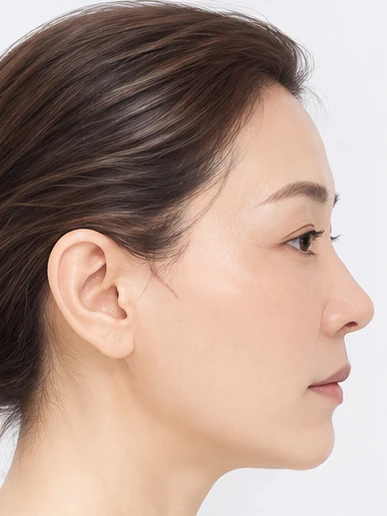
  4. 4Skin suture and finishingThe excess skin is trimmed and sutured.Facelift surgery process explanation image Step 4 of 4 — Skin suture and finishing. Side face image (AI-generated image)
Image: Facelift surgery process
These are illustrative images, not actual patient or surgical outcome photos. The actual method is determined individually during consultation.

What are the side effects of facelift and what should be checked before surgery?

A facelift is a surgery that dissects and repositions the skin and deep facial tissues, and various complications can occur depending on the surgical range and the individual's health. It is important to fully check risk factors before surgery and manage them appropriately.

Hematoma
This is one of the early complications that require the most attention after surgery. It mainly occurs within 24 hours after surgery, and elevated blood pressure or medications that increase bleeding risk can contribute. Depending on the size and condition of the hematoma, additional treatment or surgery may be needed.
Facial nerve damage
If the facial nerve is stimulated or injured during surgery, temporary weakness of the facial expression muscles or facial asymmetry may occur. In many cases this recovers over time, but rarely, permanent functional impairment may remain.
Skin necrosis and delayed wound healing
If blood circulation to the skin decreases, wound healing may be delayed or necrosis may occur in part of the skin. Smoking, hematoma, and excessive skin tension can increase the risk.
Scarring and earlobe deformity
Scars may remain at the incision site and may become noticeable depending on individual skin characteristics and the wound-healing process. Changes in skin tension or earlobe position may also cause a deformity in which the earlobe is pulled downward.
Hairline changes and hair loss
Temporary hair loss may appear around the incision site, and rarely, permanent hair loss or changes to the hairline may occur.
Reduced sensation and asymmetry
Numbness and reduced sensation may occur around the ears or on the face due to effects on the cutaneous sensory nerves. Most cases improve over time, but some may persist for a long time. Asymmetry may also appear due to differences in swelling or tissue recovery.
Infection and other complications
Rarely, infection, wound separation, salivary gland injury, or salivary leakage may occur, and additional treatment may be needed depending on the condition.

The two keys to reducing these risks are proficiency in facial anatomy and how thoroughly risk factors are managed before surgery.

Pre-surgery check

Smoking cessation
Smoking and nicotine use can affect skin blood flow and wound healing, so sufficient abstinence from smoking before and after surgery is necessary.
Medications and supplements
Aspirin, anticoagulants, some anti-inflammatory painkillers, and supplements can affect bleeding risk. Be sure to tell the medical team about any medications you are taking, and discuss whether to stop them with the medical team in charge.
Blood pressure management
Uncontrolled high blood pressure can increase the risk of bleeding and hematoma after surgery, so blood pressure must be kept stable before surgery.
Checking underlying conditions
Health conditions that may affect surgery and recovery, such as diabetes, cardiovascular disease, and bleeding disorders, are checked in advance, and the necessary tests are carried out.

From pre-surgery preparation to recovery management

If you are curious about facelift — KakaoTalk 1:1 consultation

The appropriate method varies depending on the degree and extent of sagging, so you can make a preliminary inquiry via KakaoTalk before treatment.

Frequently asked questions about facelift

Is facelift a surgery that only pulls the skin?

Question details: When I look at the website of hospitals that perform facelift, it seems that they do not just cut the skin, but I am curious what it means to pull the SMAS.

Facelift is not simply a surgery that cuts and pulls sagging skin. Below the skin there is a fascial layer called SMAS, and as aging progresses, not only the skin but also this layer sags together. In facelift, the SMAS layer along with the skin is appropriately dissected, moved, and fixed to correct the sagging facial tissue more stably.

What is the difference between mini facelift and facelift?

Question details: I am curious if mini facelift means cutting only a little.

It is not simply a difference in incision length. In general, mini facelift is performed when sagging is relatively mild and the range to be corrected is not large, and the dissection and correction range is also relatively limited. If sagging is severe or a wide range from the cheeks to the jawline needs sufficient correction, a full facelift may be more appropriate.

Does facelift completely remove deep nasolabial folds?

Question details: I am in my late 40s and considering facelift because my nasolabial folds are deep.

If facelift moves the sagging cheek tissue closer to its original position, nasolabial folds can be alleviated. However, nasolabial folds are caused by various factors such as adhesion between skeleton and skin and fat distribution, so they do not disappear completely with facelift alone. Over-pulling with the goal of making nasolabial folds completely invisible is also unnatural.

Do sagging deep cheek fat and jowl fat improve with facelift?

Question details: I have tried laser and thread lift because of deep cheek fat or jowl fat, but it still looks sagging.

As one ages, the cheek tissue that has sagged downward and jowl fat on the jawline are the main correction targets of facelift. Moving the sagging tissue in the appropriate upward and outward direction can make the blurred jawline more defined. However, if there is excessively much fat itself, liposuction or other methods may be considered together.

Does facelift remove double chin?

If the sagging under the chin is caused by the descent of facial soft tissue and skin, it can be improved to some extent with facelift. However, if the cause of double chin is submental fat, sagging of neck muscles, or jawbone structure, facelift alone may not be sufficient. Neck lift or liposuction may be considered together as needed.

Does facelift also improve neck wrinkles or sagging neck?

Question details: My face is okay, but my sagging neck makes me look old.

A standard facelift can improve the jawline and upper neck to some extent, but it does not fully correct severe sagging of the entire neck. If the neck skin is significantly loose or the platysma muscle that creates vertical neck bands is severely sagging, performing a neck lift together may be more effective in some cases.

Will I look fierce because my face is pulled too tightly after a facelift?

Question details: I am worried that a facelift will pull my face too much, making my eyes or lip corners look raised and giving a fierce impression. I am concerned because I know someone whose impression worsened after surgery.

Simply pulling the face strongly to the side can cause unnatural changes around the eye corners or mouth. In a natural facelift, it is important not to pull the skin excessively but to move the sagging deep tissues in the appropriate direction and to redrape the skin without tension. Right after surgery, it may look tighter than usual due to swelling and pulling sensations.

Where do the facelift scars occur?

Question details: I wonder if they are invisible when I tie my hair up.

In general, the incision starts around the hairline at the temple, then runs in front of and around the ear. Depending on the surgical area, it may extend behind the ear or to the scalp. Scars are hidden as much as possible by using natural wrinkles and the border of the ear, but this surgery does not eliminate scars completely.

Can the scar on the incision line in front of the ear remain white or become widened?

Question details: I heard there is an incision in front of the ear and that it can change the shape of the ear.

Initially, the incision line may look red or firm, and it gradually fades over time. However, depending on skin constitution, wound tension, and the healing process, scars may remain widened or with altered color. Suturing the skin with excessive tension can apply unnecessary force to the scar, so it is important to adequately support the deep tissues.

After a facelift, can the ear shape become longer or the earlobe pulled?

The change in which the earlobe is pulled downward and appears longer after a facelift is commonly called 'pixie ear.' It can occur if excessive tension is placed on the skin or if fixation of the tissues around the ear is not appropriate. Therefore, it is important to perform the surgery so that excessive force is not applied to the skin itself.

In a facelift, the incision is also inside the hairline, so can the sideburn position change or disappear?

Depending on the incision location and the direction in which the skin is moved, the position of the sideburns or hairline can change. This change can be more problematic especially in cases of revision surgery. It is important to check the hairline and sideburn positions before surgery and plan the incision and skin movement direction accordingly.

It has been 6 months, but my face still feels numb or like someone else's skin after the facelift. Is this okay?

Because small sensory nerves are affected during the skin undermining process, the area around the ears or cheeks may feel numb or strange after surgery. Most cases improve gradually during the recovery process, but it can take considerable time for sensation to return, and in rare cases, sensory changes may persist for a long time.

Can nerves be damaged during a facelift?

Question details: I am worried because I heard that a facelift done incorrectly can cause the mouth to become crooked.

The facial nerve is an important nerve that moves facial expressions and runs anatomically close to the facelift surgical site. Although rare, if the nerve is damaged or its function is temporarily reduced, abnormalities may occur in movements of the forehead, eyebrows, around the mouth, etc. Therefore, a thorough understanding of facial nerves and anatomical structures is very important in facelifts.

One side of my lip corner or eyebrow movement is strange after surgery. Is this nerve damage?

Question details: Occasionally after surgery, one side of my lip corner or eyebrow movement is strange. I wonder what to do if this continues.

It does not necessarily mean permanent nerve damage. Differences in left and right movement can appear due to postoperative swelling, tissue pulling, or temporary irritation around the nerve. However, if distinct facial asymmetry occurs, it is important to check the cause at the clinic where the surgery was performed and monitor the progress.

It is 2 weeks after my Facelift, but my face is still very swollen and the bruising is also severe. When can I meet people?

Because the surgical area is extensive, significant swelling and bruising can occur initially. Major swelling and bruising gradually decrease, but residual swelling, facial firmness, and pulling sensations may last longer. If you have important appointments or events, it is advisable to schedule surgery with sufficient recovery time.

At 3 weeks after Facelift, one side of the face suddenly became swollen and firm. Is this a side effect?

Question details: Since last week, one side of my face has suddenly become very swollen and firm.

Swelling and bruising are common after a facelift, but if one side suddenly becomes severely swollen or tight with increased pain, it is necessary to check for hematoma. Especially if swelling increases rapidly right after surgery, do not assume it is simple swelling and wait; contact the clinic where the surgery was performed immediately. Additional treatment may be required depending on the size and condition of the hematoma.

I heard that skin necrosis, where the skin turns black and dies, can occur after a facelift. Is that true?

Although rare, if blood supply to the undermined skin area is insufficient, skin damage or necrosis can occur. Various factors such as the extent of surgery and skin condition affect this, and smoking in particular can impair skin blood circulation and increase the risk. Therefore, it is very important for smokers to quit smoking before and after surgery.

I am a smoker. Do I have to quit smoking if I undergo a facelift?

Question details: I am also curious if switching to e-cigarettes would be okay.

Nicotine constricts blood vessels and can adversely affect blood supply to the operated skin and wound healing. Not only regular cigarettes but also e-cigarettes or nicotine products containing nicotine can be problematic. The smoking cessation period may vary depending on the surgical extent and patient condition, so it is important to quit smoking for a sufficient period according to the medical staff's instructions before surgery.

After a facelift, can the hair around the ears or at the temples fall out?

If the incision is located around the scalp or hairline, hair around the incision may fall out temporarily after surgery. In most cases it regrows over time, but if hair follicles are damaged or wide scars remain, some hair loss may persist. It is important to consider the existing hairline and hair direction when determining incision placement.

Do I have to wear a compression band after a facelift?

Question details: I wonder if the longer I wear it the better the face adheres, and for how many months I need to wear it.

A compression band can help stabilize initial swelling and the surgical site, but wearing it tightly for a long time does not improve the lifting effect. Excessive compression can instead press on the skin and around the ears, causing discomfort. It is best to follow the instructions from the clinic where the surgery was performed regarding wearing method and duration, according to the surgical extent and recovery status.

After a facelift, when can I start washing my face, shampooing, dyeing my hair, or exercising?

Question details: I am curious if I cannot wash after a facelift. Since there are incisions on the scalp, I think I won't be able to wash my hair.

Light face washing or shampooing may be possible relatively early depending on the condition of the incision site, but care must be taken not to rub or irritate the wound. Procedures involving chemicals that may touch the incision site, such as dyeing or perming, are best performed after the wound has sufficiently healed. Strenuous exercise can also increase swelling or bleeding in the early stages, so it should be started gradually according to the recovery status.

One month after facelift, the areas around the cheeks and ears feel hard and are being pulled severely. Is there something wrong with the skin?

Facelift is a surgery that widely dissects under the skin and moves tissues, so during the recovery process, the area under the skin may feel firm or a pulling sensation may persist for a considerable period. In many cases, it gradually becomes more natural as swelling and scar tissue soften. However, if pain or redness worsens or one area becomes abnormally firm, it is advisable to have the condition checked.

After facelift, the jawline or cheeks look uneven. Was one side pulled less?

Question details: I am worried that one side was pulled less or cut less during surgery.

In the early stages after surgery, the speed at which swelling, bruising, and tissues settle on both sides differs, so asymmetry may appear more pronounced. Many faces originally have some degree of asymmetry in the skeletal structure and soft tissues. Therefore, rather than judging the surgical outcome based only on the early appearance, it is better to evaluate the remaining asymmetry after sufficient recovery.

Does a facelift really make you look 10 years younger?

Question details: I have also heard that the effect lasts 10 years, but I am curious if it does not sag again soon.

It is difficult to express the effect of facelift for everyone as 'looking 10 years younger' or 'lasting exactly 10 years.' Surgery can move sagging tissues closer to the position from when they were younger, but natural aging continues even after surgery. There are individual differences in long-term changes depending on skin elasticity, degree of aging, surgical scope, lifestyle habits, and so on.

From what age is it good to have a facelift?

Question details: I am in my late 40s and was recommended surgery during a hospital consultation. I am also curious if doing it too early means I cannot do it again later.

Facelift is not a surgery that must be done at a specific age. It is more important to decide based on the degree of sagging in the face and neck compared to actual age, skin elasticity, and the desired range of improvement. Even if relatively young, surgery can be considered if sagging is pronounced, and even if older, it is not necessarily required if sagging is not severe. Even if a facelift was performed previously, if sagging progresses again over time, revision surgery can be considered depending on the condition.

Should I do fat grafting and filler together?

Aging comes with both sagging and volume loss. Even if sagging tissues are lifted with a lift, if the temples, front cheeks, and under the eyes are hollow, one may still look tired, so fat grafting is often performed together. And if you have had a lot of filler in the past, it must be evaluated before surgery, and in some cases it is removed first before proceeding.

Is it okay with smoking, alcohol, and medications I am taking?

Smoking is the biggest risk factor for skin necrosis and delayed wound healing. It is recommended to quit smoking for at least 4 weeks before and after surgery. It is best not to drink alcohol starting 1-2 weeks before surgery. Antiplatelet agents or anticoagulants such as aspirin, and health supplements such as omega-3 or ginkgo leaf extract can also increase the risk of bleeding. However, you must not stop them on your own, and you should consult with the prescribing doctor to decide whether to discontinue. Underlying conditions such as high blood pressure or diabetes must be well controlled before surgery. Please tell us everything about the medications you are taking and your health condition during the consultation.

Is the surgery very painful?

Question details: I am also curious about how the anesthesia is done.

During surgery, sedation or general anesthesia is used along with local anesthesia. Postoperative pain is not as severe as expected for most people and is controlled with oral painkillers. What patients find more uncomfortable is not the pain but the pulling sensation, pressure, and swelling.

Recovery progress: When can I return to work?

For the first few days immediately after surgery, swelling and bruising are rising, so a compression band is worn and rest is taken. Sutures are removed around one week. Initial swelling and bruising generally improve over 2–4 weeks, and office workers usually return around 2 weeks. By then, it can be somewhat covered with makeup. After about 4 weeks, light exercise and sauna can be resumed. The pulling sensation, dull sensation, and minor swelling gradually resolve over 3 to 6 months. Recovery speed varies by individual.

If it sags again, is revision surgery possible?

Yes, it is possible. However, because tissues have adhered and anatomical structures have changed from the first surgery, the difficulty is higher than the first surgery. If you are considering revision surgery, we recommend consulting with medical staff who have sufficient experience in revision surgery.

What does the cost depend on?

The cost varies depending on the surgical scope (how far it covers the forehead, midface, lower face, and neck), the layer dissected, whether concurrent surgeries such as fat grafting or eye surgery are performed, and the anesthesia method. Even with the same name 'lift,' if the content differs, comparing only the price is meaningless. Therefore, when receiving a consultation, be sure to ask these three things along with the price: how far it corrects, which layer is pulled, and what is included in that price.

I am curious if it can be done with thread lift or laser, or if surgery is necessary.

If sagging is mild and skin elasticity has decreased to a certain degree, improvement can be expected with energy lifting such as ultrasound or radiofrequency, or with thread lift. If the jawline has collapsed, cheek fat has descended causing nasolabial folds and mouth wrinkles to deepen, or neck skin has sagged, there are limits to returning already descended tissues to their original position with only heat or threads. If you have undergone multiple procedures but still feel dissatisfaction, it may be time to consider surgery. Which option is appropriate is determined by examining the degree of sagging during consultation.

Is facial sagging caused by the skin stretching?

Facial aging occurs across multiple layers, not just one layer of skin. Skin elasticity decreases, subcutaneous fat decreases and descends downward, and the SMAS, the fascial layer under the skin, becomes loose. The retaining ligaments that anchor facial tissues to the bone also weaken, and as the bone is gradually resorbed, the support itself becomes smaller. Therefore, methods that pull only the skin have limitations, so lifting procedures that address deeper layers together are used.

How are SMAS lift and deep plane lift different?

SMAS lift is a method in which the skin is dissected and then the fascial layer (SMAS) underneath is separately folded or pulled and fixed, mainly addressing sagging of the jawline and cheeks. Deep plane lift enters below the SMAS layer, releases the retaining ligaments around the cheekbones and jaw, and moves the skin, fat, and SMAS as a single unit. Therefore, it can address the midface and nasolabial areas as well, but because it handles layers close to the facial nerve branches, it requires higher proficiency. Which method is appropriate is determined by diagnosing which area and which layer the sagging has occurred in, rather than by the surgery name, and the methods performed at our clinic are explained during consultation.

How is a facelift planned differently for each person?

Facial skin thickness and elasticity, fat distribution, the position of the retaining ligaments, and the degree of tissue sagging differ from person to person. Therefore, a facelift is not simply about pulling the skin tight; it is important to accurately evaluate the tissues causing the sagging and correct them within the necessary range. In addition, the surgery is planned with the aim of a natural, harmonious result, taking into account the position of the incision line, the tension placed on the skin, and even the characteristics of scarring.

I had thread lift or filler in the past. Should I mention it during the consultation?

You must let us know. The areas where you have received thread lift, filler, fat grafting, or radiofrequency/ultrasound lifting may have tissues adhered or layers altered. Letting us know when and what procedures you received will help in planning the surgery, and if you do not remember well, we may check with ultrasound.

I am taking hypertension medication. Can I still get a facelift?

If your blood pressure is well controlled, surgery can be considered. Hematoma, which is blood collecting under the skin after surgery, carries higher risk the higher the blood pressure, so blood pressure management before and after surgery is important. How to take your blood pressure medication on the day of surgery may differ depending on the type of medication, so please follow the hospital's instructions.

I am receiving obesity treatment injections such as Wegovy or Mounjaro. Do I need to tell you before surgery?

You must inform us in advance. GLP-1 class medications slow the rate at which the stomach empties, which can increase the risk of food entering the lungs during sedation or anesthesia. Even if you do not have diabetes and are using it for weight management, please be sure to mention it during consultation.

Do I also need to stop red ginseng, herbal medicine, or nutritional supplements before surgery?

Omega-3, vitamin E, ginkgo biloba extract, red ginseng, garlic extract, and herbal medicine can affect bleeding and are usually stopped 1-2 weeks before surgery. General anti-inflammatory analgesics are stopped 5-7 days before surgery. Do not stop medications you are taking for heart or cerebrovascular disease on your own; please consult with the prescribing doctor first.

What should I prepare and bring on the day of surgery?

You must fast for 8 hours before surgery for anesthesia. On the morning of the day, wash your hair thoroughly, and come without makeup, contact lenses, jewelry, or hair extensions. Front-button clothing that does not need to be pulled over the head is convenient, and since you cannot drive yourself after surgery, you must come with a guardian.

How should I manage at home after surgery to reduce swelling?

When lying down, elevate your head by 30-45 degrees with pillows, and apply cold compresses intermittently for the first 2-3 days. It is good to eat soft and lightly seasoned foods. Salty foods and alcohol can prolong swelling, so avoid them. Also refrain from opening your mouth wide or chewing hard foods for the time being.

If I feel pain or nausea after surgery, should I endure it?

Do not endure it; please tell us. Pain and vomiting can raise blood pressure and cause bleeding, so the hospital actively manages them.

Can anyone receive hyperbaric oxygen therapy?

There are cases where confirmation is needed before receiving it. If you have a cold, rhinitis, otitis media, lung disease, or claustrophobia, please inform us in advance. Your ears may feel stuffy during treatment, but swallowing saliva or yawning can improve it. Electronic devices such as cell phones, hair products, and oil-based cosmetics cannot be brought into the chamber.

After a facelift, can I receive radiofrequency or ultrasound lifting elsewhere?

For at least 3 months after surgery, do not receive radiofrequency or ultrasound lifting elsewhere and please consult with us first. This is because sensation around the cheeks and ears may be dulled for a while, making it difficult to feel heat well. Those using a cardiac pacemaker cannot receive the hospital's radiofrequency massage management.

How do I care for facelift scars?

After removing the stitches, use silicone scar ointment or sheets for more than 3 months, and apply sunscreen thoroughly. If the scar becomes red or thick, scar laser or injection treatment can be performed together after 4-8 weeks. Scars stabilize over 6 months to 1 year and gradually fade.

What symptoms after surgery require me to contact the hospital immediately?

If you have the following symptoms, please contact us immediately without waiting. When one side of the face suddenly swells or a bruise enlarges, when the wound is red and hot or pus comes out, when the skin color turns dark red or blisters form, when lip corner movement or eye closing becomes newly uncomfortable, or when you have a fever of 38 degrees or higher.

What side effects can occur with facelift surgery?

The most common complication is hematoma, which is blood collecting under the skin. It mainly occurs in the early postoperative period and is more frequent in men or those with high blood pressure, so blood pressure management before and after surgery is important. Temporary weakening of the facial nerve occurs rarely, and most recover within weeks to months, but it can rarely be permanent. Other possible issues include skin necrosis, sensory loss, hypertrophic scarring, earlobe deformity, incisional hair loss, and asymmetry.

Is there recovery management provided at the hospital after surgery?

ImageUp Plastic Surgery Clinic provides hair washing assistance after surgery, hyperbaric oxygen therapy, LED swelling management, LDM ultrasound management, and radiofrequency massage management according to the recovery stage. All management begins only after the medical director examines to confirm there is no hematoma or inflammation, and the start time and intensity are adjusted based on the recovery status.

When can the final result of a facelift be assessed?

The final result of a facelift is assessed between 6 months and 1 year after surgery. The speed of recovery varies from person to person.

Depending on the individual, side effects such as bleeding, infection, swelling, asymmetry, and scarring may occur, and the degree may vary. Please make your decision after sufficient consultation with a specialist.

※ Surgical method, recovery period, and results vary individually depending on the degree of sagging, skin condition, tissue condition, etc., and the exact surgical plan is determined after consultation. The possibility of side effects and complications will be explained together during the consultation.

For additional inquiries, contact us via KakaoTalk

1:1 KakaoTalk pre-inquiry — Mon–Thu 10:00 - 19:00 · Fri 10:00 - 21:00 · Sat 10:00 - 16:00.