

Revision Eye Surgery
What is revision eye surgery?
Revision eye surgery is a procedure that re-evaluates the condition and corrects it when the results of previously received double eyelid, canthoplasty, or ptosis correction surgery differ from the desired appearance or cause discomfort due to asymmetry, line loss, excessive canthoplasty, etc. Rather than judging the need for revision solely based on immediate post-operative swelling or scar contraction, priority is given to confirming the current state after the tissues and scars have sufficiently stabilized. The correctable range varies depending on the remaining tissue and scar extent, so individual evaluation through consultation is necessary. Eye surgery is performed by Medical Director Kwon Dohyun (Plastic Surgery Specialist (Korea)).
At a Glance
Revision eye surgery is a procedure that re-evaluates and corrects asymmetry, line loss, excessive canthoplasty, adhesion issues, etc., that appear after previous double eyelid, canthoplasty, or ptosis correction surgery. Completely reversing the pre-surgery anatomical structure can be difficult, so the possible correction range varies depending on the remaining tissue and scar condition. If there is inflammation (such as stye), treat it first before determining the revision surgery timing.
When to consider revision eye surgery?
Revision Eye Surgery Process
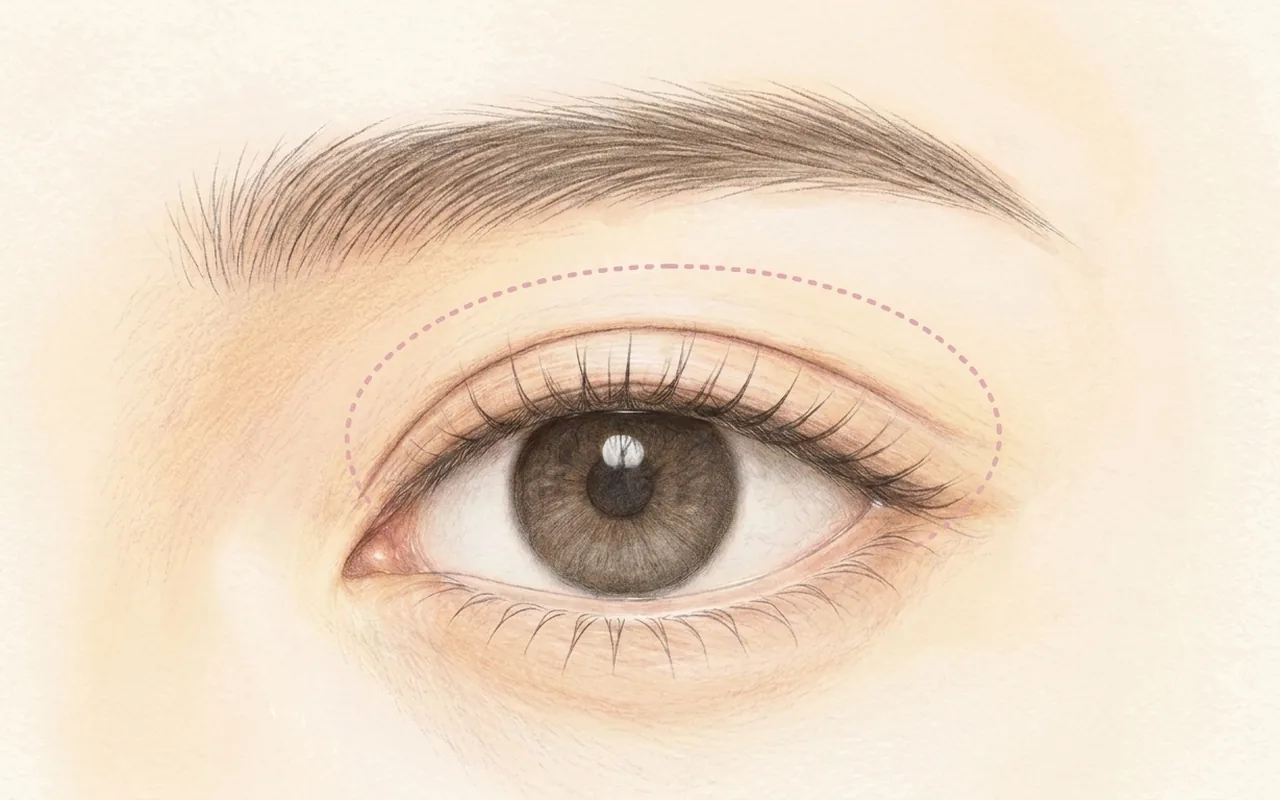
- 1Analysis of previous surgery and current statusComprehensively check the existing incision line and double eyelid line, skin laxity, scar and adhesion, amount of fat, eye-opening strength, and left-right difference.
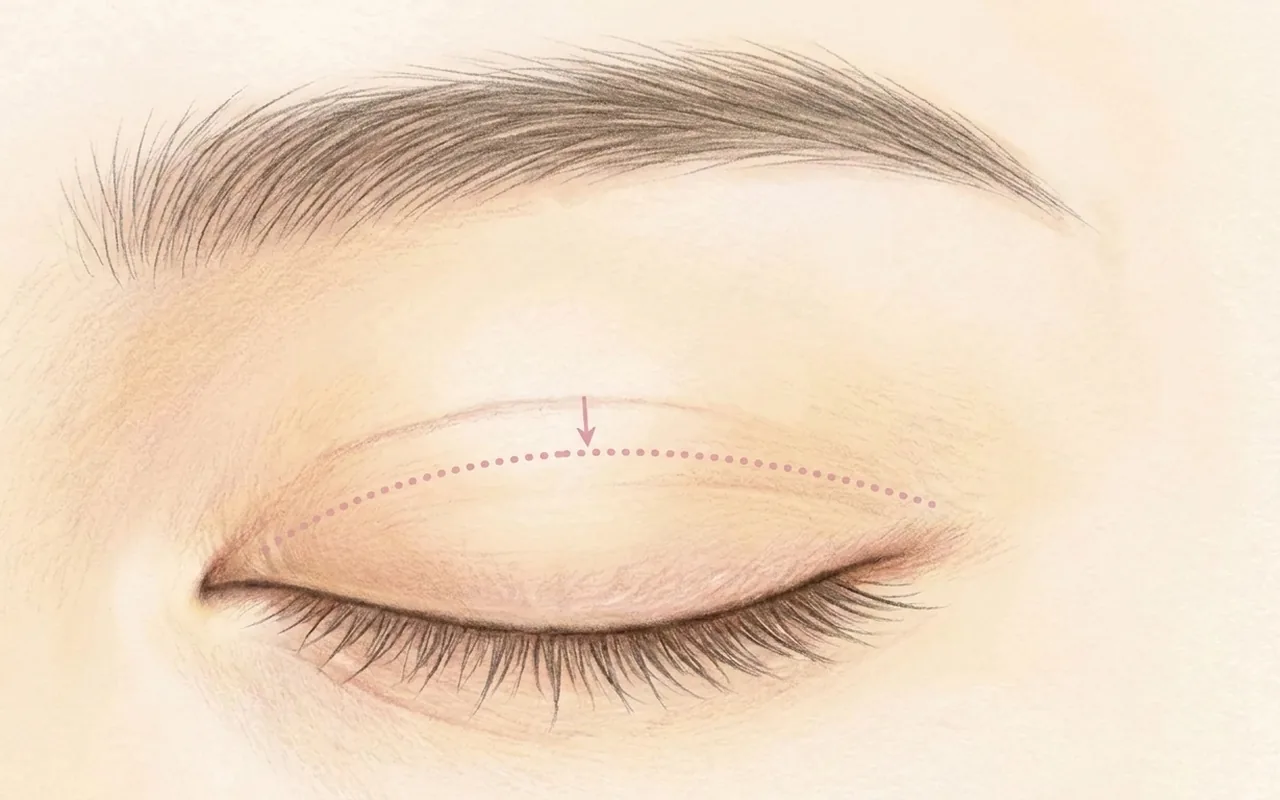
- 2Revision surgery designBased on the cause of the current problem, plan the new double eyelid height and shape, tissues to be corrected, and the range.
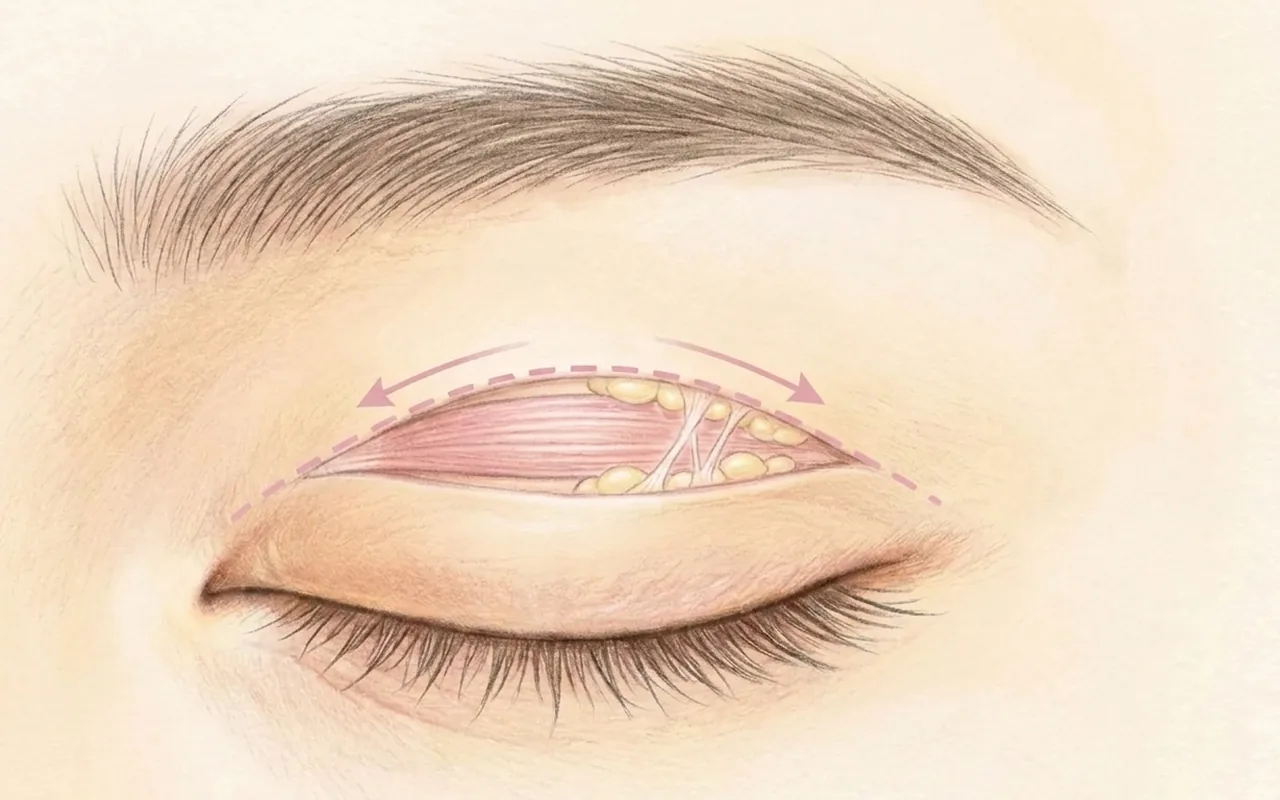
- 3Correction of existing adhesion and tissueAs needed, organize the existing double eyelid adhesion and scar tissue and correct the skin, muscle, fat, and eye-opening structure to suit the individual's condition.
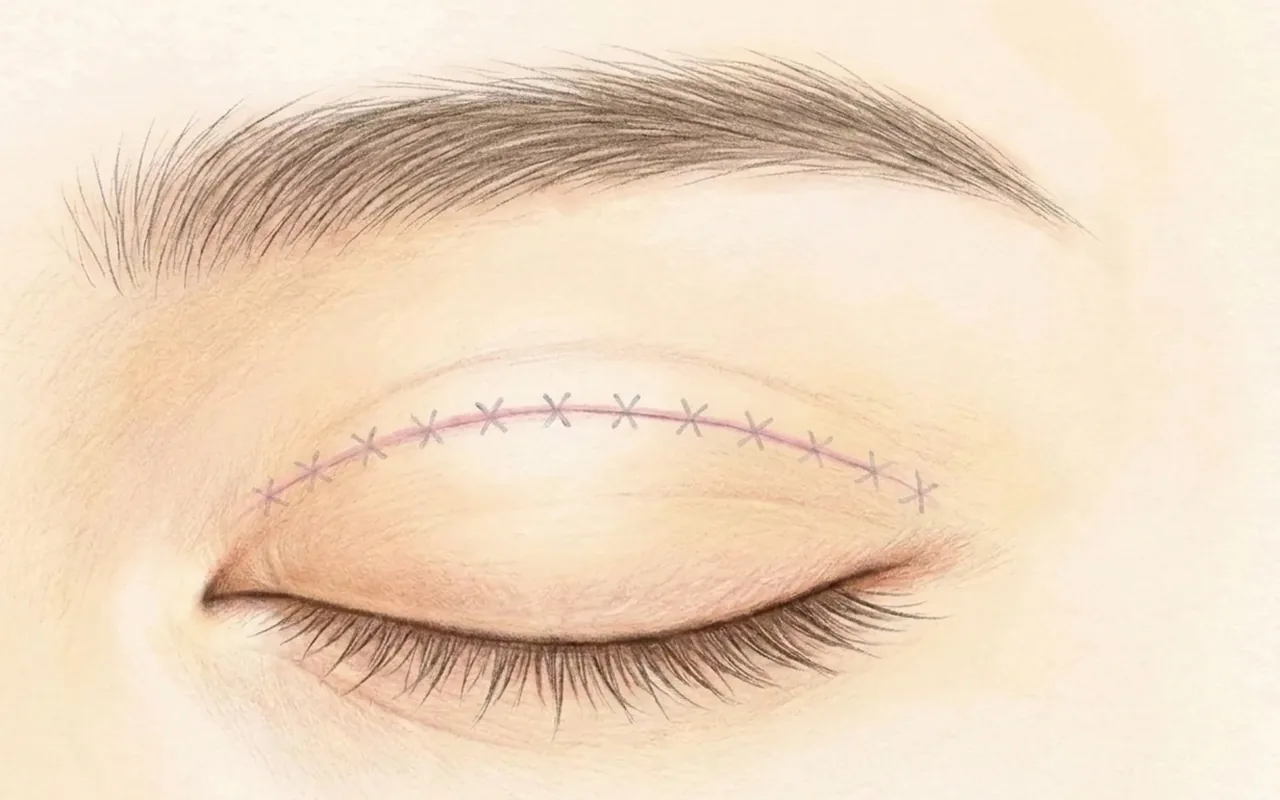
- 4New line formation and finishingForm a new double eyelid line and check the height and depth when the eyes are open, left-right balance, and degree of pupil exposure to finish in detail.
What do we check before revision surgery?
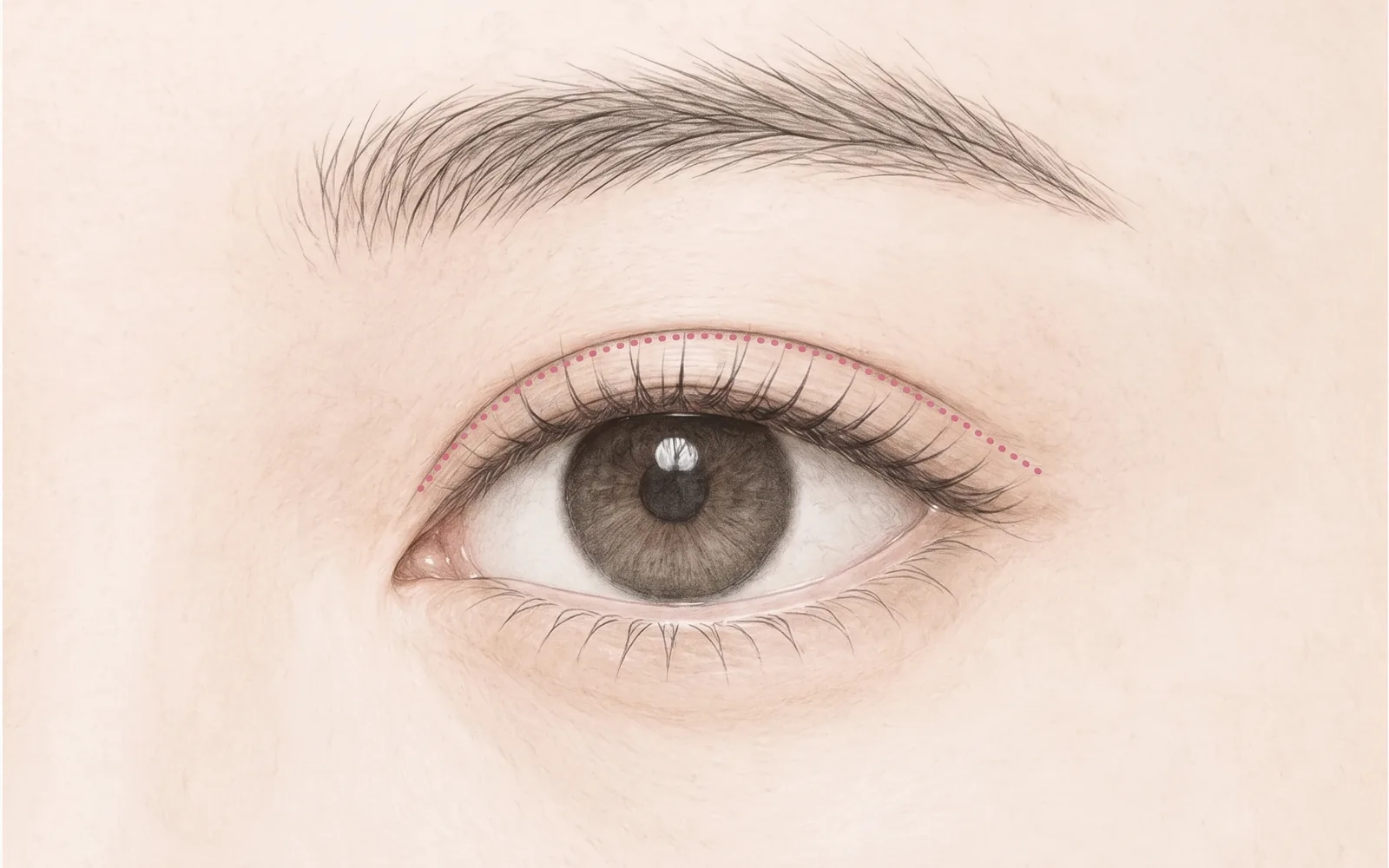
Key points of revision eye surgery
Revision eye surgery, KakaoTalk 1:1 consultation
Anesthesia method and recovery schedule for revision eye surgery can be inquired in advance via KakaoTalk before consultation.
Revision Eye Surgery Key Summary
Revision eye surgery is a procedure that re-evaluates and corrects asymmetry, line loss, overcorrection, etc. from previous eye plastic surgery. In the initial swelling and scar contraction stage, do not hastily judge whether to undergo revision surgery; the principle is to establish a correction plan based on the current state after the tissue and scar have sufficiently stabilized.
The correctable range varies depending on the previous surgical method and progress, so confirmation through consultation is necessary.
Recommended for
- When the double eyelid line is too high or too low
- When the double eyelid comes undone or becomes blurred
- When the height of both double eyelids or the eye shape differs
- When multiple layers of double eyelid lines appear
- When the line is excessively deep or unnatural
- When scars or adhesions from previous surgery are prominent
- When there is overcorrection, undercorrection, or asymmetry after ptosis correction
- When you want to improve the results of previous eye surgery more naturally
Determining the timing of revision surgery
Revision eye surgery does not necessarily require waiting a certain period; the appropriate timing varies depending on the type and cause of the problem.
In general, revision surgery is often considered after postoperative swelling and scar tissue have sufficiently stabilized, but if there is a functional problem or early correction is needed, a different timing may be selected after examination.
Therefore, it is recommended to evaluate the timing of the previous surgery and the current tissue condition together to make a decision.
Frequently Asked Questions
I’m not satisfied with my Double Eyelid Surgery. When can I have revision surgery?
In general, it is advisable to consider revision surgery after swelling from the first surgery has sufficiently subsided, scar tissue has softened, and the shape has stabilized. About 6 months later is often considered, but the timing may vary depending on the surgical method and the current condition of the eyes. If there are severe functional problems or suture abnormalities, earlier treatment may be needed in some cases.
My Double Eyelid Surgery is too high and deep. Can it be lowered?
It may be possible. For a high double eyelid, after checking the location and degree of existing adhesions, skin laxity, and tissue removed in the previous surgery, a method of releasing the existing adhesions and forming a line at a new position is considered. If there is insufficient skin laxity or adhesions are severe, the difficulty of surgery may increase.
My Double Eyelid Surgery is too low or has become like an inner double eyelid. Can it be raised?
After checking the position of the current crease and the amount of skin laxity, a double eyelid crease at a new height can be created. However, rather than raising it unconditionally, it is important to adjust it to a height that suits the face, considering factors such as the size of the eyes, the distance between the eyes and the eyebrows, and skin thickness.
My Double Eyelid Surgery has come undone. Do I need surgery again?
The treatment method differs depending on whether only part of the crease has weakened or whether it has come undone overall. Depending on the condition, it may be re-secured with the Non-incisional (Buried Suture) Method, or revision surgery with the Incisional Method may be more appropriate after assessing adhesions and skin condition.
The double eyelid heights are different on each side. Can you even out the asymmetry?
Asymmetry can be improved through revision surgery. However, preexisting asymmetry—including not only the double eyelid line but also brow height, eyelid-opening strength, eyeball position, and the amount of skin—must also be assessed. Rather than creating completely identical eyes, the goal is to achieve overall balance.
Can revision surgery be performed on just one eye?
Yes. If you are satisfied with the shape of the other eye and the problem is only on one side, revision surgery on one side only is also sometimes performed. However, the structure of both eyes and eyelid-opening strength should be compared together to confirm whether correcting only one side can achieve a natural balance.
Can a thick double eyelid like sausage eyes also be improved with revision surgery?
The cause of a bulky appearance—whether it is a high crease, excessive adhesion, scar tissue, tissue swelling, or eyelid-opening strength—must first be identified. Depending on the cause, methods such as releasing existing adhesions, lowering the crease, and refining the tissue may be considered.
The Double Eyelid Surgery crease has formed in multiple folds. Can it be refined into a single line?
Multiple crease lines can result from various causes, such as adhesions from previous surgery, excess skin, or hollowing above the eyes. Improvement can be achieved by releasing unnecessary adhesions and creating a new crease at the desired position, but if there is significant hollowing above the eyes, volume correction may also be considered.
When I close my eyes, the surgery scar is too visible. Can the scar also undergo revision surgery?
If a scar is wide, depressed, or uneven, a method of revising the scar tissue and resuturing may be considered depending on its condition. However, it is difficult to completely eliminate an existing scar, and the goal is to improve it into a more natural, less noticeable scar when the eyes are closed.
I think too much fat was removed in my first surgery. Can hollowness above the eyes also be corrected?
Hollowing above the eyes can appear not only from excessive fat removal but also from several causes, such as adhesions of the skin and soft tissue and aging. After checking the remaining tissue and the degree of hollowing, methods such as releasing adhesions or supplementing deficient volume with Fat Grafting may be considered.
I had Ptosis Correction, but my eyes open too wide or look startled. Can this be adjusted again?
If eyelid-opening strength has been overcorrected, revision surgery to adjust the degree of correction may be considered after checking current muscle function and the previous surgical method. Because revision Ptosis Correction must consider both function and eye shape, accurate analysis of the cause is important.
I had Ptosis Correction, but I still look sleepy. Can it be done again?
If eyelid-opening strength was not adequately corrected or a left–right difference remains, re-correction may be considered. However, a sleepy appearance can also be due to skin laxity or double eyelid height, so the actual function of the eyelid-opening muscle should be checked first before deciding on a revision surgery method.
Can Medial Epicanthoplasty or Lateral Canthoplasty also be restored?
If there is discomfort due to an overly open appearance, scarring, asymmetry, or similar issues, restoration surgery can be considered depending on the current tissue condition. However, the extent of possible restoration may vary depending on already excised tissue and the degree of scar adhesions, and restoring the area to a state completely identical to the original may be difficult.
Is eyelid revision surgery more difficult than the first surgery?
In general, revision surgery involves more factors to consider than the first surgery. This is because previous surgery may have changed the normal anatomical structure, or adhesions and scar tissue may have formed. It is important to understand the previous surgical method and the current tissue condition and to plan the surgery according to the remaining skin and fat, muscle, and the state of adhesions.
If I have revision surgery, can it be completely corrected to the desired shape this time?
Revision surgery is a surgery that analyzes current problems and improves them within the possible range. If a large amount of skin or fat was removed in previous surgery, or if adhesions and scarring are severe, there may be limits to the extent that can be corrected. Therefore, rather than completely returning the eyes to their original state, it is important to aim to create the most natural and stable eye appearance based on the currently remaining tissue.
3 months after incisional double eyelid and ptosis correction, the line looks broken; will it change more?
Question details: 3 months ago I had full incision, incisional ptosis correction, and medial epicanthoplasty. The mucous membrane in the middle part of one eye is slightly raised and the line does not go all the way, feeling slightly broken, so it looks blurry when taking photos. I am curious if it will not change any more as time passes.
If you had ptosis correction, changes can continue for 6 months or more after surgery. This is currently the period when scars etc. can be at their worst, so please do not be too stressed and observe the progress for a while.
Can the double eyelids be undone two days after Natural Adhesion·Ptosis Correction?
Question details: Two days ago I had Natural Adhesion, Ptosis Correction, and fat removal, but I want to undo it. 1. Before Double Eyelid Surgery I had a thin inner double eyelid; if undone, will it become a monolid or return to the original double eyelid 2. Is it better to undo it quickly before adhesion forms 3. Is the difficulty of the surgery on the difficult side 4. If undone, will the gap between the eyes and eyebrows return as before (it has become too close now) I am curious.
If it has only been 2 days since surgery, swelling etc. has not yet fully settled, so please reconsider. 1. It mostly returns to almost the original state, but because fat was removed, the line may change slightly. 2. You can remove it around one week after surgery. 3. It varies depending on the surgical method used, but it is not a difficult surgery. 4. If the anatomical structures were well preserved during surgery, it often returns close to the original state, but the line may differ depending on the condition.
Only one side is very swollen after revision eye surgery and canthoplasty. When should I get a swelling injection?
Question details: I underwent revision double eyelid surgery, incisional method, ptosis correction, medial epicanthoplasty, and dual canthoplasty (lateral canthoplasty and lower eyelid canthoplasty), and I am going to have the stitches removed tomorrow. The swelling does not seem to be going down and is similar to day 3, with little swelling on the right side but a lot on the left side like a sausage. It seems like it will be inconvenient to live with right away, so I am curious when I can get a swelling injection.
There are individual differences in swelling after surgery. If double eyelid surgery and canthoplasty are performed together, swelling, bruising, and conjunctival edema may occur more easily. Swelling and bruising become more severe for 2-3 days after surgery, and major swelling usually subsides about 1-2 weeks after stitch removal. Bruising and redness also gradually decrease. A swelling injection is helpful if received on the day of stitch removal, and improvement is faster if you also receive swelling laser treatment. Management such as cold compresses is also important.
Is it okay to undergo revision eye surgery while having a stye?
If the inflammation has currently subsided and the condition is stable, surgery is often possible, and the decision is made after checking your condition at a consultation. However, if there is pain and the inflammation has not fully resolved, the stye should be treated first before undergoing double eyelid surgery.
I had surgery yesterday. If both eyes look uneven, do I need revision surgery?
Immediately after surgery, swelling and bruising can appear differently on both sides, so eye size or eye tail position may look different. The asymmetry of the eyes you originally had also has an effect. Therefore, rather than judging left-right differences based only on the initial appearance, it is better to evaluate after swelling has sufficiently subsided and the tissue has stabilized.
If you are not satisfied with the epicanthoplasty surgery results, when can you have surgery again?
Question details: It seems not open enough and I feel upset.
Right after surgery, the eye shape continues to change due to swelling and scar contraction, so it is better not to decide on revision surgery too early. Unless there is a problem that requires early correction, the tissue and scar are allowed to stabilize sufficiently before evaluating the current condition to determine the timing and method of revision surgery.
After Lateral Canthoplasty and Lower Eyelid Canthoplasty, the outer eye corner looks too drooped. Will it rise a little over time?
Right after surgery, the outer eye corner may appear more drooped than expected due to swelling and fixed tissues. It is only that the outer eye corner appears lowered; the surgery does not forcibly lower the outer eye corner. As swelling subsides and tissues settle during the recovery process, the shape may become more natural, so it is difficult to judge the final result based only on the initial appearance.
It is the 7th day after lateral canthoplasty surgery, and the outer eye corner feels too tight and stiff. Is this okay?
After lateral canthoplasty or lower eyelid canthoplasty, the tissues around the outer eye corner are moved and fixed, so a pulling or stiff feeling may occur initially. It often becomes more comfortable gradually as swelling subsides and tissues stabilize. However, if the pain gradually worsens or is accompanied by severe redness or discharge, it is advisable to visit the hospital for a check.
After lateral canthoplasty, something like a blister swelled up on the white of the eye. Is it okay?
Question details: I am curious what this is and if there is an abnormality in the eyeball.
After surgery, conjunctival edema may appear where the conjunctiva swells and the white of the eye looks swollen like a blister. It usually improves over time, but if the swelling is severe and it is difficult to close the eyes, or if accompanied by pain, severe redness, vision changes, etc., the condition must be checked at the hospital.
If the incisional lower eyelid canthoplasty sutures break, does it return to its original state?
Question details: It has been 7 years since I had lower eyelid canthoplasty. I heard from a YouTube video that lower eyelid canthoplasty is fixed with thread, so if the thread breaks, it returns to its original state. After searching, I found that there are incisional and non-incisional types, and although it was a long time ago and not certain, there was a lot of bruising at the time, so I think it was done with the incisional method. The hospital website where I had the surgery also explains that it is sutured after incision (there is a time difference). The surgery was done together with lateral canthoplasty. 1. If the thread breaks in incisional lower eyelid canthoplasty, does the eye shape return to its original state? 2. Is the probability of the tied thread breaking high? 3. In one comment on Knowledge iN, it said that after about two and a half years, you can consider it maintained for life, but I am curious why recurrence is easy right after surgery and it is considered permanently fixed as time passes, and if the tied thread breaks, wouldn't it return to original, and does the probability of the thread breaking decrease as time passes?
1. In lower eyelid canthoplasty, after about 6 months post-surgery, the surgical site is maintained by adhesion rather than the strength of the thread. However, this is only the case if the operating surgeon understood the anatomical structure well and performed the surgery accurately. If you had a non-incisional lower eyelid canthoplasty, it may return to original if the thread breaks. 2. With incisional lower eyelid canthoplasty, the chance of it returning to the original state even if the thread breaks is low, but it may vary from person to person. 3. As in answer 1, after 6 months or more post-surgery, the surgical site adheres and is maintained. The role of the thread is for about 6 months. If the thread does not loosen in the early period after surgery, the surgical site is often maintained by the adhesion of the tied tissues regardless of the strength of the thread. The degree and duration vary from person to person. Conversely, if non-incisional was performed, it usually returns if the thread loosens.
What should I do if my eyes still look small even after double eyelid and ptosis correction?
Question details: I previously had double eyelid surgery and ptosis correction, but my eye size is still around average so they look small.
Changes in eye size after surgery depend most importantly on the anatomical structure of the eyes you have. If you had incisional ptosis correction, it is also good to consider medial epicanthoplasty, lateral canthoplasty, lower eyelid canthoplasty, etc.
After revision ptosis correction, the space between the eyebrows and eyes has become narrower. Will it become even narrower?
Question details: I underwent revision ptosis correction with incisional double eyelid surgery. It is now one month post-op and major swelling has mostly gone down, but the space between the eyebrows and eyes has become much narrower. I am curious whether the space between the eyebrows and eyes will become even narrower or more natural as the swelling goes down further.
After the incisional method or incisional ptosis correction, the eye-opening function improves and the drooping eyelid decreases, so the habit of raising the eyebrows to open the eyes before surgery disappears and the eyebrows return to their original position. This makes it feel as if the distance between the eyes and eyebrows has decreased. The current distance is the original distance between the eyebrows and eyes, and it was farther before surgery because the eyebrows were raised. Since it has been about one month, it is still far from the point where the eyes, eyelids, and eyebrows adapt and settle after ptosis correction. It takes at least 6 months or more. In most cases, as the scar improves and swelling decreases further, it becomes more natural over time, although the speed and degree of recovery vary from person to person.
After pulling the eyelid, the double eyelid disappeared; has the eyelid stretched?
Question details: After tapping and pulling the eyelid, there is still no double eyelid as if the eye is swollen, and the pulled area has turned red.
It does not stretch from pulling once or twice. It is thought to be temporary swelling due to the pulling force and tension. However, if the eyelid is pulled repeatedly, the skin may stretch or be damaged.
My eye-opening strength is insufficient and my forehead hurts every evening; why is that?
Question details: I have monolids but not sleepy eyes. It seems I use the eyebrow muscles to open my eyes due to insufficient eye-opening strength, and around evening my forehead hurts like a headache, or more precisely, the eyebrow muscles hurt as if tired.
First, an accurate evaluation is needed to determine if there is ptosis, that is, difficulty with the eye-opening muscle. The above symptoms can appear when the strength of the eye-opening muscle is weak. Surgery can be performed in various ways depending on the degree of strength of the eye-opening muscle, the structure of the eyeball, eyelid skin, etc. First, please visit for consultation and an accurate diagnosis of the eye-opening muscle is necessary.
Depending on the individual, side effects such as bleeding, infection, swelling, asymmetry, and scarring may occur, and the degree may vary. Please make your decision after sufficient consultation with a specialist.
Eye surgery pages worth viewing together
Please also check Double Eyelid Surgery, Epicanthoplasty, Ptosis Correction, Upper Blepharoplasty, Lower Blepharoplasty, and Revision Eye Surgery.
We guide you to the method suitable for your eyelid condition among Non-incisional (Buried Suture) Method, Incisional Method, and Natural Adhesion Method.
EYE Ptosis CorrectionAfter evaluating for ptosis, we determine the method among non-incisional or incisional ptosis correction.
For additional inquiries, contact us via KakaoTalk
1:1 KakaoTalk pre-inquiry — Mon–Thu 10:00 - 19:00 · Fri 10:00 - 21:00 · Sat 10:00 - 16:00.