

Deviated Nose
What is a deviated nose?
A deviated nose refers to a shape in which the nasal bridge or tip bends to one side from the facial midline, making the nose line look asymmetric. In addition to cases where the nasal bone itself is crooked, many cases also involve a deviated septum or asymmetry of the nasal tip cartilage, and functional issues such as nasal obstruction may appear together.
At ImageUp Plastic Surgery, we three-dimensionally analyze the degree and direction of curvature in the nasal bones, septum, and nasal tip cartilage, and perform corrections tailored to the cause. We aim to straighten the deviated nasal bones and septum and align the position and support structure of the nasal tip, targeting both a straight, balanced nasal line centered on the face and functional improvement.
Deviated Nose Rhinoplasty Procedure
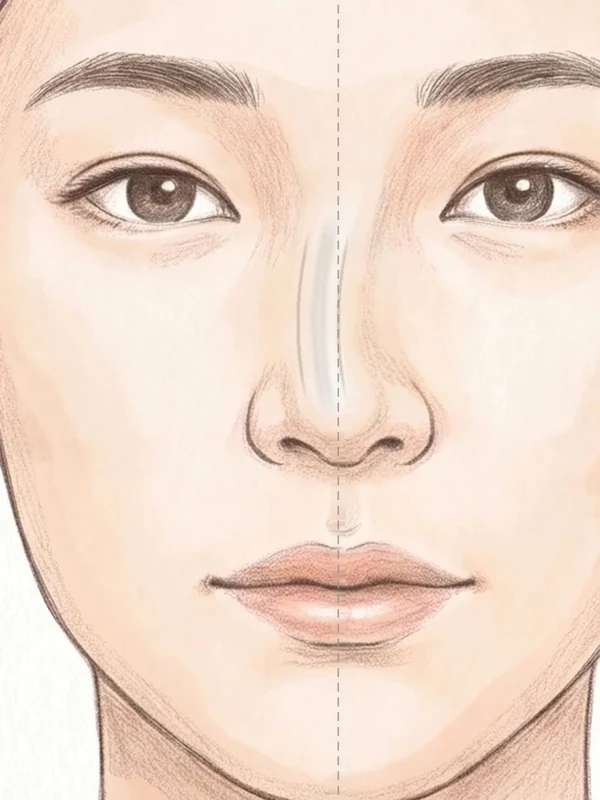
- Before surgery (C-shaped deviated nose)
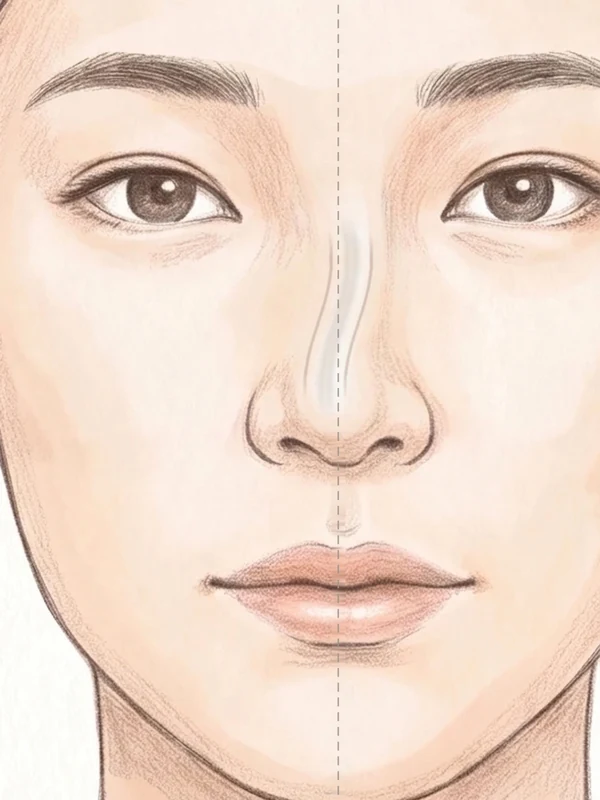
- Before surgery (S-shaped deviated nose)
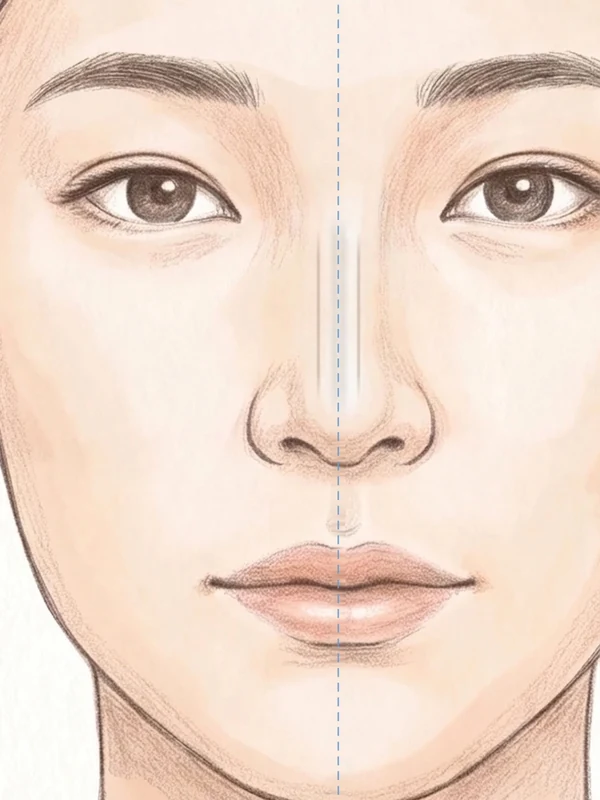
- After surgery (after correction)
- 1Before surgeryFrom the front and side, we identify the degree and direction of curvature of the nasal bones and septum, and asymmetry of the nasal tip. We also evaluate whether functional issues such as nasal obstruction or septal deviation are present, and plan the scope and direction of correction accordingly.
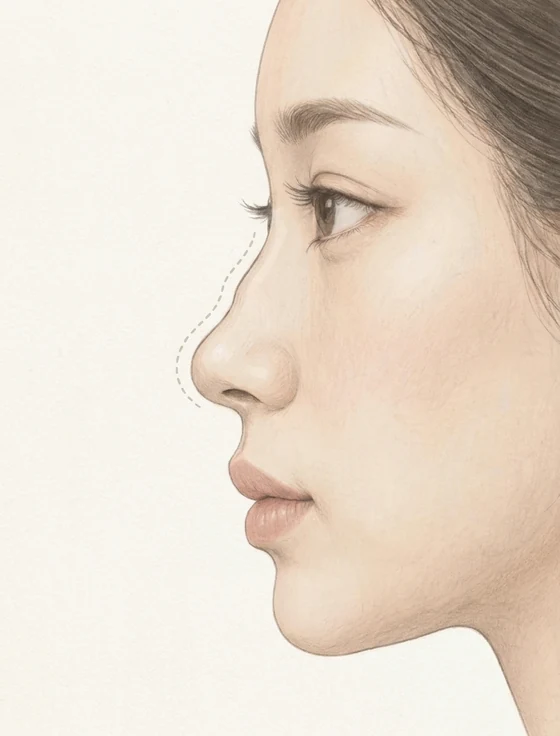
- 2Correction of curved structures and alignment of support structuresWhen necessary, the deviated nasal bones are realigned through osteotomy, and the curved septum is corrected to align the nasal midline. If the nasal tip cartilage is asymmetric, its position and shape are adjusted, and autologous cartilage may be used to reinforce the support of the nasal tip as needed.
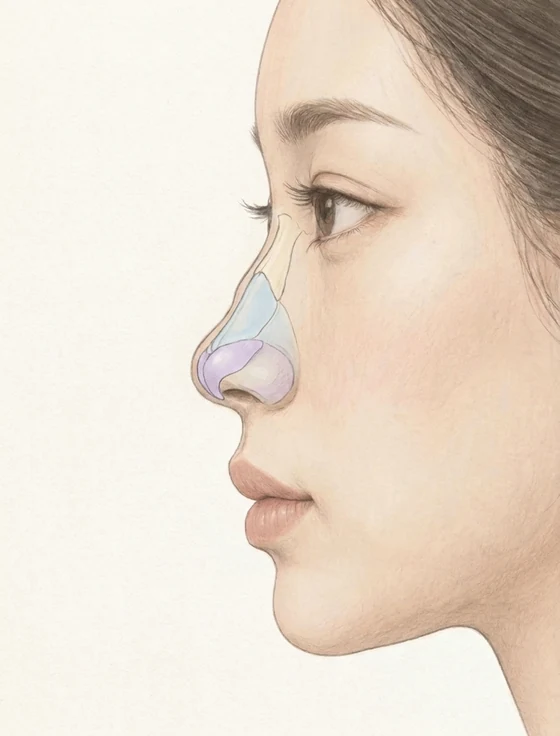
- 3After surgeryThe centers of the previously curved nasal bones and septum are straightened to create a straighter, more balanced nasal line from the front. We check the position and symmetry of the nasal tip and its harmony with the facial midline, aiming to improve functional issues as well.
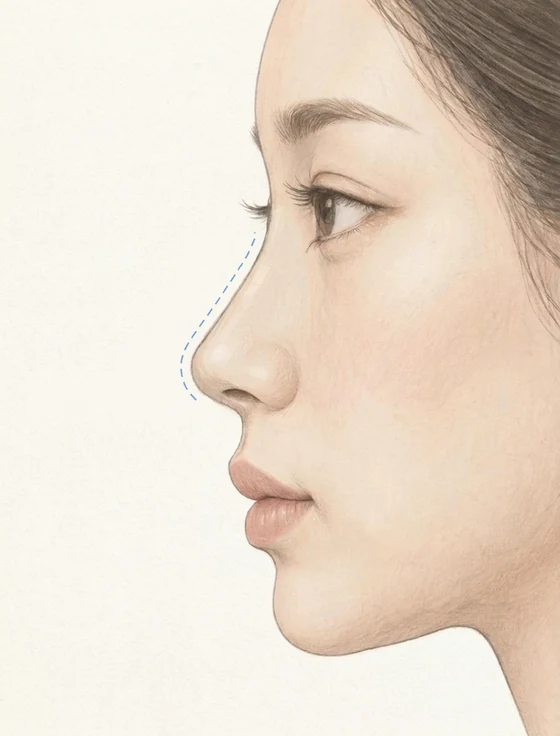
Key points of deviated nose surgery
Deviated Nose — KakaoTalk 1:1 Consultation
If you are curious about your previous surgical history or your current nose condition, you can inquire via KakaoTalk before consultation.
Deviated Nose Frequently Asked Questions
My nose is crooked to one side. Can surgery make it straight?
A deviated nose often involves not only the nasal bones but also the septum and cartilage. After identifying where the deviation is, the nasal bones and cartilage are corrected as needed so that the nose aligns more naturally with the center of the face.
My nose only looks crooked in photos. Is this also a deviated nose?
The nose may actually be crooked, but it can also appear relatively crooked because of facial asymmetry itself or the position of the eyes, mouth, or chin. Therefore, not only the nose but also the facial midline and overall left–right asymmetry should be assessed together.
Is osteotomy always required for a deviated nose?
It depends on the location and degree of the deviation. If the nasal bone itself is crooked, osteotomy may be needed to adjust the position of the nasal bone, but if deformity of the cartilage or septum is the main cause, it may be corrected by other methods.
Do you also correct a deviated septum at the same time?
When the external nose is crooked, the internal septum is also often crooked as well. If septal deformity is affecting the nasal shape or breathing, concurrent correction may be considered depending on the condition.
My nose is crooked and one side is blocked. Can breathing also improve?
If the cause of nasal obstruction is related to a structural problem such as a deviated septum, functional improvement can be expected by correcting it at the same time. However, other causes such as rhinitis or mucosal issues may also be present, so the cause should be identified first.
My nose has been crooked since I injured it in the past. Can I have surgery?
Correction may also be considered when the nasal bones or septum have been deformed and become crooked due to trauma. After confirming the location of the previous fracture and the current degree of deformity of the nasal bones and cartilage, we determine the necessary extent of surgery.
Can the nasal bridge also be raised during deviated nose surgery?
It is possible. While first considering correction to straighten the central axis of the nose, additional areas such as a low nasal bridge or the nasal tip can be adjusted together. Rather than simply raising the nasal bridge to conceal the deviation, it is important to first accurately assess the deviation of the existing structure.
Can deviated nose surgery make the nose completely straight?
With a deviated nose, asymmetry may remain not only in the nasal bones and cartilage but also in the skin and soft tissue, so there may be limits to achieving perfect left-right symmetry. Especially in cases of severe deformity or longstanding traumatic deviated nose, the goal is to improve the central axis and balance within the possible range.
Can the nose become crooked again after surgery?
Severely crooked cartilage may have a tendency to return toward its original direction, and scar contraction during the recovery process can also have an effect. Therefore, it is important to adequately correct the cause of the deformity and provide stable support.
My nose became crooked after previous nose surgery. Is revision surgery also possible?
It may be possible. Causes such as implant displacement, deformity of existing cartilage, septal deviation, and scars and adhesions are checked first. In revision surgery, the correction method is determined considering even the condition of the existing implant and grafted cartilage.
I didn’t originally have a Deviated Nose, but after nose surgery my nose looks slightly crooked. Is this due to swelling?
Early on, uneven swelling on the left and right can make the nose look crooked. If the original nasal bones or septum are asymmetric, a slight asymmetry can also remain after surgery. If the degree of curvature is still apparent after swelling has sufficiently subsided, it is best to have it checked in a consultation.
What is checked before deviated nose surgery?
We check from the front and in profile in which direction and how much the nasal bone and septum are deviated, and whether the tip is asymmetric. We also evaluate whether functional problems such as nasal obstruction or septal deviation are present, and plan the extent and direction of correction.
My bridge is straight, but only the tip is turned to one side. Is that still a deviated nose?
A deviated nose includes not only the bridge but also cases where the tip appears shifted to one side of the facial midline. If there is asymmetry in the tip cartilage, the position and shape of the cartilage are adjusted to straighten it.
Is autologous cartilage used in deviated nose surgery too?
It is used when needed. After straightening the deviated nasal bone and septum, we look at tip asymmetry and support and reinforce the tip's support structure with autologous cartilage.
Is deviated nose surgery only about making the nose straight?
It is not simply about straightening the nose; the goal is a natural nose line that takes into account the facial midline running through the eyes, lips, and chin, and left-right balance.
Depending on the individual, side effects such as bleeding, infection, swelling, asymmetry, and scarring may occur, and the degree may vary. Please make your decision after sufficient consultation with a specialist.
View together by rhinoplasty type
Please review our complete guide to Low Nasal Bridge, Upturned Nose, Arrow Nose, Deviated Nose, Dorsal Hump, Alar Reduction, revision rhinoplasty, and Rhinoplasty.
View rhinoplasty types and revision, with 3D CT analysis, on one page.
NOSE Low Nasal BridgeLow nasal bridge surgery can be performed in various ways depending on the height and shape of the nose, skin thickness, and overall facial proportions.
NOSE Upturned Nose/Short NoseAn upturned or short nose refers to a shape in which the length of the nose is relatively short or the nasal tip is lifted upward so that the nostrils are highly visible from the front.
NOSE Arrow Nose/Long NoseAn arrow or long nose refers to a shape in which the nasal tip droops downward or the length of the nose appears long relative to the face.
NOSE Dorsal HumpA dorsal hump refers to a shape in which the nasal bone and cartilage forming the nasal dorsum are overly developed or protruding, so that the middle portion of the nasal dorsum appears bulged in profile.
NOSE Alar ReductionAlar reduction is a surgery that adjusts the width and shape of the alar to create a more balanced nose shape when the alar is widely spread to the sides or the nostrils appear large, making the nose look wide and blunt.
NOSE Revision RhinoplastyRevision rhinoplasty is surgery performed when, after a previous rhinoplasty, the shape of the nasal bridge or tip is unnatural or asymmetry has developed, or when further correction is needed due to implant malposition or showing through, nasal tip deformity, contracture, or similar issues.
Deviated Nose — KakaoTalk 1:1 Consultation
If you are curious about your previous surgical history or your current nose condition, you can inquire via KakaoTalk before consultation.