

L-osteotomy cheekbone reduction
The cheekbone is cut in an L shape and moved inward
L-osteotomy Cheekbone Reduction is a method of cutting the cheekbone in an L shape and moving it inward. For cheekbone surgery, depending on the technique, small incisions may be added not only inside the mouth but also in the scalp or around the ear.
At a Glance
For the cheekbone, it is not about making it as small as possible; what matters is which parts are reduced, by how much, and how they are moved. If you excessively reduce even the front cheekbone that creates facial three-dimensionality, the face can look flat. Therefore, we plan surgery by considering the degree of projection from the front and side views along with the overall facial three-dimensionality.
An inpatient ward is in operation, and contouring surgery is performed with a 1-day hospital stay. Recovery takes about 2 weeks, though it may vary from person to person. A specialist anesthesiologist is on site during contouring surgery.
Why Do the Cheekbones Look Prominent?
Wide or prominent cheekbones are not caused only by one bone sticking out.
The size and protruding direction of the cheekbone body, the width of the zygomatic arch, the skeletal ratio between the front and side of the face, and the thickness of soft tissue such as skin and fat together determine the contour of the face.
Therefore, there are cases where the face looks wide from the front but the lateral protrusion is not large, and conversely, cases where the front width is not wide but the 45-degree cheekbone looks strongly protruding.
Before surgery, it is important to first check which area of the cheekbone makes the face look wide or angular.
The Cheekbone Looks Different Depending on the Area
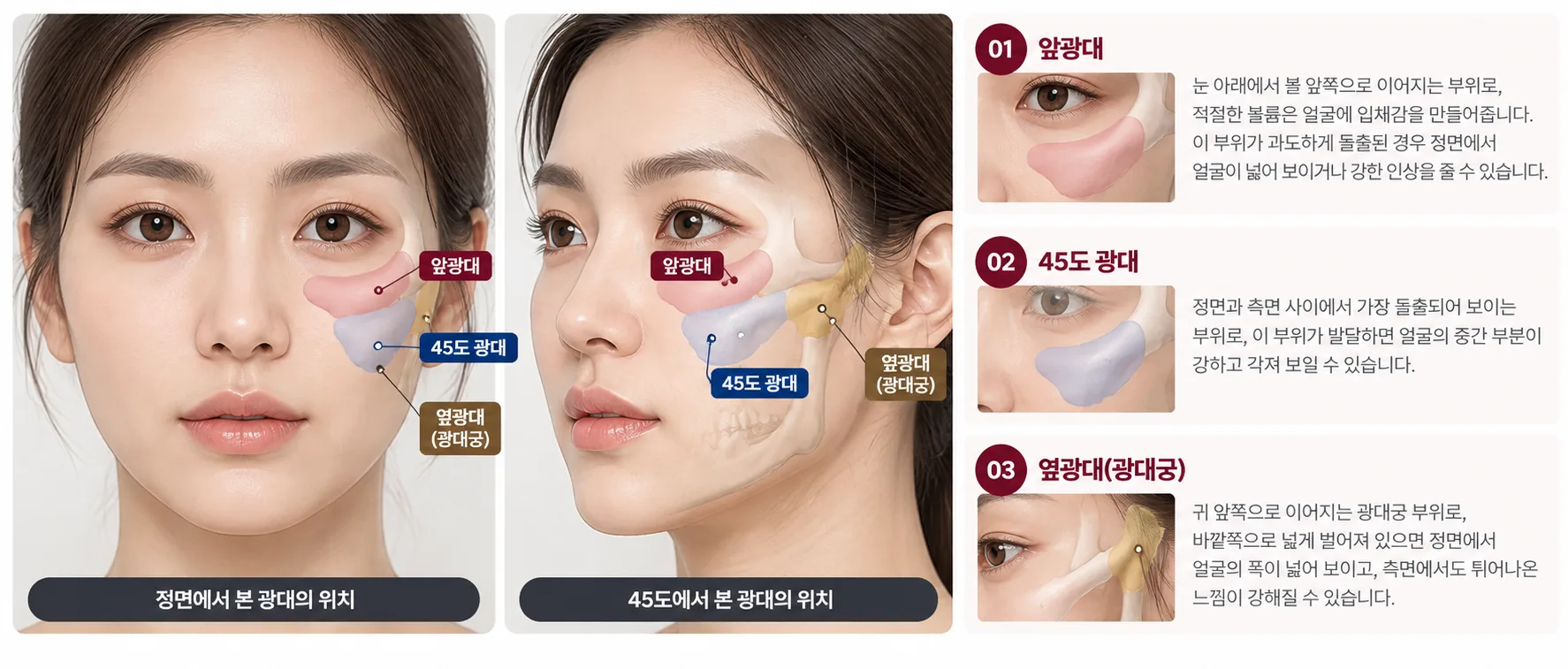
Anterior Cheekbone
This is the area extending from below the eye to the front of the cheek. An appropriate amount of anterior cheekbone volume gives the face dimension, so reducing it as much as possible is not necessarily better.
45-degree Cheekbone
This is the area that looks most prominent between the front and the side. If this area is developed, the middle of the face may look strong and angular.
Lateral Cheekbone
This is the zygomatic arch area extending toward the front of the ear. If it flares widely outward, the face may look wider from the front.
What Is L-osteotomy Cheekbone Reduction?
L-osteotomy Cheekbone Reduction creates a movable bone segment by cutting the cheekbone body in an L shape, then moves the protruding cheekbone body and zygomatic arch inward to adjust the width and contour of the face.
Because it adjusts the position of the cheekbone itself rather than simply shaving down the protruding bone, both the face width seen from the front and the degree of protrusion at 45 degrees can be considered.
The amount and direction of movement are decided after checking the shape and degree of protrusion of the cheekbone and the proportions of the whole face.
How Is L-osteotomy Cheekbone Reduction Performed?
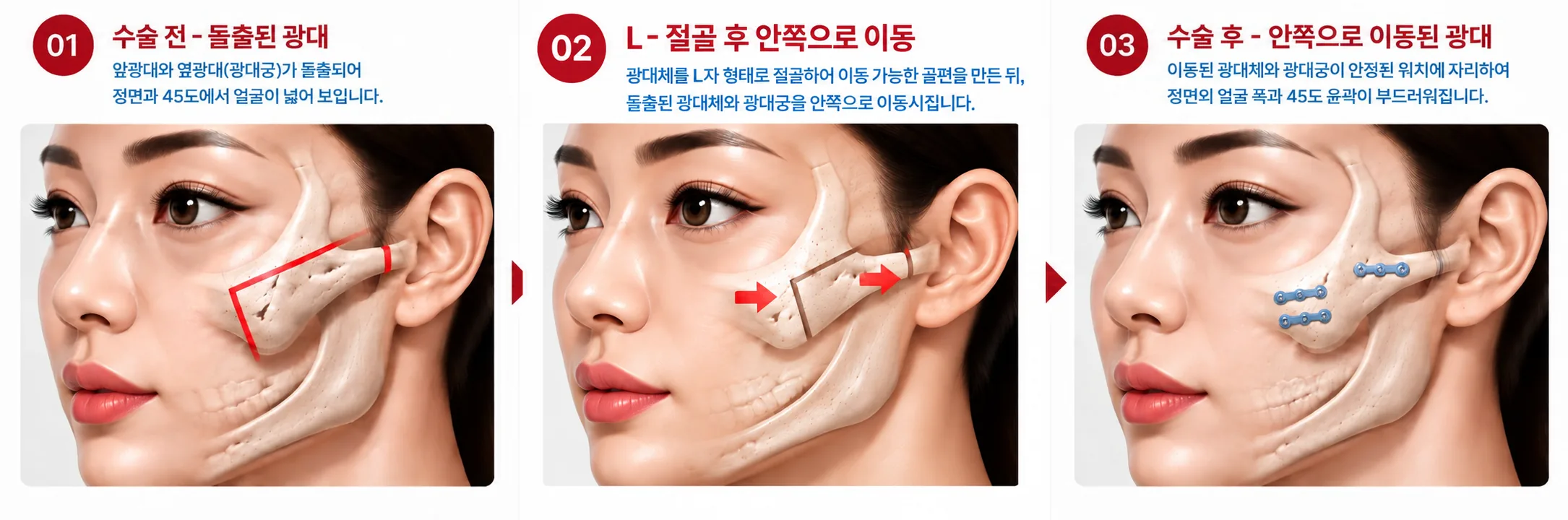
- 01
The Protruding Shape of the Cheekbone Is Analyzed
The frontal face and the 45-degree and lateral views are checked for the width and degree of protrusion of the cheekbone, and which area to mainly adjust among the anterior cheekbone, 45-degree cheekbone, and lateral cheekbone is decided.
- 02
The Osteotomy Location and Direction of Movement Are Planned
The shape of the cheekbone body and zygomatic arch is examined, and the osteotomy location and the range and direction of inward movement are planned.
- 03
The Cheekbone Body Is Cut
The cheekbone body is cut at the planned position so that it can be moved within the necessary range.
- 04
The Cheekbone Is Moved Inward
The protruding cheekbone body and zygomatic arch are moved inward to adjust the frontal face width and the 45-degree contour.
- 05
The Moved Cheekbone Is Fixed
The position and left-right balance of the moved bone segment are checked, and it is stably fixed to complete the procedure.
Position and Direction Matter More Than Reducing the Cheekbone a Lot
Moving the bone far inward in Cheekbone Reduction does not necessarily create a natural face shape.
If the anterior cheekbone is reduced excessively, the dimension of the face may decrease or the midface may look flat, and the change in the facial line after surgery may also differ depending on the condition of soft tissue such as skin, fat, and muscle.
Therefore, it is important to keep the anterior cheekbone volume that is needed while appropriately adjusting the protruding 45-degree cheekbone and lateral cheekbone to create a natural curve.
Why Fixation Is Important in Cheekbone Reduction
Because Cheekbone Reduction moves the position of the cut bone, it matters not only how far the bone is moved but also how the moved bone segment is fixed so that it stays stable.
The cheekbone is fixed in an appropriate position in consideration of its shape, the osteotomy location, and the direction of movement, and the height and contour on both sides are checked.
Because the bone needs to heal stably after surgery, you should follow the medical team's instructions during the recovery period.
Cheek Sagging After Cheekbone Reduction Is Also Considered
Various soft tissues, including skin, fat, and muscle, are connected around the cheekbone.
Because moving the cheekbone also affects the soft tissue surrounding it, skin elasticity, cheek fat volume, existing sagging, and the range of cheekbone movement must be evaluated together before surgery.
In particular, if the midface already sags or there is a lot of soft tissue, it is important to plan the surgery in consideration of the soft-tissue changes that may occur afterward, rather than judging the facial line by Cheekbone Reduction alone.
How Does the Facial Line Change After Cheekbone Reduction?
Right after surgery, the face may look wide or uneven from side to side because of swelling.
As the initial swelling subsides, the face width from the front and the contour at 45 degrees gradually emerge, and the cut bone and surrounding tissue need sufficient time to stabilize.
The final facial line gradually settles as the soft tissue, such as skin, fat, and muscle, adapts to the new skeleton, not only as the bone changes.
What should I know after cheekbone surgery?
L-osteotomy Cheekbone Reduction FAQ
Do my cheekbones look wide because the bone sticks out?
Wide or protruding-looking cheekbones are not a matter of one part of the bone alone. The size and direction of protrusion of the zygomatic body, the width of the zygomatic arch, the skeletal proportions of the front and side of the face, and the thickness of soft tissue such as skin and fat together determine the contour, so the area causing it is checked first.
My face looks fine from the front, but my cheekbones stick out at 45 degrees.
Even when the front width is not wide, the cheekbone at the 45-degree angle can look strongly protruded. The width and protrusion of the cheekbones are checked from the front, at 45 degrees, and from the side, and the main area to adjust among the anterior, 45-degree, and lateral cheekbones is decided.
If my lateral cheekbones are wide, does my face look big from the front too?
If the zygomatic arch running in front of the ear is spread wide outward, the face can look wide from the front. In L-osteotomy cheekbone reduction, the zygomatic arch is moved inward together with the zygomatic body to adjust the frontal width.
Is L-osteotomy cheekbone reduction a surgery that shaves down bone?
It is not simply shaving off protruding bone. The zygomatic body is cut in an L shape to create a movable bone segment, and the protruding zygomatic body and arch are then moved inward. Because the position of the cheekbone itself is adjusted, both the frontal width and the protrusion at 45 degrees can be considered.
How is it decided how far the cheekbones are moved inward?
The amount and direction of movement are decided after checking the shape and protrusion of the cheekbones and the overall facial proportions. Moving the bone a lot does not necessarily produce a natural face shape, so position and direction are planned together.
In what order is L-osteotomy cheekbone reduction carried out?
The protrusion of the cheekbones is analyzed, the osteotomy position and direction of movement are planned, and then the zygomatic body is cut. After that, the cheekbone is moved inward, and the procedure is finished by checking left-right balance and fixing it.
Why is fixation important in cheekbone reduction?
Because the surgery moves the position of the cut bone, the fixation process that keeps the moved bone segment stable is important. The cheekbone is fixed in an appropriate position considering its shape, the osteotomy position, and the direction of movement, and the left-right height and contour are checked.
Where are the incisions for cheekbone reduction?
Depending on the surgical method, cheekbone surgery may add small incisions not only inside the mouth but also in the scalp or around the ear. The incision locations are explained during the consultation according to the surgical plan.
What anesthesia is used for cheekbone reduction, and is a hospital stay needed?
Facial contouring surgery is performed under general anesthesia, and an anesthesiologist is on site during contouring surgery. The clinic has inpatient rooms, and contouring surgery involves a 1-day hospital stay.
How long is the recovery period after cheekbone reduction?
The recovery period is about 2 weeks, and it may vary from person to person. Because the bone needs to heal stably, care during recovery follows the medical team's guidance.
My face looks wider right after surgery. Is that normal?
Right after surgery, swelling can make the face look wider or the two sides look different. As the initial swelling goes down, the frontal width and the contour at 45 degrees gradually appear, and the bone and surrounding tissue need enough time to stabilize.
My cheeks already sag a bit. Can I still have cheekbone reduction?
When there is already midface sagging or a lot of soft tissue, rather than judging the facial line by cheekbone reduction alone, the plan also considers the soft tissue changes that may occur after surgery. Skin elasticity, the amount of cheek fat, the existing degree of sagging, and the range of cheekbone movement are reviewed together.
Can sensation in my cheeks or lips change after cheekbone surgery?
Nerves responsible for sensation run near the surgical area, so after surgery, the lips, chin, or cheeks may feel dull or different from usual. Many cases recover over time, but depending on the degree of nerve injury, sensory changes may persist for a long time.
What are the possible side effects of cheekbone reduction?
Depending on the individual, side effects such as bleeding, infection, swelling, asymmetry, and scarring may occur, and their degree varies. Reducing the anterior cheekbone too much can lessen the three-dimensional look of the face, so it is considered important to adjust while keeping the needed dimension.
Can I ask questions before the cheekbone reduction consultation?
You can ask in advance through a KakaoTalk 1:1 consultation about which area concerns you. The surgical range is decided after the width and protrusion of the cheekbones are checked from the front, at 45 degrees, and from the side in the consultation.
L-osteotomy Cheekbone Reduction — KakaoTalk 1:1 Consultation
You can make a prior inquiry via KakaoTalk before your visit about which area concerns you.
View together by Facial Contouring surgical method
Explore Long-curve square jaw, L-osteotomy zygoma reduction, Chin Tip Surgery, and the full guide to Facial Contouring together.
View cheekbone, square jaw, and chin tip surgeries together on a single page.
FACE Long-curve square jaw reductionThe lower jawline from the jaw angle below the ear toward the chin is resected in a long curve.
FACE Chin tip surgeryThe shape and length of the chin tip, and its anteroposterior position, are corrected.
For additional inquiries, contact us via KakaoTalk
1:1 KakaoTalk pre-inquiry — Mon–Thu 10:00 - 19:00 · Fri 10:00 - 21:00 · Sat 10:00 - 16:00.